Morning along the shoreline often begins in fragments—wind moving across the water, footprints pressed into damp sand, the distant rhythm of waves folding into themselves. At Rockaway Beach, where the city meets the Atlantic in a long, open stretch, the scene usually carries a familiar balance between movement and stillness. But sometimes, the sea leaves behind something that alters that rhythm entirely.
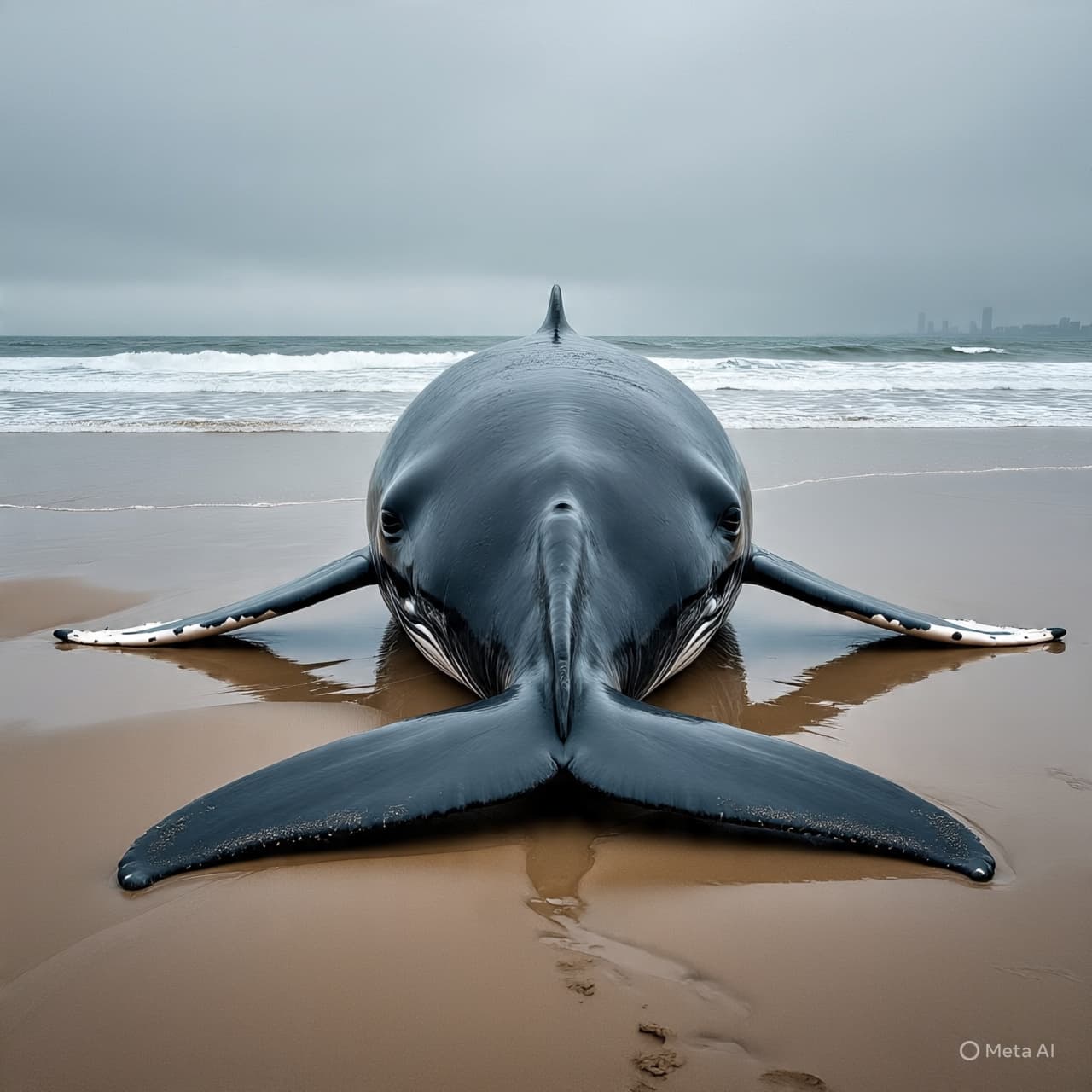
A large whale has washed ashore along the beach, its immense form resting where water gives way to land. The sight, at once striking and solemn, has drawn attention from both authorities and onlookers, transforming a routine morning into a moment of quiet interruption. The animal, no longer moving, lies as a reminder of the vast world just beyond the shoreline—a world that rarely comes this close in such a way.
Officials and marine experts have responded to the scene, working to assess the situation and determine the species, condition, and possible cause behind the stranding. Such events, while not entirely uncommon along the Atlantic coast, carry a weight that extends beyond the immediate moment. Each instance invites questions that move between science and circumstance—about migration paths, environmental pressures, and the unseen challenges faced by marine life.
Whales, particularly large species, travel immense distances across oceans, navigating through waters shaped by currents, sound, and shifting ecosystems. When one appears on shore, it often signals a disruption in that journey. Illness, injury, disorientation, or changes in environmental conditions can all contribute, though definitive answers are not always immediate.
At Rockaway, the presence of the whale has prompted coordination among local agencies responsible for wildlife and public safety. Protocols typically involve securing the area, conducting examinations, and, if possible, performing a necropsy to better understand what occurred. These steps, carried out methodically, aim to gather information that may contribute to broader research and conservation efforts.
For those who encounter the scene, the experience tends to unfold quietly. There is little spectacle in such moments—only a sense of scale, and the recognition of something powerful brought unexpectedly to stillness. The ocean, so often defined by its motion, has in this instance delivered a pause.
As the day progresses, the practical considerations will take shape. Authorities will determine how to manage the remains, balancing environmental concerns with logistical realities. The beach, in time, will return to its usual rhythm—waves, wind, and the steady passage of people along the shore.
Yet the image lingers. A creature built for depth and distance, resting at the edge of a city, where its journey has come to an unplanned end. It is a quiet intersection of worlds—the vastness of the ocean meeting the familiarity of land.
And in that meeting, there is a reminder, subtle but enduring, that even the most distant lives can, for a moment, arrive within reach—carried not by intention, but by the shifting currents that shape both sea and story.
Published by Banx Network. This article is part of the Banx decentralized media programme, powered by the BXE token on the XRP Ledger.