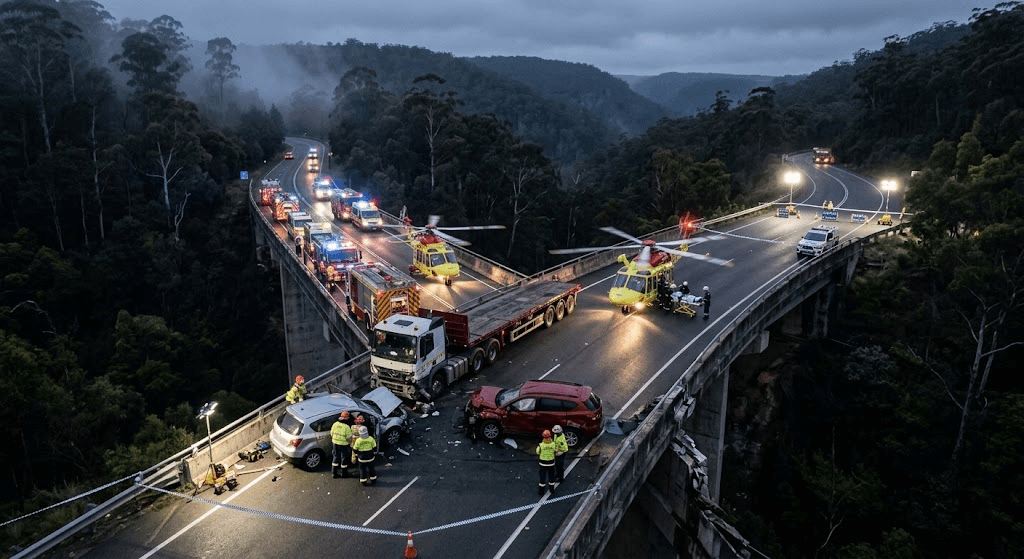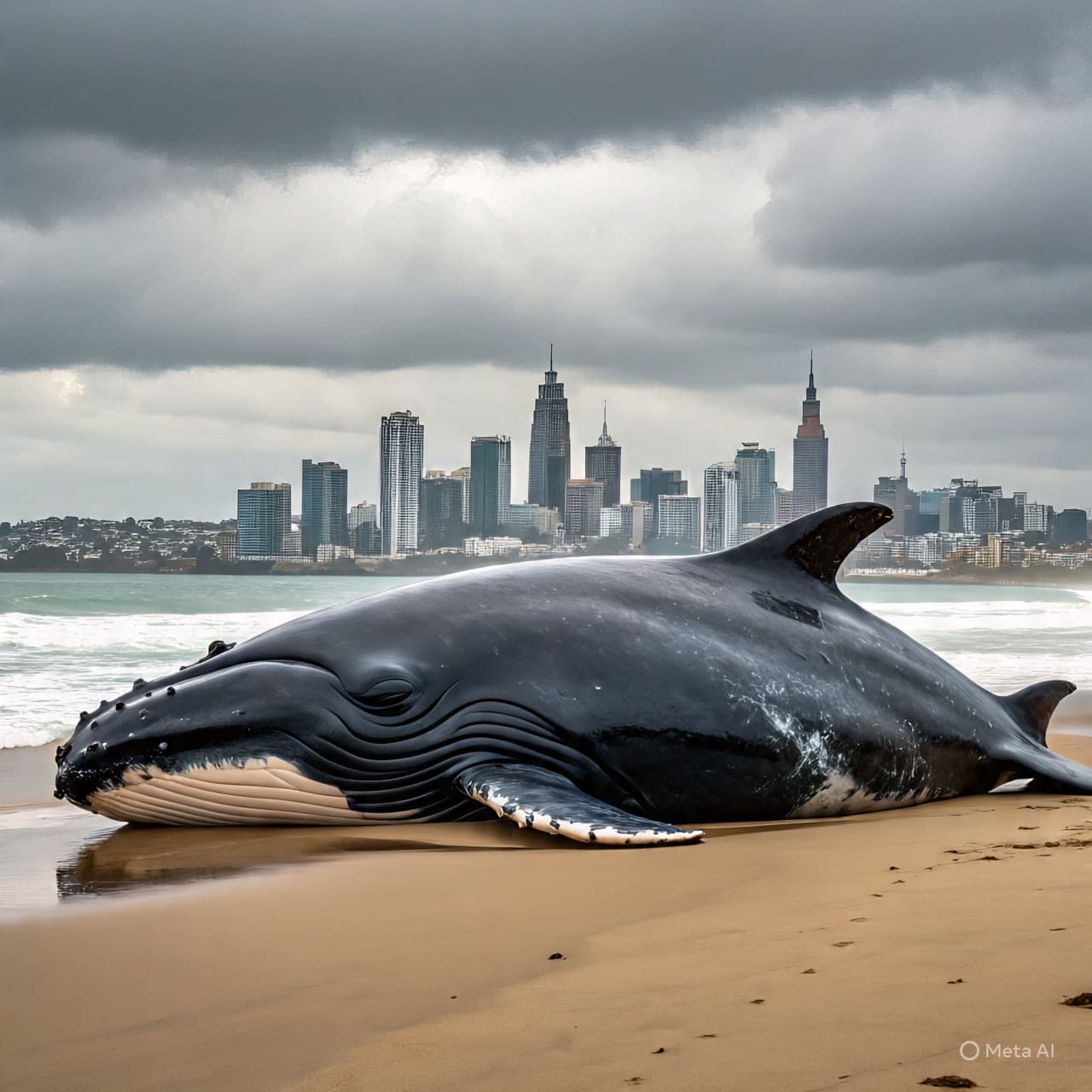
There are moments when the ocean releases something it was never meant to surrender. A vast body shaped for deep currents and open horizons finds itself instead upon sand, under the quiet gaze of a city skyline. On a central beach in , a deep-sea whale stranded ashore, drawing both concern and reflection from those who encountered it.
The whale, believed to be a species typically found in deeper offshore waters, was discovered on the sand during the morning hours. Beachgoers and local residents quickly alerted authorities, and marine experts were called to assess the situation. Stranding events, while uncommon in urban coastal areas, are not unknown in New Zealand’s waters, where shifting tides and underwater geography can complicate navigation for even the ocean’s largest mammals.
Specialists worked to determine the condition of the whale and whether a refloat attempt was possible. In some cases, deep-sea species struggle to survive prolonged time out of water due to their size and physiology. The scale of such animals presents both a logistical and ethical challenge: how to respond swiftly while ensuring safety for people and respect for the animal itself.
Crowds gathered at a distance as officials cordoned off parts of the beach. The sight of a whale—usually glimpsed far offshore through binoculars or from a boat—resting motionless on city sand offered a quiet reminder of how closely urban life borders the natural world. Children pointed in curiosity; adults stood in subdued silence. It was a scene that felt both extraordinary and solemn.
Marine authorities explained that strandings can occur for a variety of reasons, including illness, navigational error, injury, or environmental factors. Investigations will likely consider the whale’s physical condition and recent ocean conditions to better understand what led to its arrival on the beach.
New Zealand has a long history of responding to marine strandings, with conservation teams and volunteers often mobilizing quickly. In some instances, coordinated efforts have successfully guided whales back to sea. In others, humane decisions must be made when survival is no longer possible. Each case unfolds differently, shaped by tide, terrain, and time.
As the day progressed, officials continued their assessment. Members of the public were asked to avoid approaching the whale and to follow guidance from conservation staff. Safety, both human and animal, remained the priority.
By evening, authorities confirmed that further updates would be provided once a full evaluation was complete. For now, the whale rests at the meeting point of land and sea—a powerful presence in an unexpected place. The beach remains open beyond the secured area, and marine experts continue their work.
AI Image Disclaimer Images in this article are AI-generated illustrations, meant for concept only.
Source Check
Credible media coverage found from:
New Zealand Herald
Stuff
Radio New Zealand
1News
Auckland Now
Published by Banx Network. This article is part of the Banx decentralized media programme, powered by the BXE token on the XRP Ledger.