
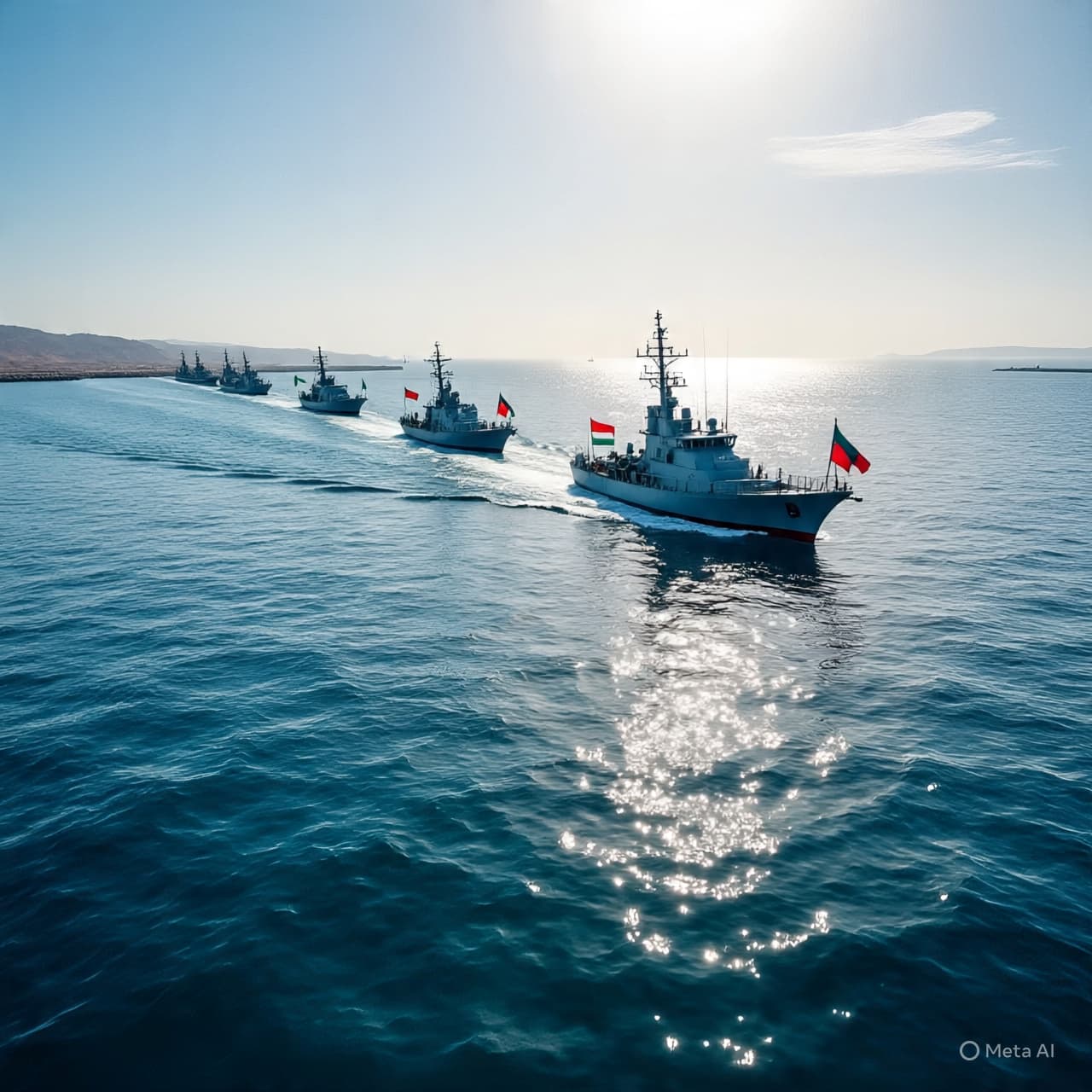
Diplomacy often travels quietly, like a small vessel navigating waters that remember storms. In the pale winter light of Geneva, conversations unfold behind polished doors, measured and deliberate. Far to the south, however, the Strait of Hormuz carries a different rhythm — the low hum of patrol boats, the sharp geometry of military formations cutting through salt air. Between these two scenes lies a familiar tension in global affairs: words seeking understanding, and weapons rehearsing resolve.
As Iran’s foreign minister arrived in Geneva for discussions with U.S. officials, the choreography of diplomacy appeared steady, almost restrained. Meetings were framed as pragmatic — an attempt to ease mounting pressures and address lingering disputes surrounding sanctions, nuclear commitments, and regional security. The choice of Geneva, long regarded as neutral ground for delicate dialogue, reflected a desire for calm deliberation rather than spectacle.
Yet while diplomats reviewed talking points, Iran’s Islamic Revolutionary Guard Corps (IRGC) conducted military drills in the Strait of Hormuz — one of the world’s most strategic maritime passages. The waterway, through which roughly a fifth of global oil shipments transit, has long symbolized both economic lifelines and geopolitical vulnerability. Exercises there carry symbolic weight, even when described as routine or pre-planned.
Iranian officials characterized the drills as defensive in nature, emphasizing readiness and deterrence. Military exercises in the region are not uncommon, and Tehran has frequently maintained that safeguarding its territorial waters and demonstrating capability are matters of national sovereignty. Still, timing has its own language. When drills coincide with diplomatic overtures, observers inevitably read the gestures side by side.
From Washington’s perspective, the Geneva talks offer an opportunity to stabilize a relationship marked by cycles of escalation and cautious engagement. U.S. officials have indicated that discussions are intended to reduce tensions and clarify expectations, particularly around nuclear activity and regional security. The broader objective appears less about immediate breakthroughs and more about preserving channels of communication.
For global markets and regional neighbors, the juxtaposition is not merely symbolic. The Strait of Hormuz remains a critical artery for energy flows, and even routine exercises can ripple through oil prices and investor sentiment. Stability there is less a luxury than a necessity, intertwined with economic forecasts far beyond the Gulf.
In many ways, this moment captures the duality that has long defined U.S.-Iran relations: diplomacy unfolding under the shadow of deterrence. Geneva represents the table where words are weighed carefully; Hormuz reflects the reminder that strategic calculations persist even amid dialogue. Neither cancels the other. Instead, they coexist — sometimes uneasily — in the architecture of international relations.
Whether these talks mark a genuine turning point or simply another chapter in a prolonged negotiation remains uncertain. What is clearer is that both sides appear aware of the costs of miscalculation. In a region where history lingers close to the surface, restraint can be as consequential as rhetoric.
For now, the world watches two stages at once: one defined by careful phrasing in conference rooms, the other by disciplined formations at sea. Between them lies a narrow passage — not unlike Hormuz itself — where balance, patience, and prudence may determine the course ahead.
AI Image Disclaimer
Visuals are created with AI tools and are not real photographs.
Source Check (Credible Media Outlets Covering This Development): Reuters Associated Press Al Jazeera BBC News The New York Times
Published by Banx Network. This article is part of the Banx decentralized media programme, powered by the BXE token on the XRP Ledger.


