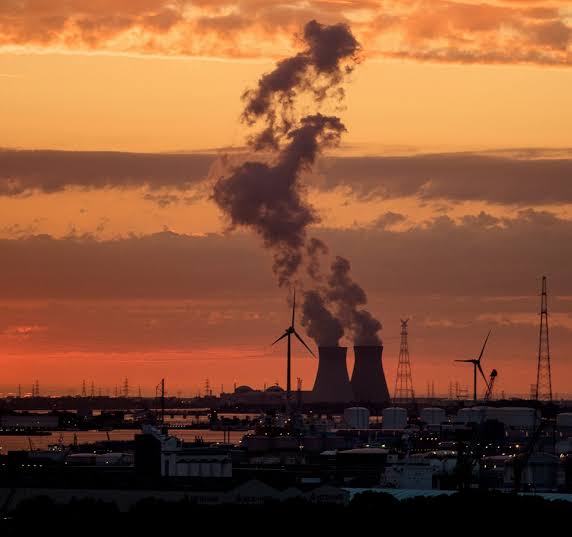
There are movements that pass unnoticed across the open ocean, carried not by ships or currents alone, but by the quiet exchange between water and air. The surface of the sea, often seen as a boundary, is in practice a place of constant passage. What rises from it is rarely visible, yet it travels far, entering the atmosphere and becoming part of a larger system that extends well beyond the horizon.
In the western reaches of the North Pacific Ocean, scientists have begun to trace one such movement. Their focus rests on particulate thiols—sulfur-containing compounds that exist in tiny airborne particles. These compounds are not new in themselves, but their origins and pathways have been difficult to define, their presence dispersed across vast distances.
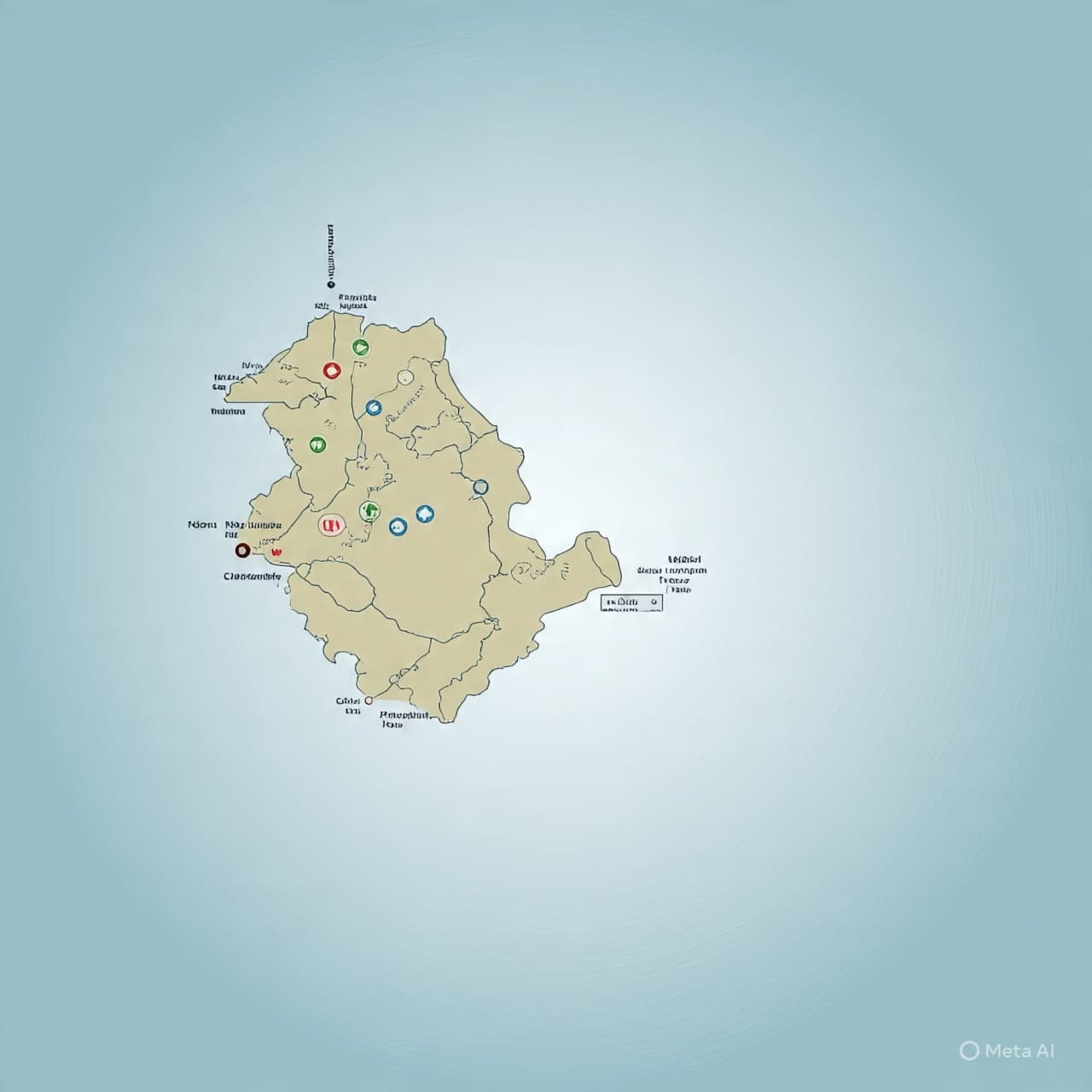
Through coordinated sampling and analysis, researchers have mapped the distribution of these particles across a wide expanse of ocean. The pattern that emerges is not random. It suggests a connection to life below the surface, specifically to phytoplankton, the microscopic organisms that inhabit sunlit waters and form the foundation of marine ecosystems.
Phytoplankton are often understood in terms of what they produce within the ocean—oxygen, organic matter, the base of food webs. Yet they also contribute to processes that extend beyond the water. As they grow and decay, they release compounds that can enter the atmosphere, either directly or through transformation. Among these are sulfur-based molecules that, once airborne, become part of particulate matter.
The study indicates that particulate thiols detected over the ocean can be traced back to these biological origins. Their presence reflects not a single event, but an ongoing cycle—one in which marine life contributes to atmospheric chemistry in ways that are subtle but measurable. The ocean, in this sense, is not contained within its surface, but participates in exchanges that move upward and outward.
There is a complexity to these interactions. Once in the atmosphere, these particles do not remain unchanged. They interact with sunlight, with other chemical species, with moisture in the air. Their composition may shift, their role evolving as they move. Some may influence cloud formation, acting as nuclei around which droplets can gather, while others may participate in broader chemical reactions.
What the mapping provides is a clearer sense of origin. By linking particulate thiols to phytoplankton activity, scientists can better understand how marine ecosystems contribute to atmospheric processes. It adds another layer to the relationship between ocean and climate, one that operates through pathways not immediately visible.
The scale of the study reflects the scale of the system itself. The western North Pacific is vast, its conditions variable, its biological activity shifting with seasons and currents. To trace a signal across such space requires careful coordination, repeated measurement, and methods capable of detecting minute concentrations.
There is a certain quietness in the findings. They do not point to dramatic change, but to connection—a reminder that processes occurring at microscopic scales can extend across regions, linking ocean and atmosphere in continuous exchange.
Scientists have mapped particulate thiols across the western North Pacific and traced their origin to phytoplankton activity. The findings improve understanding of how marine biology influences atmospheric chemistry and particle formation.
AI Image Disclaimer
Illustrations are AI-generated to visualize scientific concepts and are not real observational images.
Source Check Nature Science Proceedings of the National Academy of Sciences NOAA Scientific American
Published by Banx Network. This article is part of the Banx decentralized media programme, powered by the BXE token on the XRP Ledger.