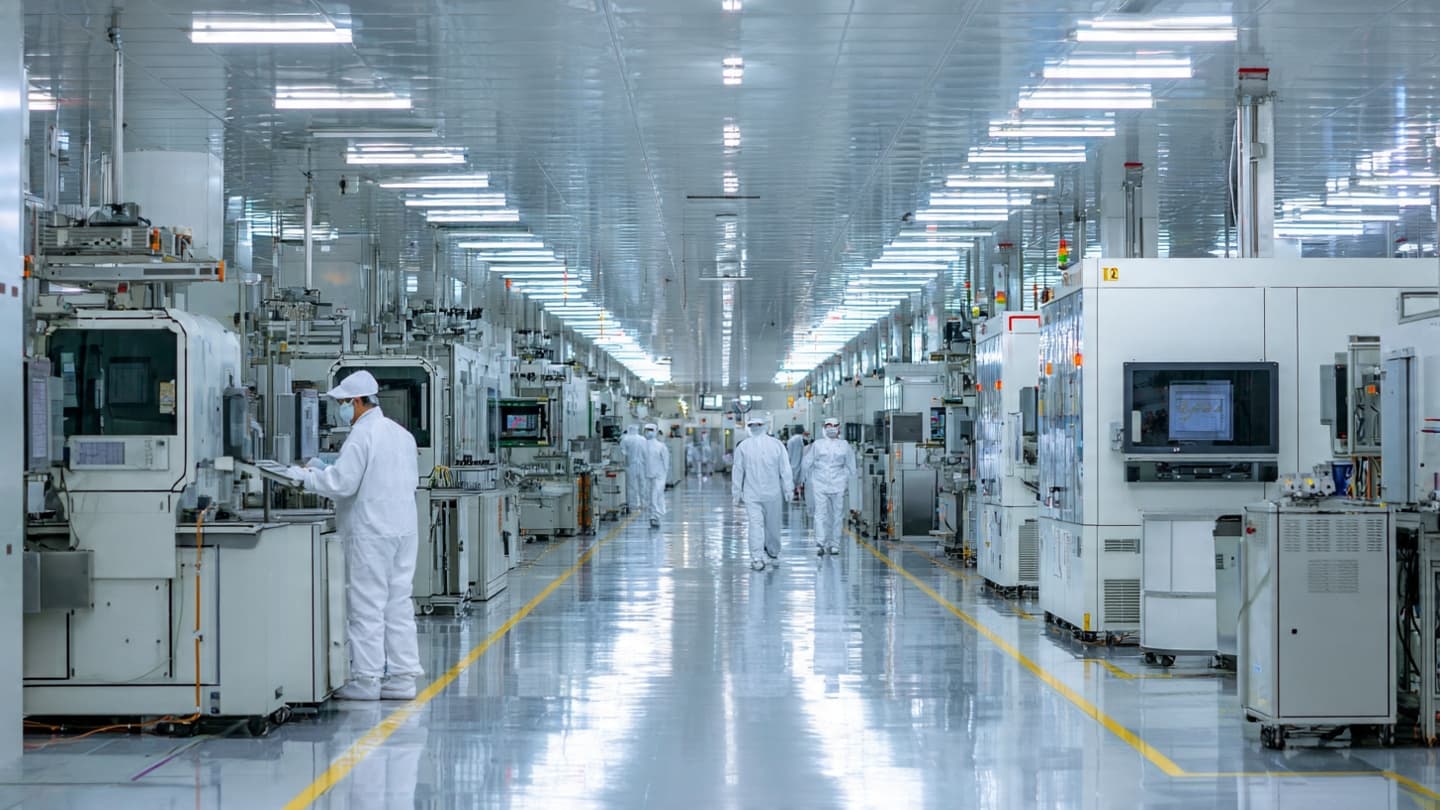
Inside the vast semiconductor industry, prosperity often arrives first as numbers: higher orders, stronger profits, rising demand, and expanding production plans. But eventually those numbers reach the factory floor, where workers consider what a booming industry means for wages, bonuses, and the security of their own income.
At SK Hynix, that question produced an unusually close result this week. Union members narrowly rejected a tentative wage agreement, with 50.08% of the 15,045 workers who voted opposing the proposal. The margin was only 25 votes.
The agreement included a 6.3% wage increase and changes to the company’s profit-sharing structure. Under the proposal, 40% of the bonus would have been paid in cash while 60% would have been distributed in company shares. The structure became an important point of concern for employees.
The timing is significant because SK Hynix is benefiting from strong global demand for high-bandwidth memory chips, which are essential to many artificial-intelligence systems. The company has been among the major beneficiaries of the rapid expansion of AI infrastructure, giving its financial performance a very different rhythm from several years ago.
Yet a rising share price does not necessarily feel the same as cash in a worker’s account. SK Hynix employees have seen the company’s stock move sharply, including a decline from its June peak. That volatility contributed to concerns about receiving a larger portion of compensation in shares rather than in cash.
The vote also illustrates how the AI boom is reaching beyond data centers and technology companies. Semiconductor manufacturing requires large numbers of engineers, technicians, production workers, and support staff. As demand rises, the question of how the resulting wealth is shared becomes part of the industrial landscape.
SK Hynix had previously committed to allocating 10% of annual operating profit to bonuses, with 80% paid immediately in cash and 20% deferred over two years. The proposed new structure would have altered that balance, placing more emphasis on company shares.
The company’s situation also exists alongside intense competition within South Korea’s semiconductor industry. Samsung Electronics recently reached a separate agreement with its workers that included a different bonus arrangement, showing that compensation structures are becoming part of the broader conversation surrounding the country’s technology sector.
For SK Hynix, the vote does not erase the strength of its business. The company remains positioned at the center of the global memory-chip market, where AI investment continues to support demand. But the narrow result shows that financial success and employee expectations do not always move at exactly the same speed.
The next stage will depend on negotiations following the rejection. For now, the result stands as a remarkably close reflection of the moment: an industry benefiting from one of the strongest technology cycles in years, while workers consider how that prosperity should be translated into compensation they can rely on.
AI Image Disclaimer These images were produced through AI generation and are intended only to illustrate the reported subject, not to represent real photographs.
Sources Reuters The Korea Herald SK Hynix The Economic Times Investing.com
Published by Banx Network. This article is part of the Banx decentralized media programme, powered by the BXE token on the XRP Ledger.