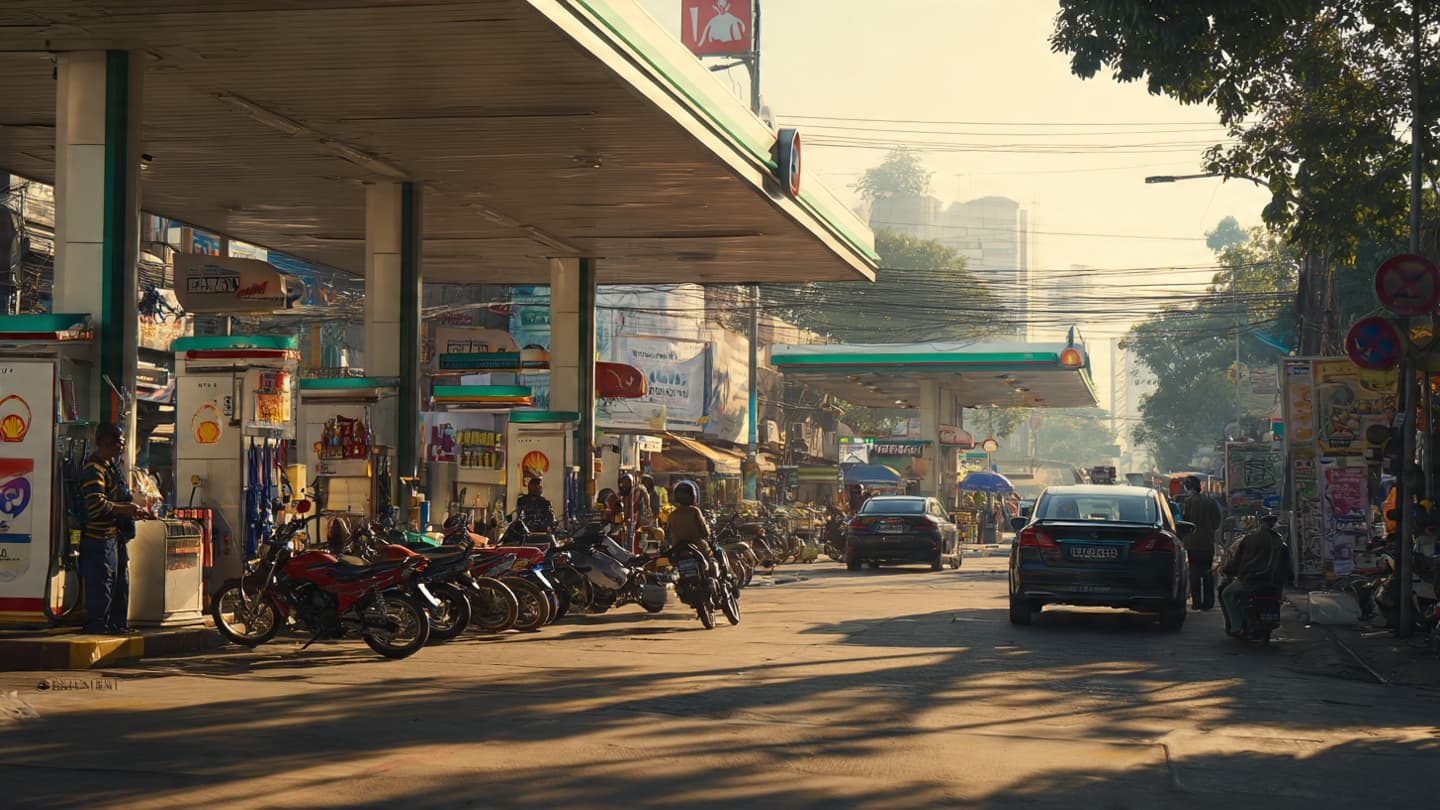
There is a particular rhythm to a fuel station in the morning: engines arriving one after another, meters beginning again, and the brief pause before a journey resumes. Across Indonesia, that ordinary movement may soon carry another layer of calculation as the government considers new limits on who can purchase subsidized fuel and how much they can receive.
The latest proposal, disclosed by Finance Minister Purbaya Yudhi Sadewa, would use vehicle characteristics as part of the effort to determine eligibility for subsidized fuel. The discussion comes as authorities continue looking for ways to control the cost of fuel subsidies while keeping subsidized prices available to people considered most in need.
For motorists, however, a fuel policy is rarely experienced as an abstract budget question. It appears at the roadside, in the distance between home and work, and in the amount left in a household budget after a tank is filled. A change in eligibility can therefore travel quietly through daily routines, affecting commuters, small businesses and people whose livelihoods depend on moving from one place to another.
The proposal follows earlier efforts to restrict subsidized fuel consumption. The government has been examining ways to distinguish between consumers according to economic circumstances and vehicle characteristics, while maintaining the price of Pertalite, the subsidized RON 90 gasoline, as a relatively affordable option.
That tension has become more visible as fuel prices move differently across the market. In June, the price of nonsubsidized Pertamax increased substantially, prompting some motorists to move toward Pertalite instead. The Jakarta Post reported that the shift contributed to longer queues at some stations, illustrating how a price change in one part of the fuel market can alter behavior somewhere else.
The government's challenge is consequently more complicated than simply drawing a line between subsidized and unsubsidized fuel. The road network is shared by commuters, delivery workers, commercial operators and households with very different financial circumstances. A vehicle can be an expression of consumption, but it can also be the tool through which income is earned.
There is also the question of implementation. Any system based on vehicle identification or eligibility criteria would need to work consistently across thousands of fuel stations and millions of motorists. Indonesia has previously relied on digital systems such as MyPertamina in attempts to manage subsidized fuel distribution, but the practical experience of queues, shortages and changing demand remains part of the broader picture.
Behind the policy discussion lies a familiar economic landscape: global energy prices can move far beyond the reach of domestic planners, while subsidies absorb a large amount of public spending. Indonesia has therefore continued to search for mechanisms that can keep assistance focused without allowing the fiscal burden to expand indefinitely.
For now, the proposal remains part of an ongoing policy discussion rather than a settled picture of the road ahead. What happens next will depend on how the government translates the idea into specific eligibility rules, purchasing limits and enforcement mechanisms. The latest plan places the debate once again at the place where national budgets meet everyday journeys: the fuel station, where policy becomes visible one liter at a time.
SEO-friendly slug: indonesia-subsidized-fuel-vehicle-based-purchase-limits
Hashtags: #Indonesia #FuelSubsidy #Pertalite #Energy #Business #Economy
Image Disclaimer
Visuals are AI-generated and serve as conceptual representations of the reported subject.
Sources
The Jakarta Post
Published by Banx Network. This article is part of the Banx decentralized media programme, powered by the BXE token on the XRP Ledger.