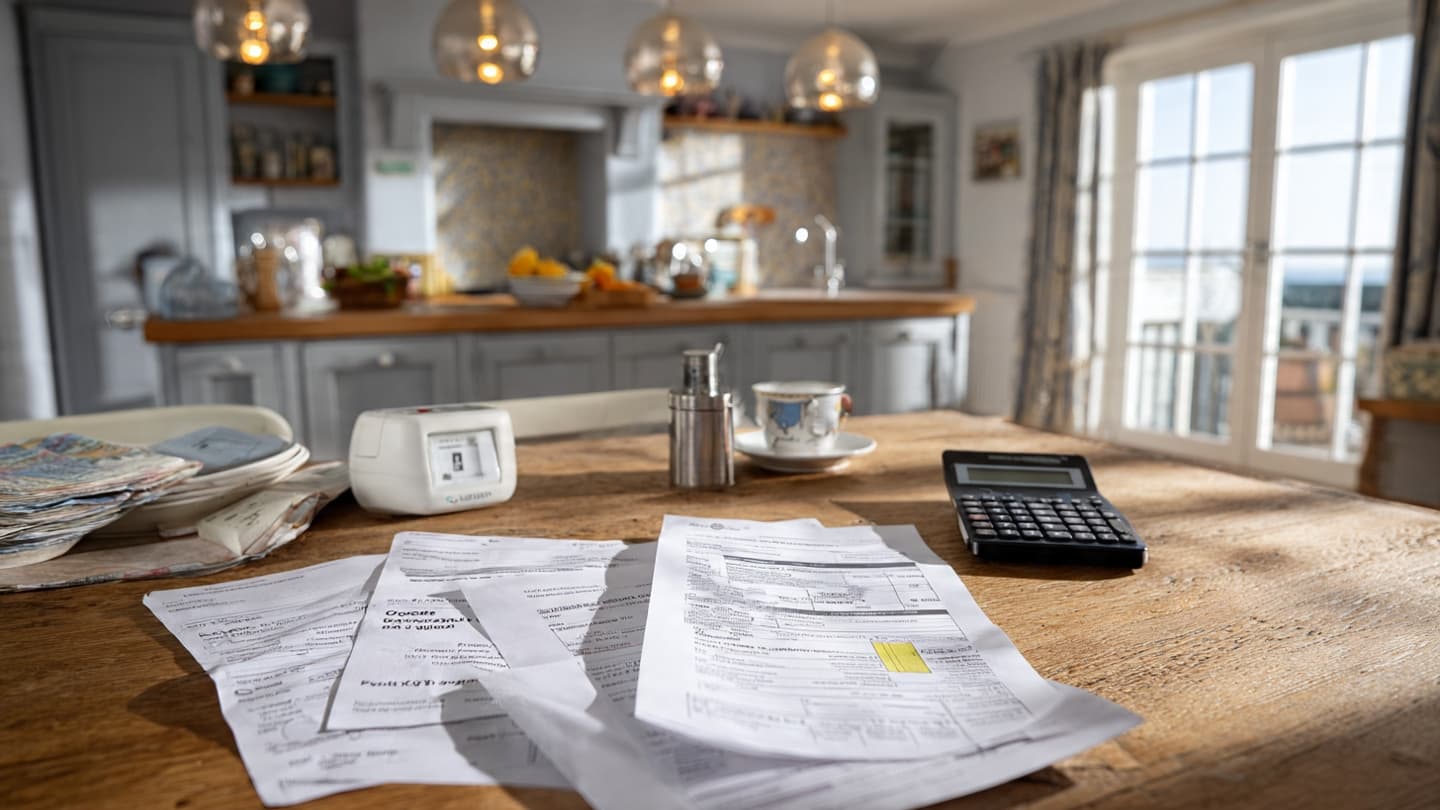
Prices have a way of changing the atmosphere of an ordinary month. A household opens an energy bill, walks through a supermarket or fills a car with fuel, and the wider economy becomes something tangible. In Britain, that everyday experience became slightly more expensive again in July as inflation moved higher after several months of relative moderation.
Consumer prices rose 2.9% year over year in July, according to the Office for National Statistics, up from 2.6% in June. Reuters reported that the increase was largely driven by a sharp rise in household energy costs following a change in the regulated price cap.
The July figure was broadly in line with economists' expectations, although it came slightly above the Bank of England's recent forecast of 2.8%. The movement means inflation remains above the central bank's 2% target, keeping attention focused on how quickly price pressures may ease during the remainder of the year.
Energy played the most visible role in the monthly change. The household energy price cap increased by around 13% in July, creating an immediate upward effect on consumer prices. For households, the statistical movement therefore had a familiar source: the cost of keeping homes warm, powered and connected to the grid.
Other parts of the inflation picture were less dramatic. Core inflation, which excludes energy and other volatile components, remained at 2.6%, while services inflation eased slightly to 3.4%. Food and non-alcoholic beverage inflation also slowed to 1.3%, helped in part by competition among supermarkets.
That contrast matters because the Bank of England watches underlying price pressures when considering interest rates. A rise caused largely by an energy adjustment can have a different meaning from a broad acceleration across services, goods and wages.
The labor market has also been showing signs of cooling. Private-sector wage growth slowed to 2.8% in the second quarter, while the number of job vacancies declined to its lowest level since 2014 when the pandemic period is excluded. The unemployment rate remained at 4.9%.
For consumers, however, inflation is experienced cumulatively. A slower rate of increase does not mean prices return to earlier levels; it means they are rising more slowly. That distinction continues to shape how households assess their spending, savings and monthly commitments.
The latest figures also leave the Bank of England balancing two different movements. Inflation has moved upward again, but some underlying indicators, including private-sector wage growth and services inflation, have softened. The central bank therefore has to distinguish between temporary energy effects and broader inflationary momentum.
Financial markets responded relatively calmly to the July figures because the increase was largely anticipated. Sterling remained firm against the U.S. dollar, while investors continued assessing whether the current inflation movement would fade as energy effects pass through the annual comparison.
Britain's inflation story is consequently still moving between two currents: household costs remain elevated, while some underlying pressures are gradually easing. The July data provide another piece of that picture, with the next readings expected to show whether the energy-driven increase proves temporary or becomes part of a broader shift in the country's price landscape.
Image Disclaimer
These visuals are AI-generated conceptual illustrations representing the economic conditions described and are not documentary photographs.
Sources
Reuters Office for National Statistics Bank of England BBC The Guardian
Published by Banx Network. This article is part of the Banx decentralized media programme, powered by the BXE token on the XRP Ledger.