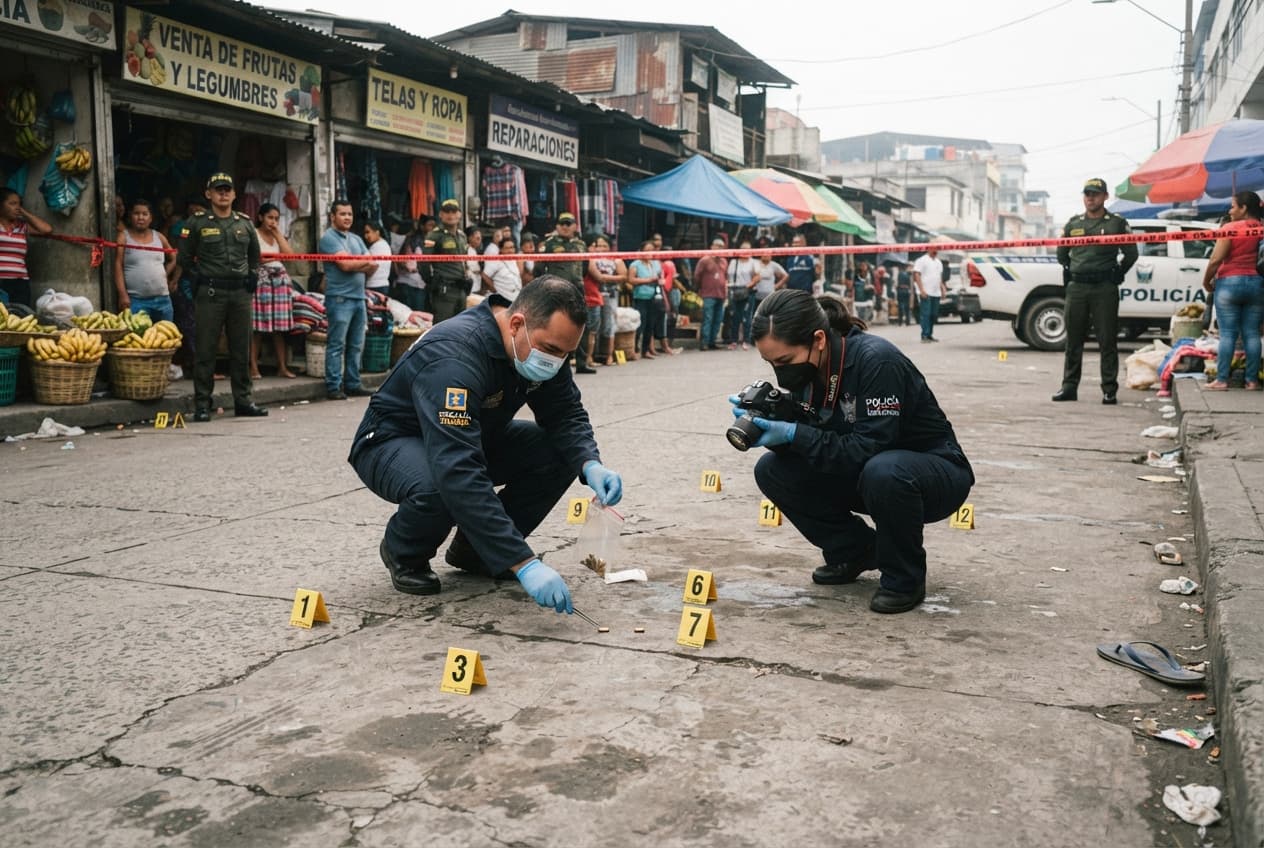
Night settled slowly over Guatemala City, though the streets never seemed entirely dark. Sirens drifted through narrow intersections like distant warnings carried by rain-heavy air, while the glow of storefront lights reflected against wet pavement and shuttered windows. In neighborhoods where routine had long learned to coexist with tension, the sound of helicopters overhead became another layer of the evening itself, circling above crowded districts already familiar with uncertainty.
Authorities in Guatemala extended emergency security measures this week following a series of coordinated gang attacks targeting police personnel and public security operations. The incidents, which unfolded across multiple areas, intensified concerns surrounding organized criminal activity and the growing strain placed upon law enforcement agencies attempting to contain escalating violence throughout the country.
Officials reported that armed groups launched attacks against police units in what appeared to be deliberate and organized operations connected to larger criminal networks. Security forces responded by increasing patrol presence, expanding checkpoints, and reinforcing tactical deployments in several high-risk districts. Emergency powers previously introduced under national security directives were extended as authorities attempted to stabilize affected areas.
The atmosphere surrounding the city shifted visibly in the aftermath. Public transportation routes experienced disruptions while local businesses adjusted operating hours amid heightened police activity. Residents described evenings marked by heavier patrols, blocked intersections, and a persistent awareness that violence could emerge suddenly within ordinary movement. The tension did not erupt loudly everywhere at once; instead, it spread gradually through caution, rumor, and silence.
For many communities, the events reflected deeper fractures that have shaped parts of Guatemala for years. Organized gangs continue to exert influence through extortion networks, territorial intimidation, and attacks aimed at security institutions. Analysts observing the region noted that direct assaults against police forces often signal attempts by criminal groups to demonstrate operational reach while testing the government’s response capacity.
The attacks also placed renewed pressure upon emergency services and local authorities already managing complex security demands across urban and rural regions alike. Officers were reportedly redeployed toward strategic corridors while investigative teams coordinated with intelligence divisions to identify individuals connected to the assaults. Authorities did not immediately release complete casualty figures linked to all incidents, though several injuries and fatalities were confirmed in preliminary reports.
Outside official statements, the emotional weight settled most heavily within everyday routines. Parents hurried children indoors before sunset. Market vendors spoke quietly while watching patrol vehicles pass through intersections. In crowded districts where music and traffic usually layered the night with movement, moments of unusual stillness began appearing between bursts of activity. Fear rarely arrives as spectacle alone; sometimes it enters through altered habits and shortened conversations.
International observers and regional security analysts continued monitoring developments closely as Guatemala attempted to prevent further escalation. Concerns remain over the adaptability of organized criminal groups operating throughout Central America, where alliances, trafficking routes, and local power struggles often intersect across borders. Emergency measures, while immediate in purpose, also underscored the long-term challenge of rebuilding public security in communities shaped by persistent violence.
By late evening, government officials stated that reinforced operations would remain active while investigations continued into the coordinated attacks. Security checkpoints and tactical patrols are expected to remain visible across several Guatemalan regions as authorities work to contain further threats connected to organized gang activity.
Published by Banx Network. This article is part of the Banx decentralized media programme, powered by the BXE token on the XRP Ledger.