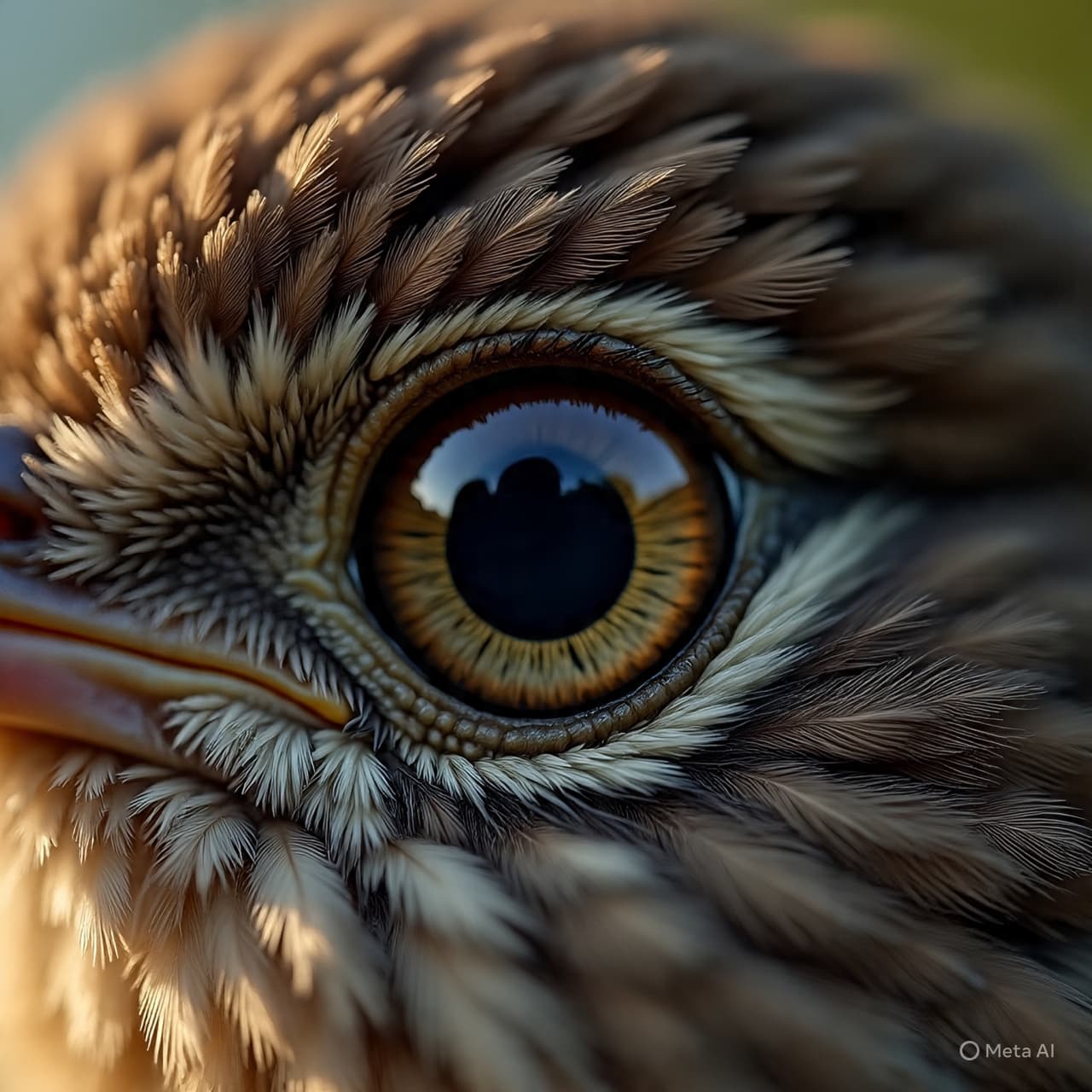
In the quiet scrutiny of a bird’s gaze, scientists have glimpsed a puzzle both delicate and profound. A mysterious structure, hidden within the eyes of certain species, may explain an unusual absence of visible blood—a feature that has long intrigued ornithologists and biologists alike. Amid the soft rustle of feathers and the subtle arc of wings, this discovery illuminates the hidden intricacies of avian design.
The eyes, already windows into perception, become laboratories of evolutionary innovation. Researchers note that the structure appears to regulate oxygen and nutrient flow in ways that minimize the presence of red blood cells in the retina, a subtle adaptation that sharpens vision while maintaining clarity. In the interplay of light and shadow across a bird’s world, this small but critical feature allows creatures to navigate with astonishing precision, from the sweep of a raptor over open plains to the dart of a songbird through forest canopies.
Beyond mechanics, the finding invites reflection on nature’s quiet ingenuity. Evolution often operates in invisible ways, crafting solutions that escape immediate notice yet prove vital for survival. Here, in the unassuming arc of an eye, is a story of efficiency and elegance—a reminder that even the smallest structures can hold profound secrets.
As ornithologists continue to map and model this ocular marvel, the birds themselves glide on, unaware, carrying a testament to the silent creativity that shapes life on Earth.
AI Image Disclaimer Illustrations were created using AI tools and are not real photographs.
Sources Nature Science Daily National Geographic The Guardian Scientific American
Published by Banx Network. This article is part of the Banx decentralized media programme, powered by the BXE token on the XRP Ledger.