
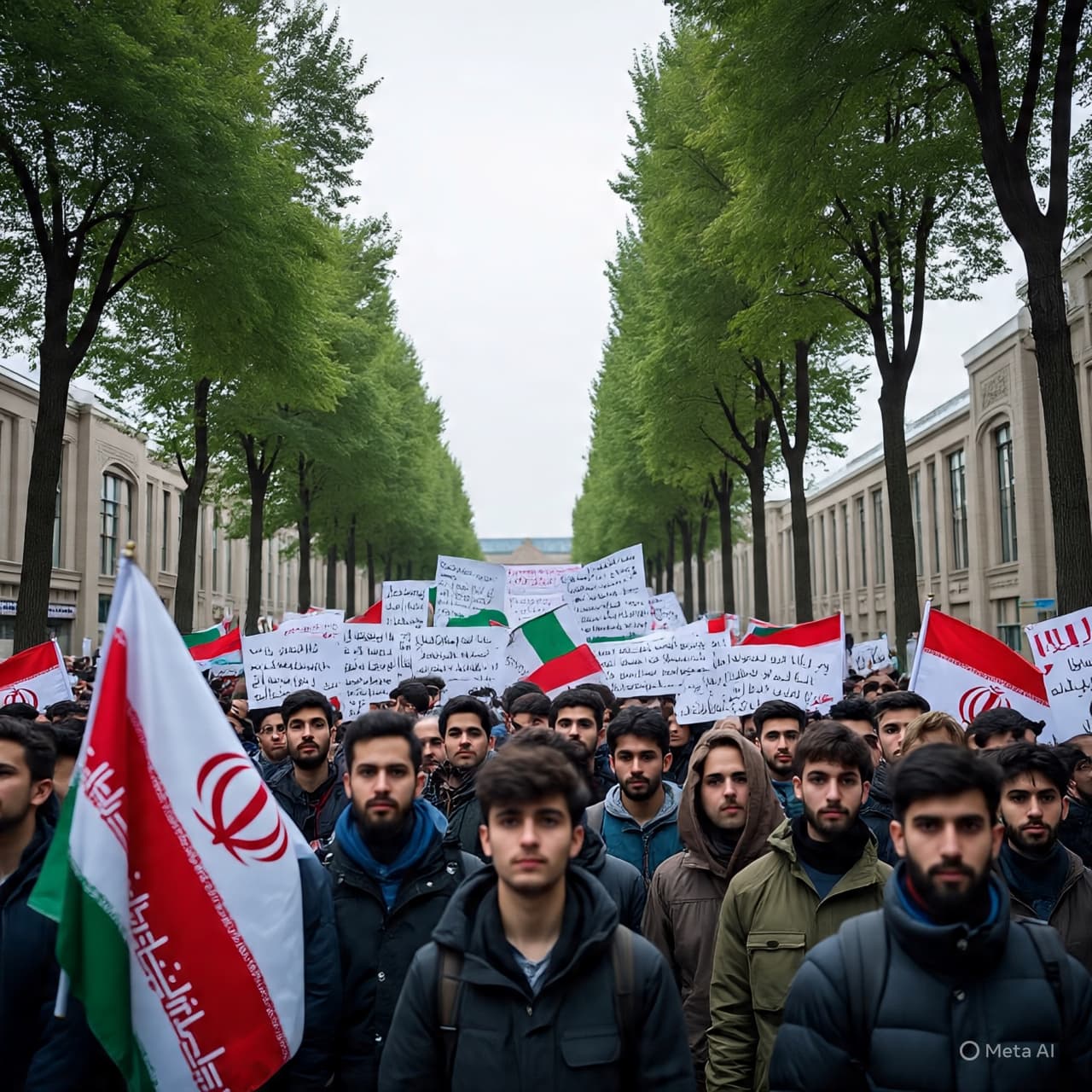
On the streets of Tehran and cities across Iran, chants ripple through narrow alleys and wide boulevards alike, a chorus both defiant and urgent. Students, young and resolute, gather outside university gates, their voices rising against a backdrop of security forces, posters, and the ever-present hum of city life. For a third consecutive day, demonstrations have carried the same refrain: “Death to the dictator.”
The protests, led primarily by university students, mark a sustained expression of dissent against the current leadership of Ebrahim Raisi and broader political conditions. Demonstrators are demanding reform, freedom of expression, and accountability, citing restrictions on civil liberties, economic pressures, and a perception of systemic corruption.
Local authorities have deployed security forces to key locations, aiming to contain crowds while preventing escalation. Witnesses report confrontations at some sites, with arrests and dispersals taking place, though the majority of gatherings remain largely peaceful. The persistence of the demonstrations signals deep frustration among younger generations, who view their universities as both a space of learning and a stage for civic engagement.
Iranian students have historically been at the forefront of political movements, from the protests of the late 1990s to the Green Movement of 2009. Analysts suggest that the current wave reflects accumulated grievances: inflation, unemployment, and limitations on social freedoms that directly affect the daily lives of young Iranians. Social media and encrypted messaging apps continue to play a key role in organizing and broadcasting the events, despite government efforts to monitor and restrict online activity.
While international media cover the demonstrations cautiously due to access restrictions, reports indicate that solidarity protests have occurred in diaspora communities abroad, echoing the slogans heard in Tehran. Observers note that repeated student-led protests carry both symbolic and practical weight: universities are historically protected spaces, and young voices carry the promise of longer-term societal impact.
The government has condemned the protests as unlawful, emphasizing national security and public order. Yet for participants, the repetition of rallies over consecutive days underscores a belief that silence is complicity, and that collective action, even in the face of risk, is necessary to press for change.
As Tehran navigates another day of student-led demonstrations, the rhythm of city life — traffic, commerce, study — persists alongside a palpable tension. Each chant, each banner, each step along the pavement signals a generation’s determination to be seen and heard, balancing hope, fear, and courage in the streets of their nation.
AI Image Disclaimer Visuals are AI-generated and serve as conceptual representations.
Sources BBC News Al Jazeera The Guardian Reuters
Published by Banx Network. This article is part of the Banx decentralized media programme, powered by the BXE token on the XRP Ledger.
.jpg&w=3840&q=75 "US Declares Drought Disaster for Parts of Puerto Rico as Dry Conditions Persist")

