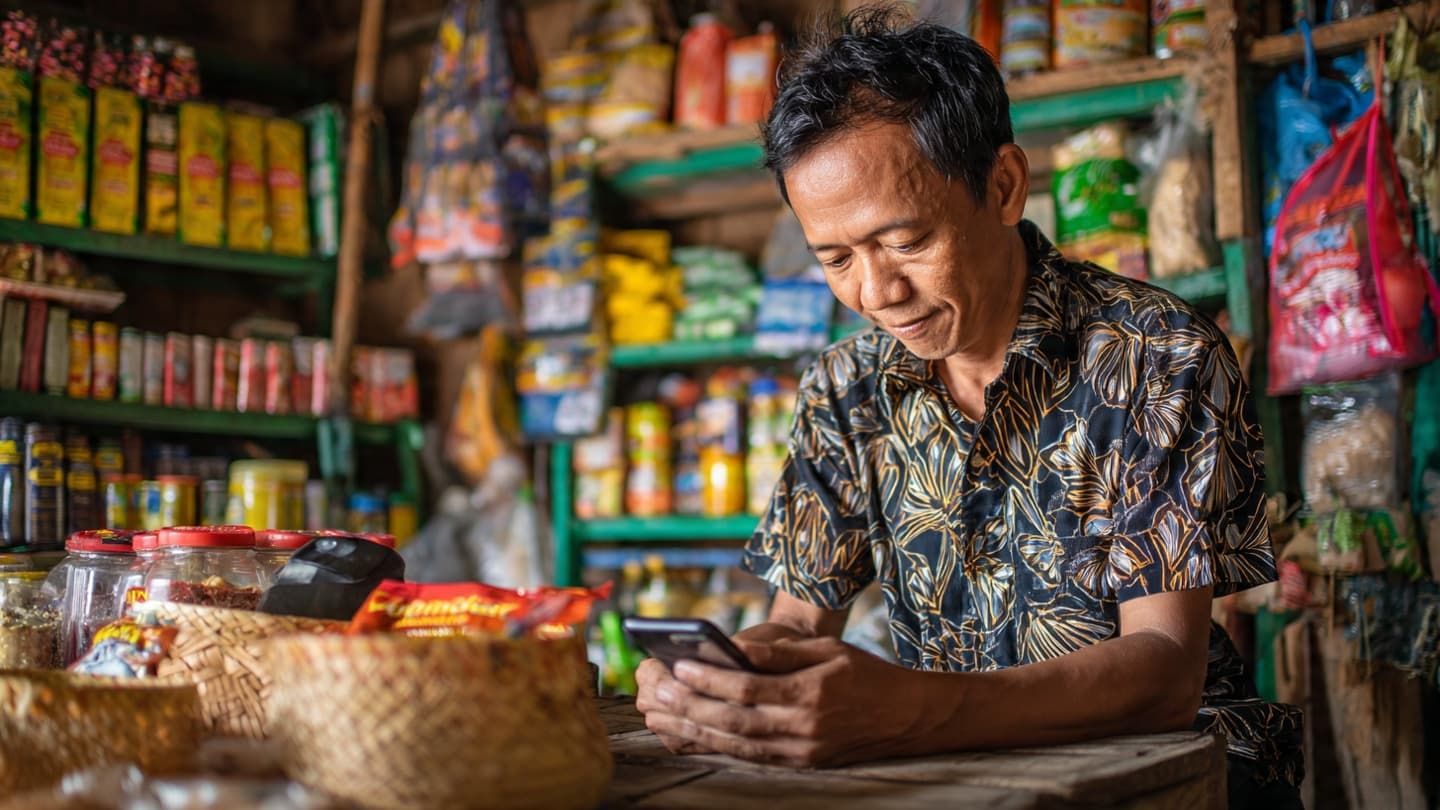
Indonesia’s digital economy often begins with something small: a phone in a shopkeeper’s hand, a payment made without cash, or a package traveling from a warehouse toward a distant island. Across an archipelago spread over thousands of kilometers, these individual transactions are becoming part of a much larger commercial network.
The country has developed one of Southeast Asia’s largest digital economies, supported by rapid smartphone adoption, expanding internet access and growing use of online commerce and financial technology.
E-commerce has become particularly important. Large platforms connect consumers with sellers in cities and smaller communities, while social-commerce models have created additional routes for businesses to reach customers without maintaining conventional retail stores.
Digital payments are changing everyday commerce as well. QR-based transactions allow small businesses to accept electronic payments using relatively simple technology, reducing dependence on cash and creating digital records of transactions.
The expansion has also attracted financial technology companies. Digital wallets, lending platforms and other services have sought to reach consumers who historically had limited access to traditional banking.
Yet Indonesia’s geography presents a distinctive challenge. An online transaction may be completed in seconds, but the physical product still needs to travel across roads, ports and islands. Logistics therefore remains one of the foundations beneath the digital economy.
For smaller businesses, digital platforms can provide access to customers far beyond their immediate neighborhoods. A producer in a regional city can potentially sell to consumers in Jakarta or other distant markets without opening a physical store there.
At the same time, competition among digital platforms is intensifying. Companies must balance customer acquisition with profitability, while regulators continue developing rules covering payments, consumer protection and digital commerce.
The result is an economy in which the digital and physical worlds increasingly overlap. A smartphone may initiate a purchase, but warehouses, delivery workers, payment systems and local businesses complete it.
Indonesia’s digital economy therefore continues to develop through a combination of technology adoption, consumer demand and investment in infrastructure. As more businesses and consumers participate, the country’s online marketplace is becoming another important layer of its broader commercial landscape.
AI Image Disclaimer The accompanying visuals are AI-generated conceptual representations and are not photographs of actual Indonesian businesses, platforms or transactions.
Sources Reuters Google, Temasek and Bain & Company Bank Indonesia Indonesia Ministry of Communication and Digital Affairs Indonesia Ministry of Trade
Published by Banx Network. This article is part of the Banx decentralized media programme, powered by the BXE token on the XRP Ledger.