Cities often reveal their ambitions through the buildings they choose to raise. A new tower, a new district, or an emerging financial quarter can become a quiet expression of how a country imagines its place in the world. Indonesia is now preparing another such chapter through plans for an international financial center.
The government estimates that the proposed Indonesia International Financial Center could attract between 300 trillion rupiah and 500 trillion rupiah in investment, equivalent to roughly $16.6 billion to $27.8 billion. The estimate includes potential investment from foreign banks and other financial businesses.
The project is intended to strengthen Indonesia’s position within the regional financial landscape. For years, many Indonesian investors and wealthy families have used financial centers elsewhere in Southeast Asia, particularly Singapore, for wealth management and international financial services. The proposed center is designed to create more of those opportunities domestically.
The government has been developing a legal framework for the project, including provisions concerning taxation, financial regulation, and dispute resolution. Proposed incentives have included substantial tax benefits for qualifying investors, reflecting the competitive environment among established financial hubs in Asia and the Middle East.
Location remains an important part of the story. Authorities have discussed several possibilities, with Bali previously mentioned as one potential destination, although the government had not finalized the location when the investment estimate was announced. The eventual choice could influence how the center connects with Indonesia’s wider economy.
The proposed financial center would also require an institutional structure capable of supervising activities within it. Plans have included a dedicated governmental body, a supervisory framework, arbitration arrangements, and a special court for disputes arising within the financial centers.
For international investors, such infrastructure can matter as much as tax incentives. Financial businesses generally look for predictable regulations, efficient dispute resolution, access to skilled workers, and reliable connections with other markets. A new financial district therefore needs more than buildings; it needs an ecosystem.
Indonesia’s size provides an important foundation. As Southeast Asia’s largest economy, the country offers a substantial domestic market alongside growing connections to regional trade and investment. A successful financial center could potentially serve both domestic businesses seeking international capital and foreign institutions seeking access to Indonesia.
The project nevertheless enters a region where established financial centers already compete for global capital. Singapore, Hong Kong, Dubai, and other hubs have spent decades developing financial infrastructure and international networks. Indonesia’s challenge will be to create a proposition strong enough to attract businesses that already have choices elsewhere.
For now, the proposed center remains part of Indonesia’s broader effort to deepen its financial sector. With projected investment reaching as much as $27.8 billion, the initiative places financial infrastructure alongside manufacturing, trade, and technology as another possible channel for Indonesia’s economic expansion.
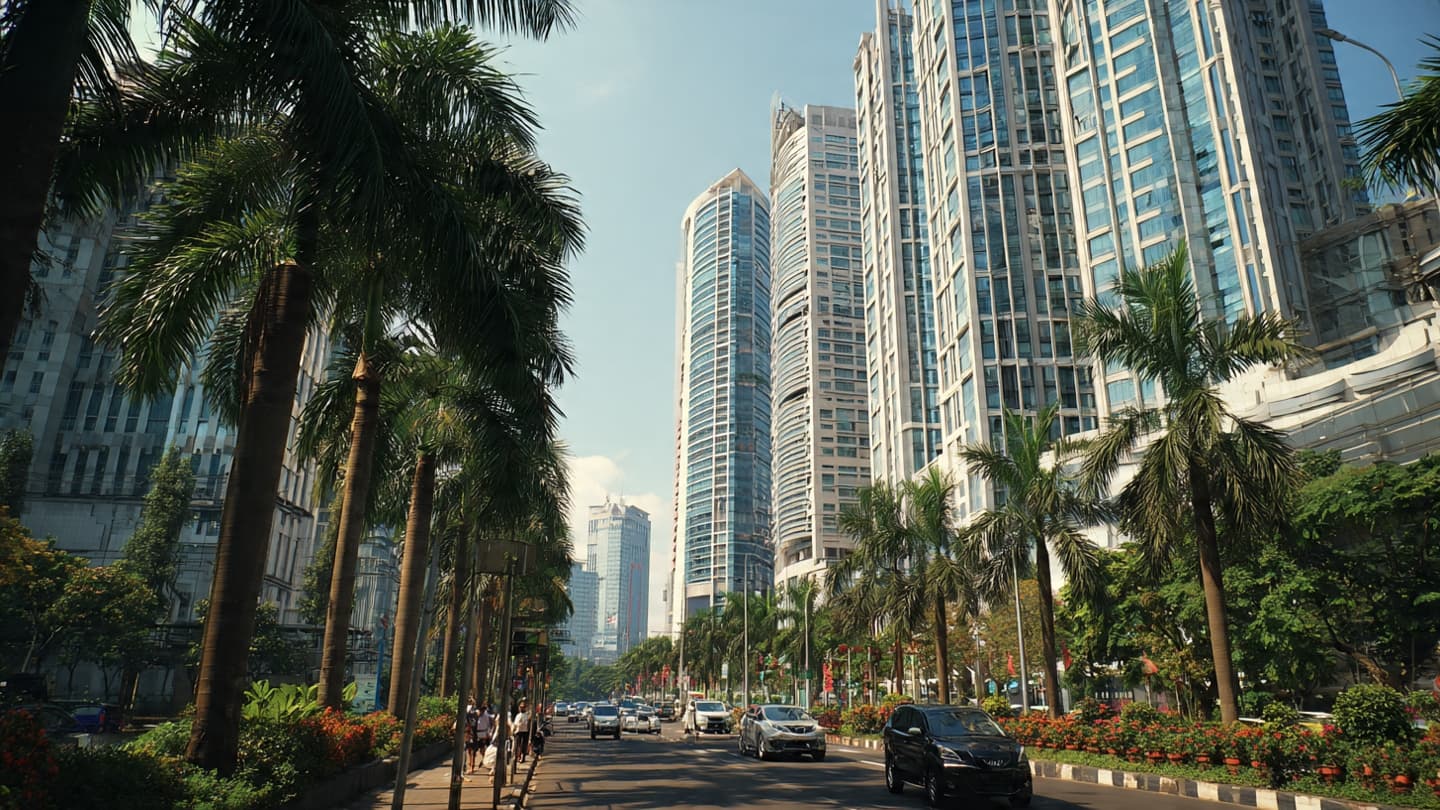
AI Image Disclaimer The visuals accompanying this article are AI-generated conceptual illustrations and do not represent actual photographs of the proposed financial center.
Sources Reuters ANTARA News The Jakarta Post
Published by Banx Network. This article is part of the Banx decentralized media programme, powered by the BXE token on the XRP Ledger.