Economic recovery rarely arrives with a single dramatic moment. It often moves quietly through investment decisions, factory floors, exports, and the gradual return of confidence. In Germany, the latest forecasts suggest that such movement is beginning to appear more clearly.
The German government has raised its economic growth forecast for 2026 to 1.3%, compared with 0.5% in its April projection. The forecast for 2027 was also increased, from 0.9% to 1.1%.
The revised figures were reported by Reuters based on a person familiar with the government's draft forecast. The Economy Ministry is scheduled to formally present the updated projections on October 8.
Germany's economy grew 0.3% in the second quarter, according to the report. Government-backed investment in infrastructure and spending related to strengthening the country's armed forces have become important elements of the current economic picture.
Exports are also expected to contribute to growth. The government reportedly expects German exports to increase 3.7% in 2026 before growth slows to 2.1% in 2027 and 1.1% in 2028.
The stronger outlook arrives despite significant pressures. Energy prices have risen amid conflict in the Middle East, while uncertainty surrounding U.S. tariffs continues to affect international trade and business planning.
Inflation remains another part of the equation. The government reportedly expects inflation of 2.7% in 2026 and 3.0% in 2027 before easing to 2.2% in 2028. Those figures illustrate how economic expansion can coexist with continued pressure on household purchasing power.
Domestic consumption is expected to remain relatively restrained, with the government projecting growth of 0.8% in 2026 and 1.1% in 2027. The recovery is therefore being shaped by several different forces rather than by a broad acceleration in every part of the economy.
The revised forecast also arrives as Germany's manufacturing sector records continued expansion. Separate September data showed production rising for a ninth consecutive month, while new orders increased for a fourth month.
For Europe's largest economy, the coming months will reveal how durable these signs of improvement become. For now, the government's revised numbers offer a different landscape from the subdued forecasts earlier in the year: not a sudden transformation, but a measured adjustment toward stronger expectations as investment, exports, and industrial activity provide fresh momentum.
SEO SLUG
germany-economic-growth-forecast-2026-2027
HASHTAGS
#Germany #GermanEconomy #EconomicGrowth #Business #Industry #Exports #Investment #Europe
IMAGE DISCLAIMER
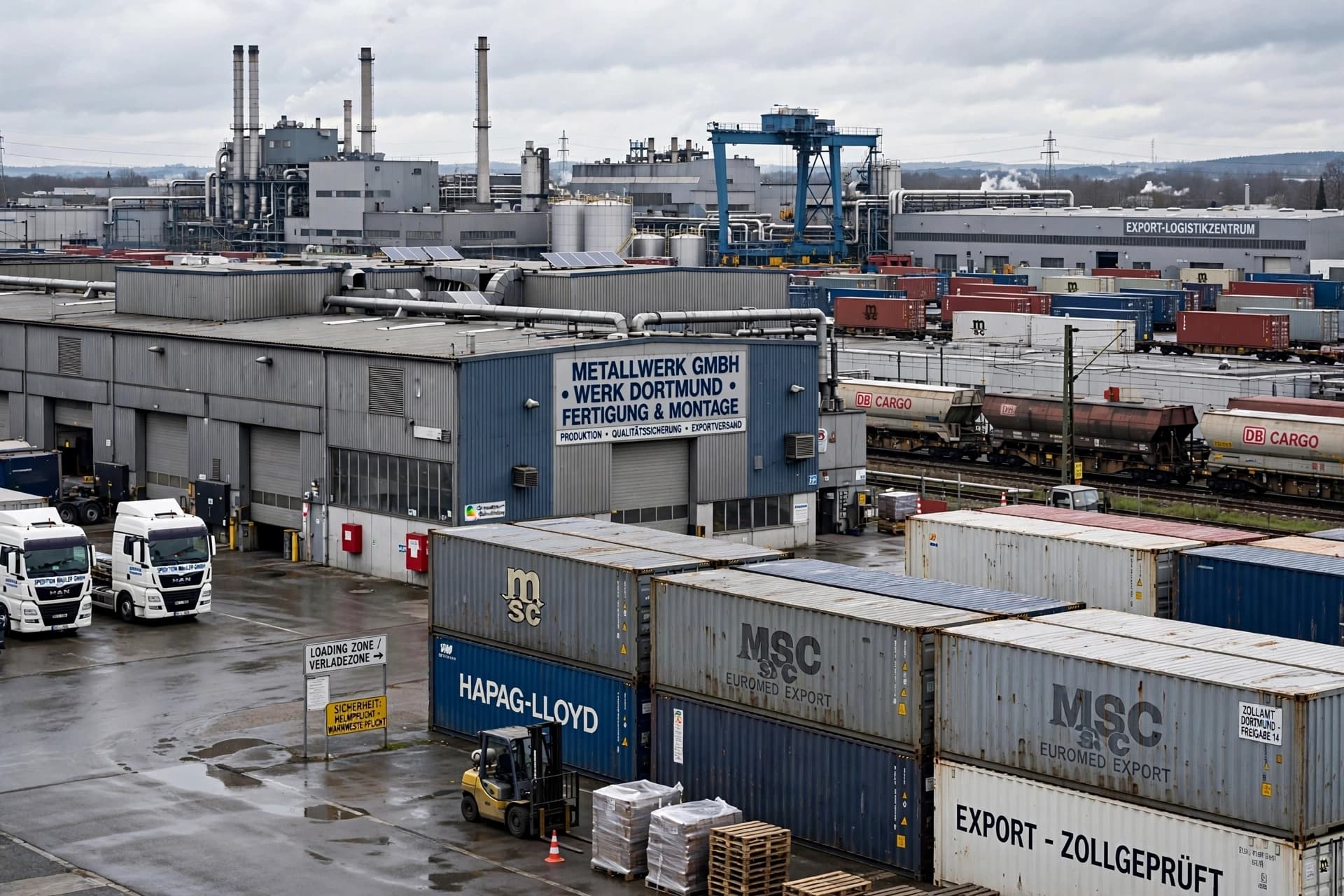
This AI-generated visual is a conceptual representation of Germany's economic outlook and does not depict an actual government forecast presentation or specific economic event.
SOURCES
Reuters German Federal Ministry for E
Published by Banx Network. This article is part of the Banx decentralized media programme, powered by the BXE token on the XRP Ledger.