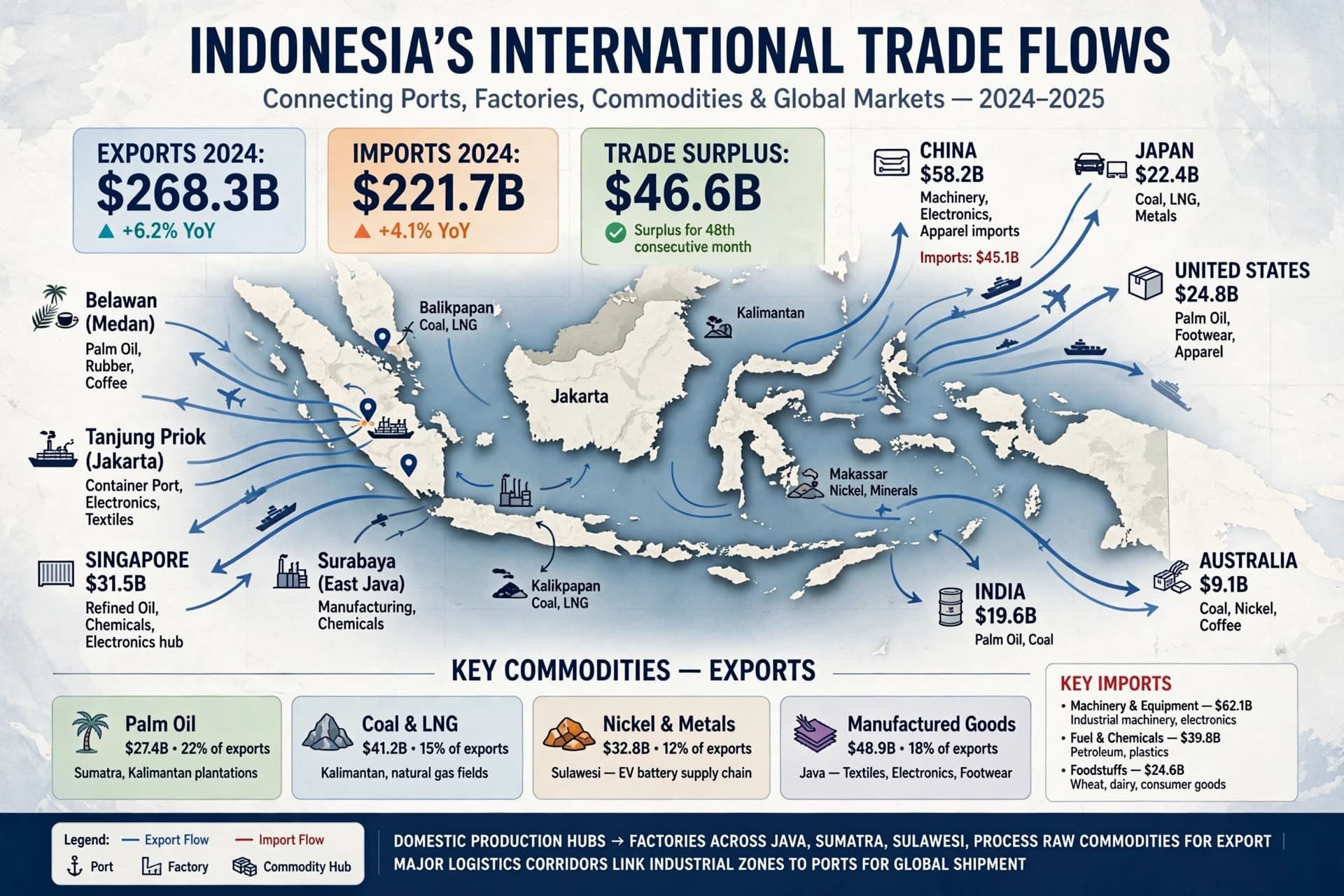
In August 2026, that rhythm produced a larger-than-expected trade surplus of approximately $3.55 billion. The result exceeded market expectations and showed that Indonesia continued to export more goods in value terms than it imported during the month.
A trade surplus occurs when the value of exports exceeds the value of imports. For Indonesia, the balance has become an important indicator of the country's external economic position, particularly because exports of commodities and manufactured goods remain significant sources of foreign revenue.
The August figure reflects activity across multiple sectors. Indonesia is a major exporter of resources such as coal, palm oil, minerals, and other commodities, while manufactured products also contribute to export performance.
Commodity prices can influence the value of exports considerably. Changes in global demand, energy markets, agricultural conditions, and industrial activity can therefore affect Indonesia's trade balance from one month to another.
Imports tell another part of the story. Indonesia purchases machinery, industrial components, consumer products, raw materials, and other goods from international markets. Some imports are directly connected to domestic production and investment.
A strong surplus can support Indonesia's external accounts, but it does not automatically describe the condition of every part of the economy. Export performance can vary by sector, while domestic consumption and investment follow their own patterns.
The composition of trade also matters. A surplus driven heavily by raw commodities can respond differently to changes in global prices than one supported by a broader range of manufactured and processed products.
For businesses, the trade figures provide another indication of international demand. Exporters monitor global prices, shipping costs, currency movements, and the economic conditions of major trading partners when making production and investment decisions.
Behind the $3.55 billion figure are ships crossing seas, factories preparing goods, farmers producing commodities, and companies negotiating contracts across borders. The monthly surplus is ultimately a snapshot of those movements—a number that records, for a brief moment, how Indonesia's economic relationship with the world tilted toward exports.
SEO SLUG
indonesia-trade-surplus-3-55-billion-august-2026
HASHTAGS
#Indonesia #Trade #Exports #Imports #Business #Economy #GlobalTrade #TradeSurplus
IMAGE DISCLAIMER
This AI-generated image is an editorial illustration and does not depict an actual Indonesian port, shipment, company, or specific trade transaction.
SOURCES
Reuters Statistics Indonesia Bank Indonesia
Published by Banx Network. This article is part of the Banx decentralized media programme, powered by the BXE token on the XRP Ledger.