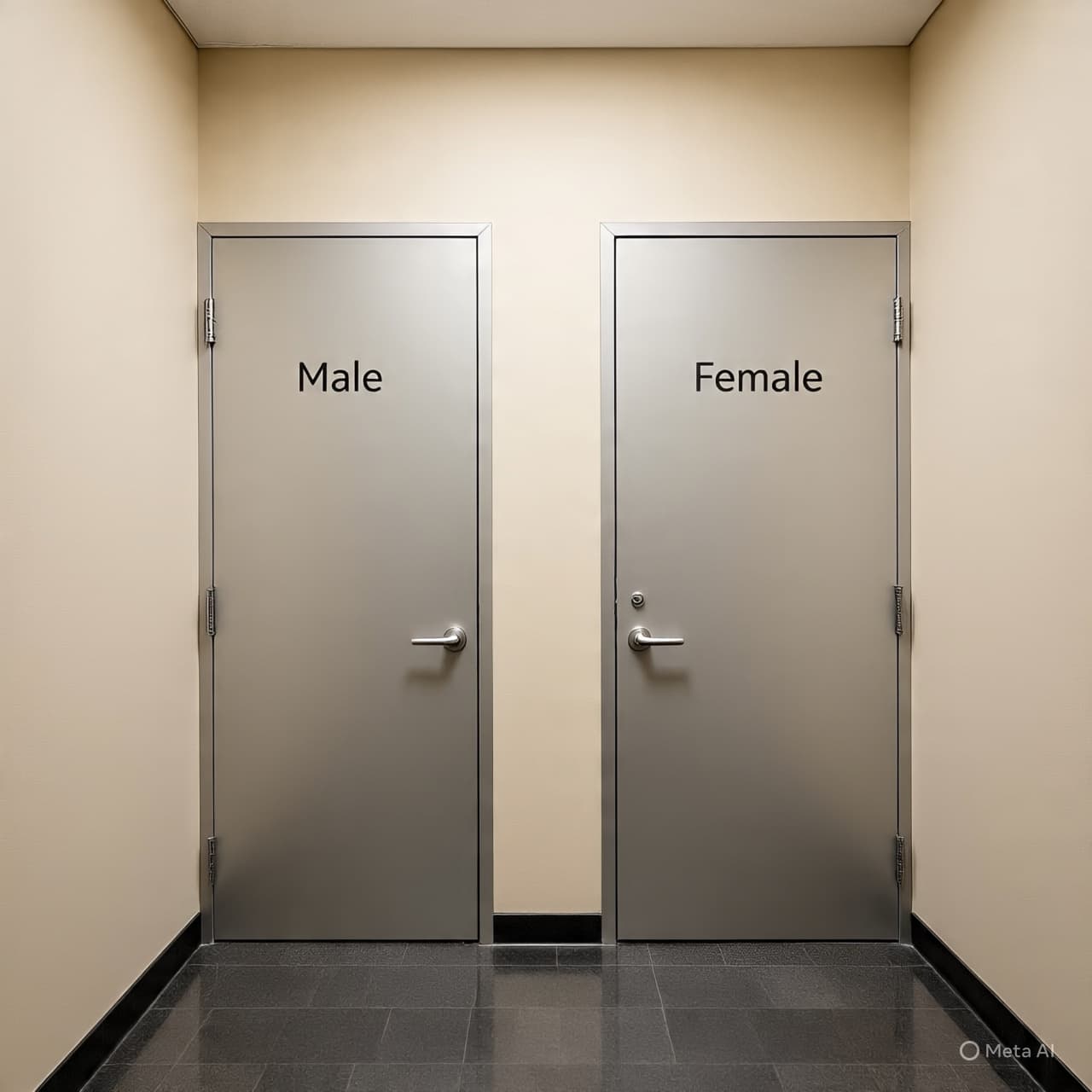
There are places we move through without thinking—doorways, corridors, rooms that exist simply to serve a purpose. They are part of the quiet infrastructure of daily life, so familiar that they rarely invite reflection. And yet, from time to time, these ordinary spaces become something else entirely.
In Idaho, a new law has brought such a shift into focus.
The legislation, recently enacted, introduces restrictions on the use of certain bathrooms in private businesses, particularly affecting transgender individuals. Under the law, access to facilities is tied more explicitly to definitions set out in statute, narrowing what had previously been, in many cases, left to the discretion of businesses or guided by broader anti-discrimination frameworks.
What changes here is not only policy, but the meaning of space. A restroom—typically unremarkable, functional, and transient—becomes a point of interpretation, where identity, privacy, and regulation intersect. The act of entering such a space, once automatic, may now carry a layer of consideration that did not exist before.
Supporters of the law describe it as a measure intended to provide clarity and address concerns around safety and privacy within private establishments. In their view, the legislation establishes boundaries where ambiguity had led to uncertainty.
Opponents, meanwhile, see the change differently. They argue that the law introduces restrictions that disproportionately affect transgender individuals, shaping everyday experiences in ways that may lead to exclusion or discomfort. Advocacy groups have raised concerns about how the law will be implemented, and whether it may face legal challenges.
As with many legislative developments, the impact will not be felt all at once. It will emerge gradually, in the small moments of daily life—in decisions made by businesses, in the experiences of individuals, in the interpretations that unfold over time.
There is a particular stillness in this stage, before the full effects are known. The law exists, but its meaning continues to take shape, influenced by response, adaptation, and, potentially, further review.
Idaho has enacted a law restricting the use of certain bathrooms in private businesses based on legal definitions of sex, affecting transgender individuals. Supporters cite privacy concerns, while critics argue it may lead to discrimination. The law is expected to face scrutiny as its implementation begins.
AI Image Disclaimer: These visuals are AI-generated and intended for illustrative purposes only.
Sources: Associated Press Reuters The New York Times The Washington Post BBC News
Published by Banx Network. This article is part of the Banx decentralized media programme, powered by the BXE token on the XRP Ledger.