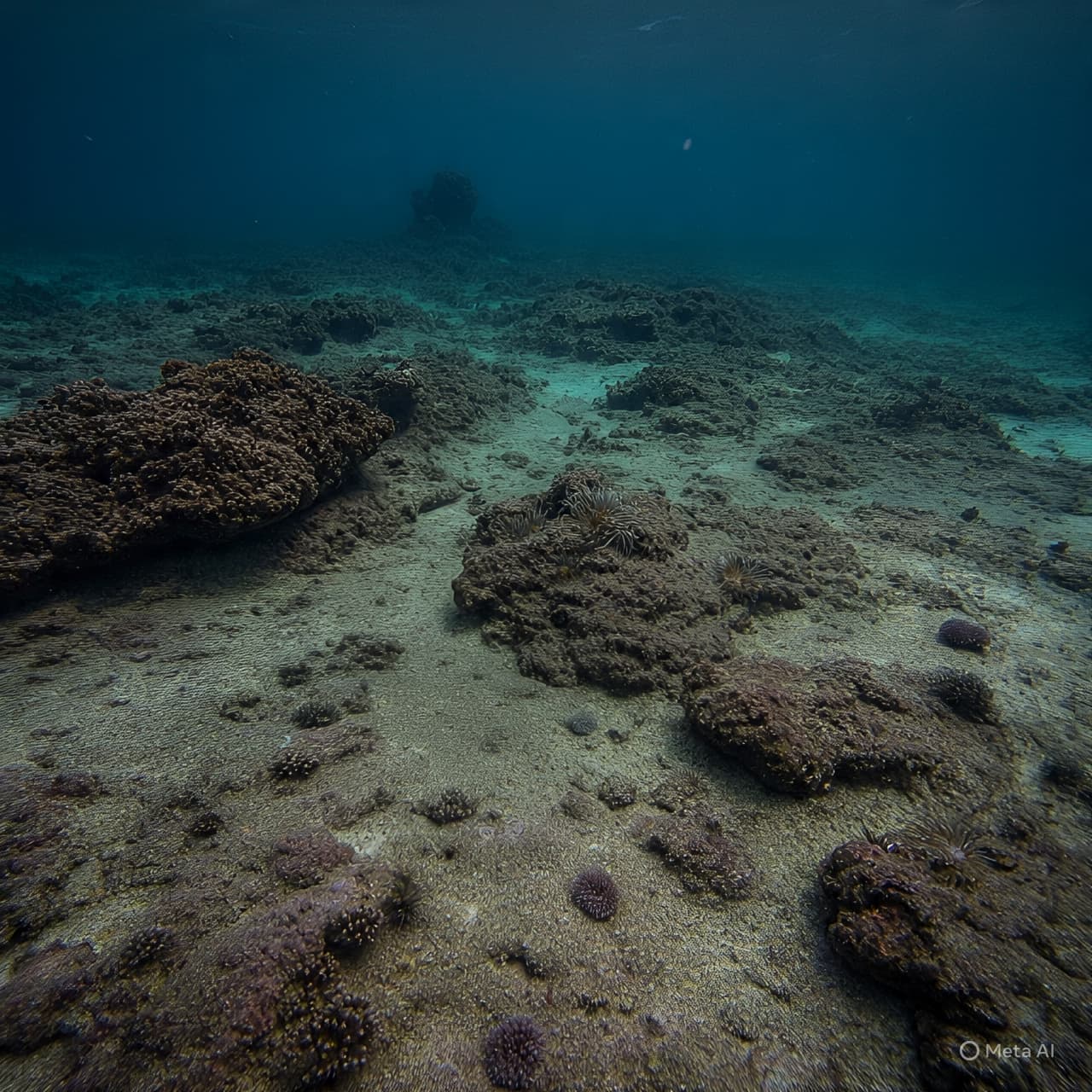
Far from coastlines and cities, where the sea stretches uninterrupted toward ice and sky, the Earth moves in ways few ever feel. Beneath the Southern Ocean, along a submerged boundary known more to geologists than to sailors, the planet’s crust continues its slow, restless negotiation. Here, sound is muffled by depth and distance, and change arrives not with collapse or spectacle, but with a measured release of pressure.
In recent hours, a magnitude 5.3 earthquake was recorded along the Western Indian–Antarctic Ridge, a remote tectonic boundary where plates gradually pull apart beneath thousands of meters of water. The tremor occurred deep below the ocean surface, far from inhabited land, in a region shaped by volcanic ridges and the steady widening of the seafloor.
Such earthquakes are a familiar feature of mid-ocean ridges, where tectonic plates diverge and molten rock rises slowly to form new crust. Unlike quakes near populated regions, these events rarely cause damage or draw immediate human attention. Their significance lies instead in what they reveal about the planet’s ongoing processes — the quiet mechanics that reshape the Earth over millions of years, far beyond daily concern.
The Western Indian–Antarctic Ridge stretches across the southern reaches of the globe, connecting segments of the global mid-ocean ridge system that encircles the planet like a submerged seam. Activity here is typically moderate, producing earthquakes that are closely monitored but seldom felt. Instruments detect the motion, chart its depth and magnitude, and then return to watchful silence.
Scientists note that a magnitude 5.3 quake, while notable on seismographs, is considered moderate and is unlikely to generate tsunamis or secondary hazards, particularly given its offshore location and tectonic setting. The energy released dissipates through water and rock, leaving little trace beyond recorded data and subtle adjustments deep below the surface.
Moments like these rarely enter public awareness, yet they form part of the continuous dialogue between the Earth’s layers. The planet does not move only when cities shake or coastlines fracture. It moves constantly, patiently, reshaping itself in places where no one stands to notice, except through the quiet vigilance of instruments and maps.
In clear terms, a magnitude 5.3 earthquake struck along the Western Indian–Antarctic Ridge, a remote undersea tectonic boundary, with no reports of damage or threat to populated areas.
AI Image Disclaimer Illustrations were created using AI tools and are not real photographs.
Sources (Media Names Only) Reuters United States Geological Survey European-Mediterranean Seismological Centre
Published by Banx Network. This article is part of the Banx decentralized media programme, powered by the BXE token on the XRP Ledger.