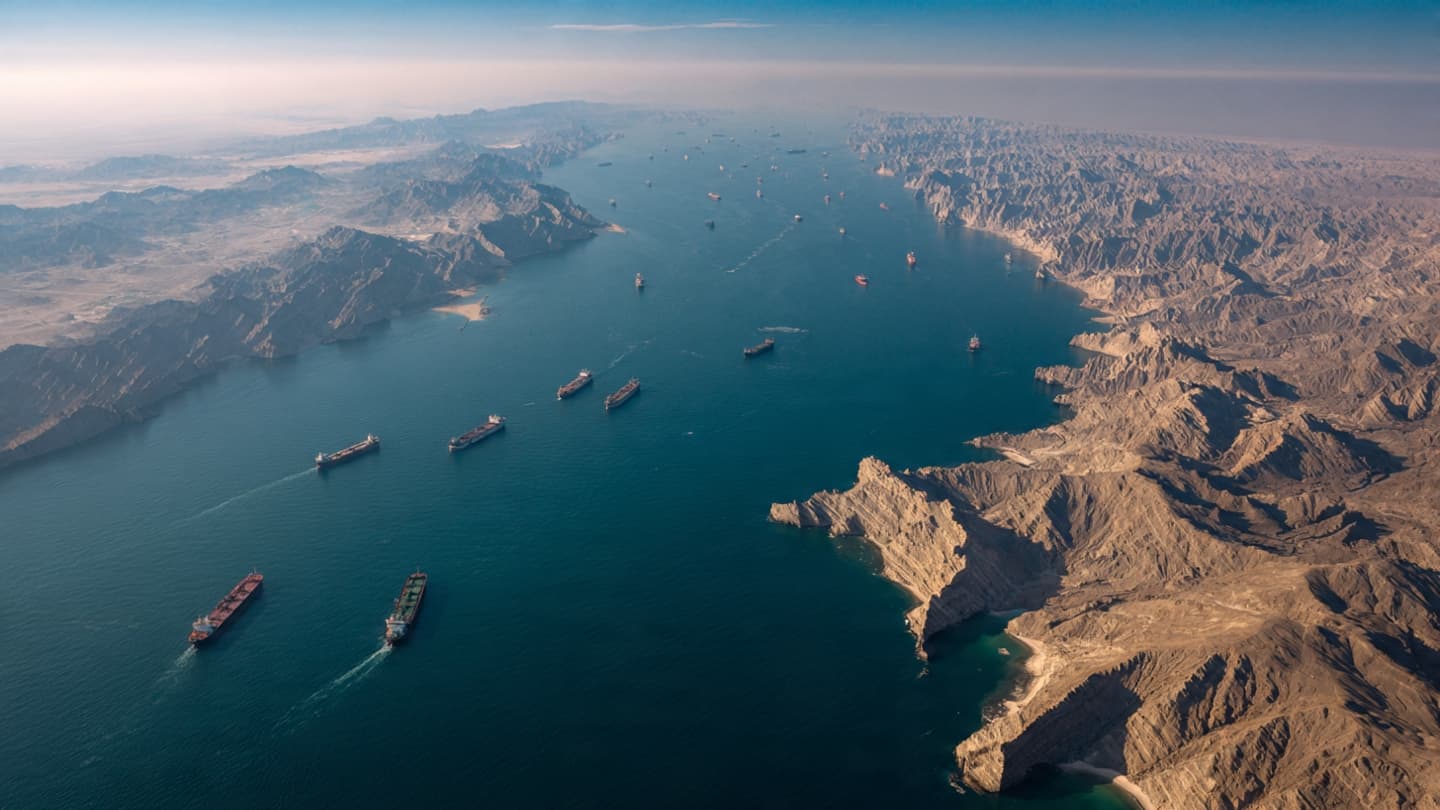
For years, the Strait of Hormuz has been one of the key cards on the world energy map. Within those narrow waters, ships carry vast amounts of oil and gas, making any disruption in the region immediately felt far beyond the Gulf.
However, after months of conflict and economic pressure, Iran's position is facing change. Reuters reports that the United States' economic campaign, including maritime blockades and stricter sanctions, has narrowed Iran's access to oil revenue, foreign currency, imports, and international financing networks.
The Strait of Hormuz remains a strategic route. Before the latest disruptions, about one-fifth of the world's oil and LNG supply passed through the area. Therefore, Iran's ability to disrupt traffic there has long been an important source of influence in its relations with other countries.
But the global market is slowly adjusting. Producer countries in the Gulf region are seeking alternative routes and shipping methods, while the energy market is trying to accommodate the reduced flows through traditional routes. Reuters notes that this adaptation has mitigated some of the economic impact that Tehran might have previously expected.
The effects are evident in the pressure on Iran's own economy. A shortage of foreign currency, weakening trade, rising prices, and difficulties in obtaining certain imported goods are all part of the increasingly felt pressure. Some Iranian officials are also concerned about the limitations on the supply of essential goods, including fuel and wheat.
Meanwhile, the oil market remains in a sensitive state. Brent prices briefly surpassed $100 per barrel in September after escalating conflict heightened concerns about global energy supply. However, this price increase also indicates that the market has not completely stalled; some supply is still finding ways to move.
Traffic in Hormuz itself has seen a sharp decline. Data from Kpler cited by Reuters shows that only six commodity ships passed through the strait on Tuesday, compared to nine ships the day before and an average of 12 ships over a 10-day period. Before the conflict, around 125 commercial ships per day used that route.
This situation complicates economic and security calculations. Iran still has an interest in maintaining its influence around the strait, while the United States is trying to use economic pressure to push for changes in Tehran's behavior. On the other hand, the global market continues to seek ways to reduce dependence on a single route.
For businesses, this uncertainty means costs that are harder to predict. Energy prices, shipping insurance, travel times, and supply availability are all affected by the situation in the region. The effects can ripple out to countries that are not even directly involved in the conflict.
Ultimately, the issue of Iran and Hormuz is not just about who has greater influence over a strait. It also illustrates how the global market can adapt to disruptions, while a country must reassess how long its economy can withstand pressure. Amid slow-moving ships and rapidly changing oil prices, the room for decision-making is becoming increasingly narrow.
Image Disclaimer: The visuals in this article are conceptual AI illustrations depicting the economic, shipping, and energy conditions around the Strait of Hormuz, not actual photos of specific conflicts or trade activities.
Sources: Reuters
Published by Banx Network. This article is part of the Banx decentralized media programme, powered by the BXE token on the XRP Ledger.