The industrial facility, a complex landscape of steel, wiring, and heavy machinery, exists as the backbone of our modern productive life. When a missile strike descends upon such a site, the sudden transition from ordered operation to chaotic ruin is profound. It is a moment that strips away the veneer of our industrial power, revealing the raw fragility of the structures we build and the individuals who operate within them. The search for survivors, unfolding amidst the jagged edges of what was once a humming production line, is a quiet, desperate testament to the value of every life.
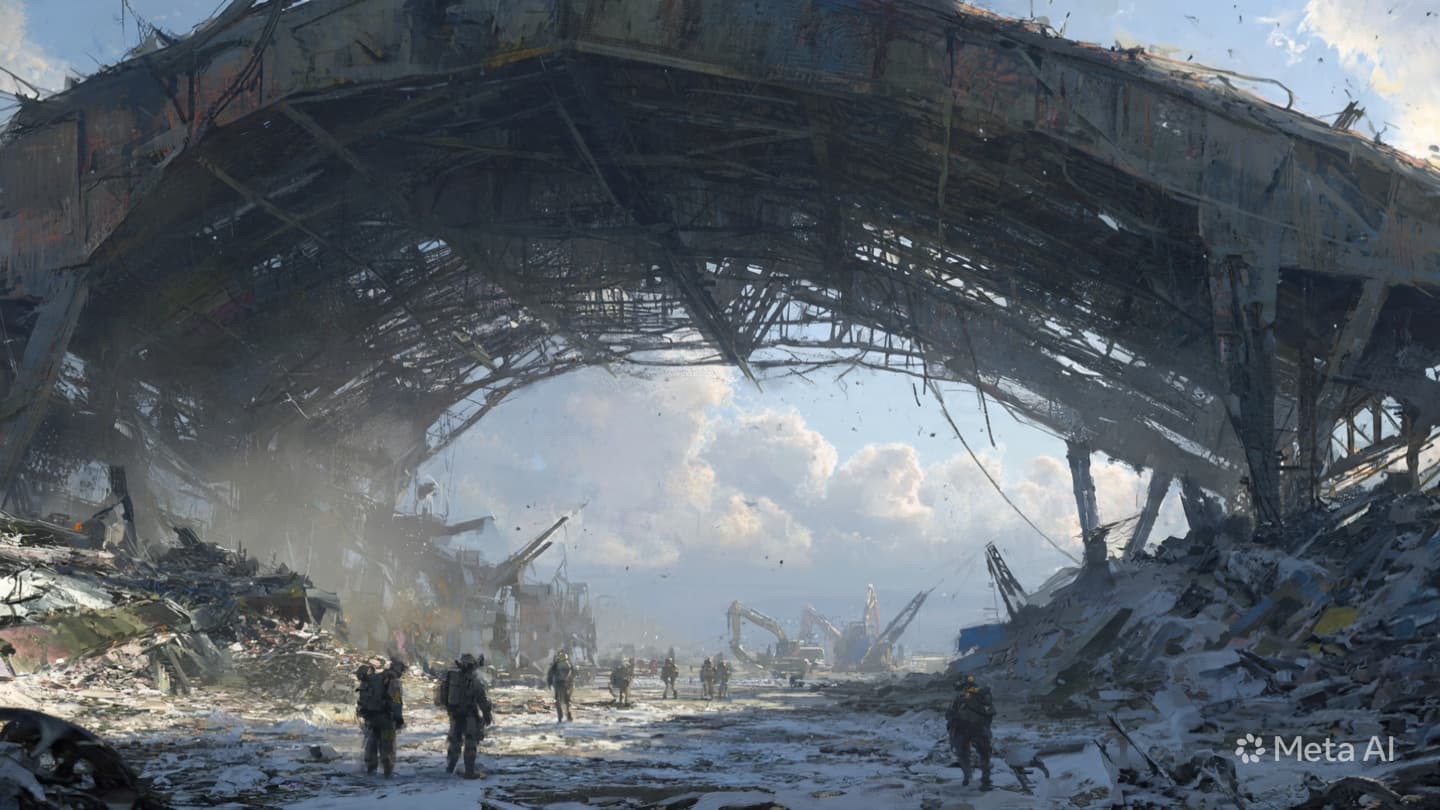
Smoke still clings to the site, a gray, lingering reminder of the fire that followed the impact. For the rescue teams, the environment is a labyrinth of unstable metal and shifting concrete, where every step must be weighed against the potential for further collapse. They move with a deliberate, haunting focus, listening for the faintest sound that might signal life beneath the weight of the wreckage. It is a work of immense patience and steady hands, an intimate dialogue between the rescuers and the broken remnants of the facility.
The atmosphere at the perimeter is one of suspended time, where family members and colleagues wait in a silence that is heavier than the smoke itself. There is a deep, human gravity in these waiting hours, a collective holding of breath as the rescue workers move deeper into the ruins. Each update from the site—a shift in the search pattern, the arrival of heavier equipment, the momentary pauses—is parsed for the smallest sliver of hope.
For the workers who escaped the strike, the facility is now a site of traumatic memory. They stand at the edge of the cordoned-off area, their presence a haunting mirror of the past, looking at the twisted steel where they had stood just hours before. The strike has not only fractured the infrastructure; it has broken the community’s sense of safety and the predictable rhythm of their daily work. It is a vivid reminder of how quickly the mundane can be transformed into the catastrophic.
The investigation into the strike is a necessary, albeit secondary, endeavor. The priority remains the search, a pursuit that elevates the human imperative of saving lives above the tactical or geopolitical reasons for the attack itself. It is a moment for editorial reflection on the nature of our resilience, and the reality that in the face of immense, sudden destruction, our only real response is the attempt to recover what we can and honor what has been lost.
As the hours stretch into days, the search continues with a stubborn, quiet intensity. The rescue teams are the anchors in this instability, their commitment a beacon of humanity in a landscape defined by the destructive force of a missile. Every successful recovery, no matter how arduous the path, stands as a small, powerful victory over the finality of the strike. It is a reminder that even in the most fractured of settings, the impulse to seek and to save remains the defining characteristic of our response to crisis.
Nature, meanwhile, continues its indifferent cycle around the ruins. The sun rises and sets, indifferent to the struggle unfolding within the industrial graveyard. Yet, for those involved in the search, the passage of time is measured by the progress through the debris and the endurance of their hope. They are writing a story of survival, one that is being composed in the very heart of the disaster, a slow, painstaking chronicle of effort against the silence.
The long-term impact on the facility and the workers will be significant, but for now, the focus remains on the immediate horizon of the next shift, the next cleared beam, and the next possibility of life. The strike has permanently altered the geography of the site, but it has also forged a new, temporary community of purpose among those working to find the missing. It is a testament to the persistence of the human spirit that even after the most devastating impacts, the work of finding the lost never truly ceases.
Following the June 22, 2026, missile strike on an industrial facility in Voronezh, rescue operations have entered their third day. Emergency crews continue to clear dense rubble and stabilize damaged sections of the main building, which was targeted due to its role in the production of electronic guidance systems. While five fatalities were confirmed immediately following the attack, rescuers are still searching for workers who were unaccounted for at the time of the impact. Authorities are utilizing thermal imaging and canine units to navigate the unstable site, while simultaneously managing the safety of the surrounding residential areas affected by the initial blast.
Published by Banx Network. This article is part of the Banx decentralized media programme, powered by the BXE token on the XRP Ledger.