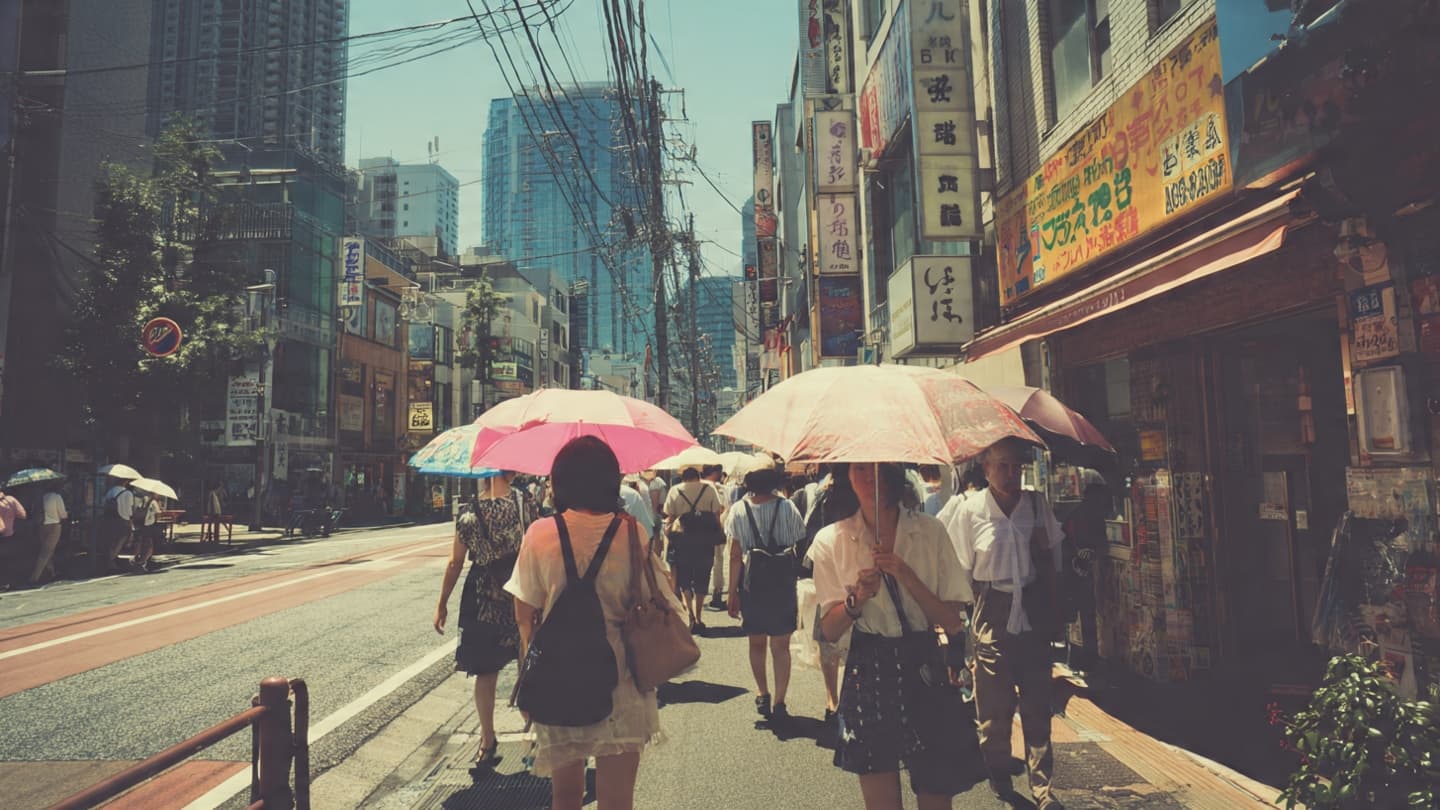
The summer city has its own rhythm. Trains arrive, bicycles pass through narrow streets and shops open their doors as morning light spreads across buildings. But when temperatures remain high for longer periods, the familiar rhythm begins to bend.
Across Japan, extreme heat is increasingly influencing everyday behavior. People are shifting outdoor activities toward cooler hours, businesses are adjusting working routines and more attention is being placed on air-conditioned spaces as protection from dangerous temperatures.
The change can appear small at first. A worker leaves home earlier. A farmer begins before sunrise. A family chooses an indoor destination rather than a park. Yet when thousands of people make similar adjustments, the shape of a city can begin to change.
Japan's aging population makes heat adaptation particularly important. Older adults are more vulnerable to heat-related illness, and many live independently. Maintaining safe indoor temperatures therefore becomes an important part of everyday health management during severe summer conditions.
Outdoor workers face a different challenge. Construction workers, agricultural laborers and delivery personnel cannot simply move all activities indoors. Employers must instead consider work schedules, rest periods, hydration and access to cooler spaces.
Technology is becoming part of the response. Wearable sensors can monitor body temperature and environmental conditions, while weather services and digital alerts allow workers and residents to anticipate periods of dangerous heat.
Businesses are adapting as well. Retailers and restaurants can adjust staffing schedules, while tourism operators increasingly consider heat when planning activities. The summer economy itself becomes influenced by temperature.
The changes also raise questions about urban design. Trees, shaded walkways, reflective surfaces and accessible cooling spaces can make outdoor environments more tolerable. In dense cities, even small differences in shade and airflow can affect how people experience a hot afternoon.
But adaptation has limits. Air conditioning requires energy, outdoor work still has to be performed and extreme temperatures can affect infrastructure as well as human health. Heat therefore becomes not simply a weather issue, but a factor influencing how cities operate.
Japan's summer is consequently becoming a quiet laboratory of adaptation. The changes are visible in altered schedules, cooling technologies and everyday decisions. Beneath the ordinary movement of city life, a new relationship with heat is gradually taking shape.
SEO-friendly Slug japan-extreme-heat-daily-life-urban-adaptation-2026
Hashtags #Japan #Health #Heatwave #Climate #UrbanLife #Environment #Science
Image Disclaimer These images were generated by AI for illustrative purposes and do not represent actual locations, individuals, or events.
Published by Banx Network. This article is part of the Banx decentralized media programme, powered by the BXE token on the XRP Ledger.