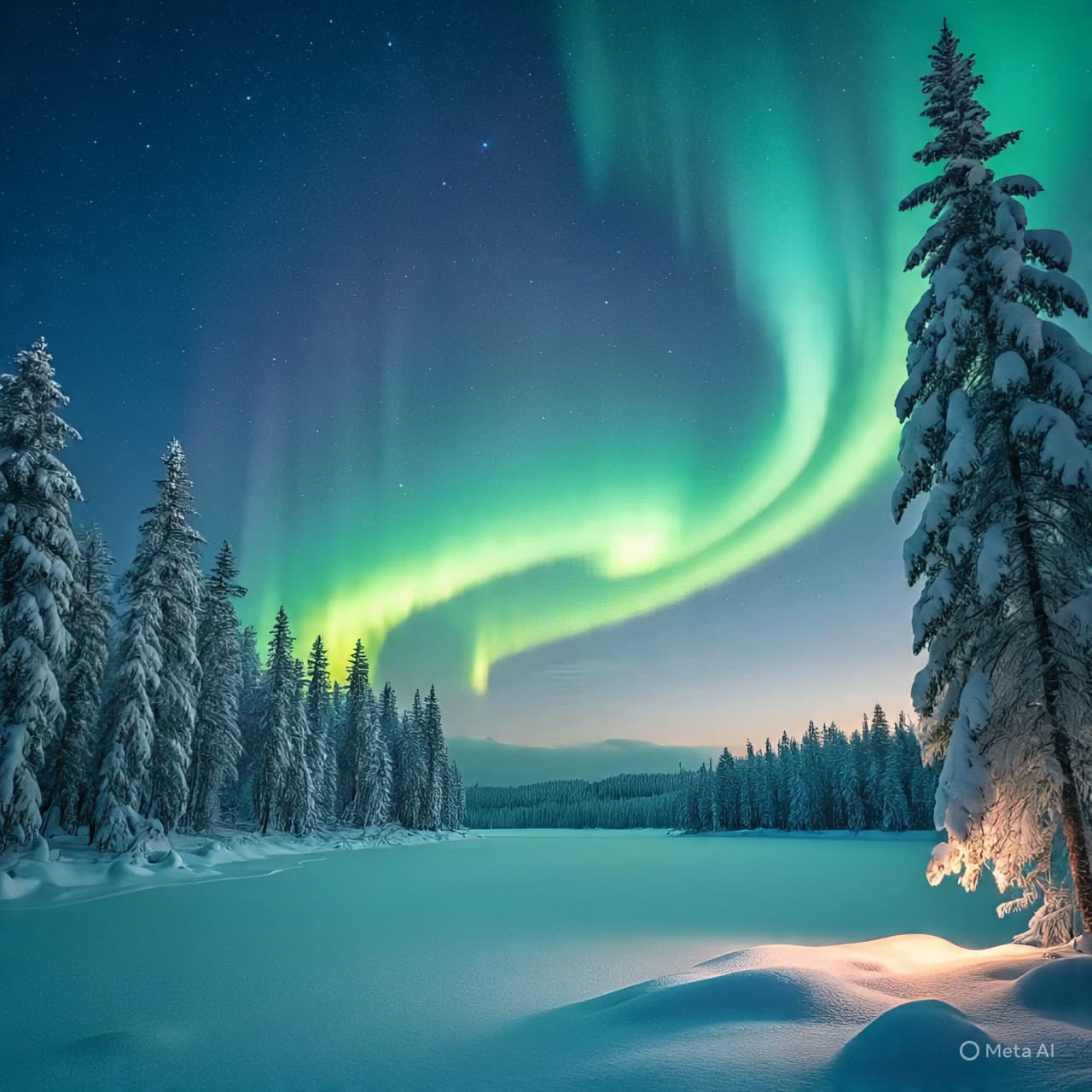
In the cold hush of a mid‑winter night, when the stars seem to press their quiet faces closer to the earth, there are moments when the world above seems to respond in kind — a slow, ethereal breathing of light that ripples across the darkest skies. This Valentine’s Day weekend, such a moment is etched in the quiet forecasts of space weather watchers, a possibility that the aurora borealis — the northern lights — might unfold not just over the Arctic expanses but across a wider swath of the northern skies.
The aurora arises not from earthly storms but from distant winds of charged particles streaming from the Sun, those solar whispers that, when they brush Earth’s magnetic shield, ignite colors high above. At times these quiet solar winds stir into livelier gusts — minor geomagnetic storms — and in those times the lights that usually drift near the poles can extend their reach. This weekend, space weather forecasters suggest such a dance may be in store, as energy from the Sun’s shifting fields could nudge the aurora’s embrace southward, closer to where people dwell and watch.
To those who watch the skies, there is a gentle practice to seeking out these light displays. Nightfall settles long and waiting in mid‑February, and maps that chart the possible reach of auroras show a view line that stretches into parts of the northern United States. Observers in Alaska, the Pacific Northwest, and across the upper stretches of the Midwest may find themselves under skies where emerald arcs or rippling veils appear after hours have grown deepest. Some forecasts suggest as many as a dozen states — from Alaska’s wide expanses to the forested reaches of Maine — could be within this quiet spectacle’s potential path.
Such forecasts are shaped by the vagaries of both solar and earthly conditions. The interplay of geomagnetic activity and the clear darkness of rural, low‑light horizons nurtures the chances of seeing the lights. The greatest likelihood often arrives between late evening and the early hours before dawn — those hours when the Earth turns its night toward the wandering particles from the Sun. In this, the experience is as much about patient waiting as watching, about stillness and the soft anticipation of color against the canvas of night.
This year’s forecast carries an added romance in its timing, weaving the age‑old celestial dance into a weekend marked by human connection. For some, looking skyward under a clear northern horizon could become part of how they celebrate — couples and families alike pausing in the quiet cold to catch a glimpse of geology and atmosphere in conversation. Yet even where the lights remain subtle or cloud cover persists, the promise of the aurora is itself a reminder: that the world’s quiet motions, from solar breath to magnetic shimmer, continue their rhythms above us, inviting those who look upward to behold their grace.
In straight news terms, forecasters at the U.S. National Oceanic and Atmospheric Administration’s Space Weather Prediction Center are projecting a G1‑class geomagnetic storm this weekend, a level of activity that can produce aurora displays far from their usual polar confines. States including Alaska, Washington, Idaho, Montana, Wyoming, North Dakota, South Dakota, Minnesota, Wisconsin, Michigan, New York and Maine are on watch for visibility Saturday night into early Sunday, especially between about 10 p.m. and 2 a.m. local time, conditions permitting.
All Visuals are AI‑generated and serve as conceptual representations.
Sources (Media Names Only)
Forbes People Martha Stewart Economic Times
Published by Banx Network. This article is part of the Banx decentralized media programme, powered by the BXE token on the XRP Ledger.