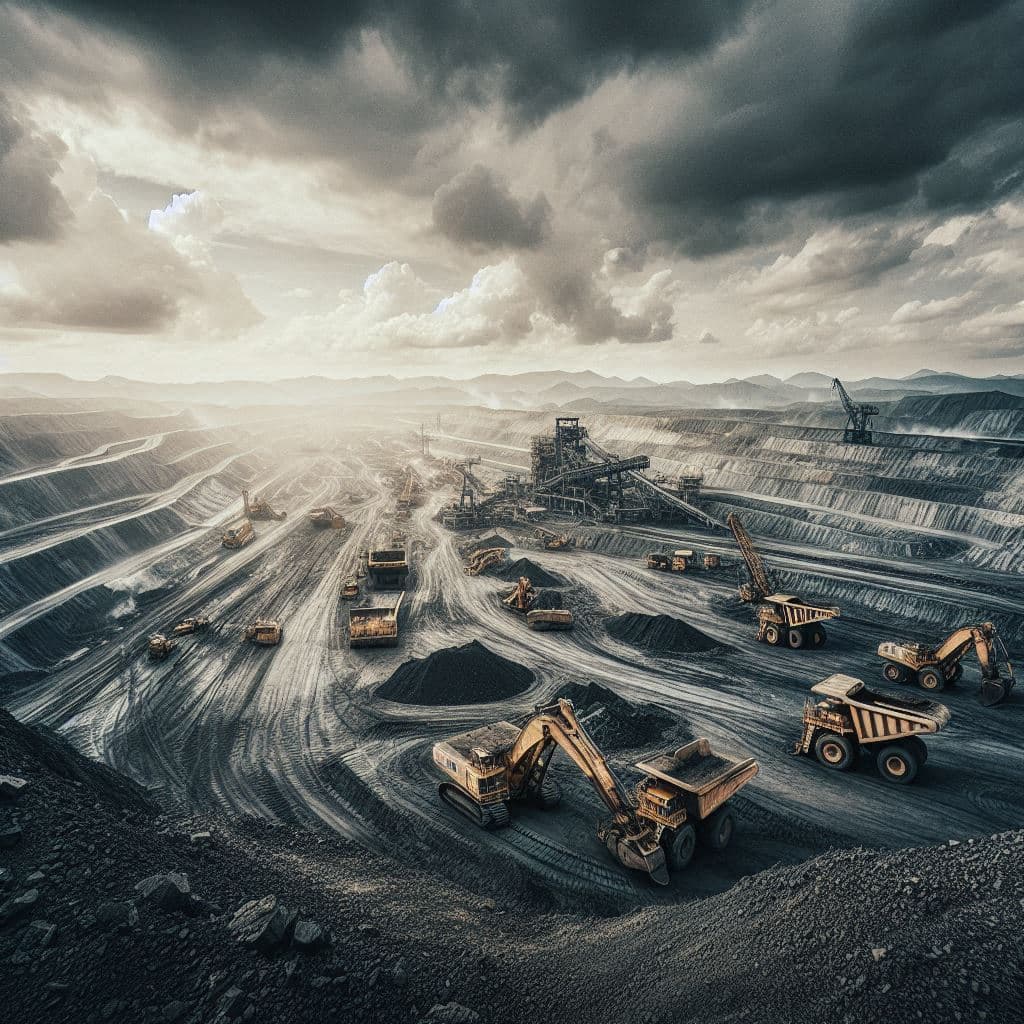
In the hush that settles over coalfields at dusk, where conveyor belts slow and earth seems to exhale, there lies a moment to reflect on what we extract and why. The heart of Indonesia’s mineral wealth has long beat in rhythm with the slow churn of mining wheels and the cadence of barges down river channels. But as the calendar edges toward 2026, that rhythm faces a subtle and significant shift — a government-led reassessment of how much of that coal will be drawn from the ground and sent out into the world, and at what cost to the communities and enterprises whose livelihoods intertwine with it.
For decades, coal has been one of Indonesia’s most enduring export stories, a fuel that powered industries and underpinned economic growth. Yet the tides of global demand have ebbed, and domestic policymakers are now weighing those shifting currents against the need to stabilize commodity prices and chart a sustainable path forward. In recent deliberations over the 2026 production quota, authorities have signaled a much-reduced outlook — with total coal output potentially slipping to roughly 600 million tonnes, down from much higher figures in recent years.
That expectation is not without consequence. Representatives from the coal industry — including the Indonesian Coal Mining Association — have voiced apprehension about the scale of production reductions under evaluation, which could range from about 40% to upward of 70% for some operators relative to earlier plans. For them, it is not merely a question of figures on a page, but of factories, payrolls, and the rhythms of life in mining towns where families, generations deep, depend on continuity of work.
Their concerns echo beyond boardrooms and association statements. Industry voices note that such steep reductions could challenge the viability of certain mining operations, especially smaller enterprises less equipped to navigate abrupt output adjustments. The specter of layoffs, stalled investment, and contractual penalties reverberates through these objections — gentle, earnest, and rooted in real-world implications of policy shifts.
Meanwhile, government officials emphasize the broader picture: aligning production with international demand, supporting price stability, and prioritizing long-term stewardship of resource wealth for future generations. They point to fluctuating global markets and the necessity of a measured strategy that balances economic, environmental, and social interests across the archipelago.
In the quiet spaces between these perspectives, there is awareness that the coming year will be pivotal — not just for the numbers that emerge from quota tables, but for the people whose work and aspirations lie beneath them. The story unfolding is not one of conflict alone, but of negotiation between tradition and transformation, between the present’s practicalities and tomorrow’s promise.
As formal decisions are finalized in the coming months, the narrative remains open: a careful balance between safeguarding economic livelihoods and responding to a changing global landscape in coal demand — all unfolding in the corridors of policy and the fields of industry with an attentive eye toward stability and shared prosperity.
AI Image Disclaimer “Illustrations were produced with AI and serve as conceptual depictions.”
Sources iNews / RCTI+ Voice Indonesia IDX Channel / RCTI+ Mining.com Da Bieu Nhan Dan
Published by Banx Network. This article is part of the Banx decentralized media programme, powered by the BXE token on the XRP Ledger.