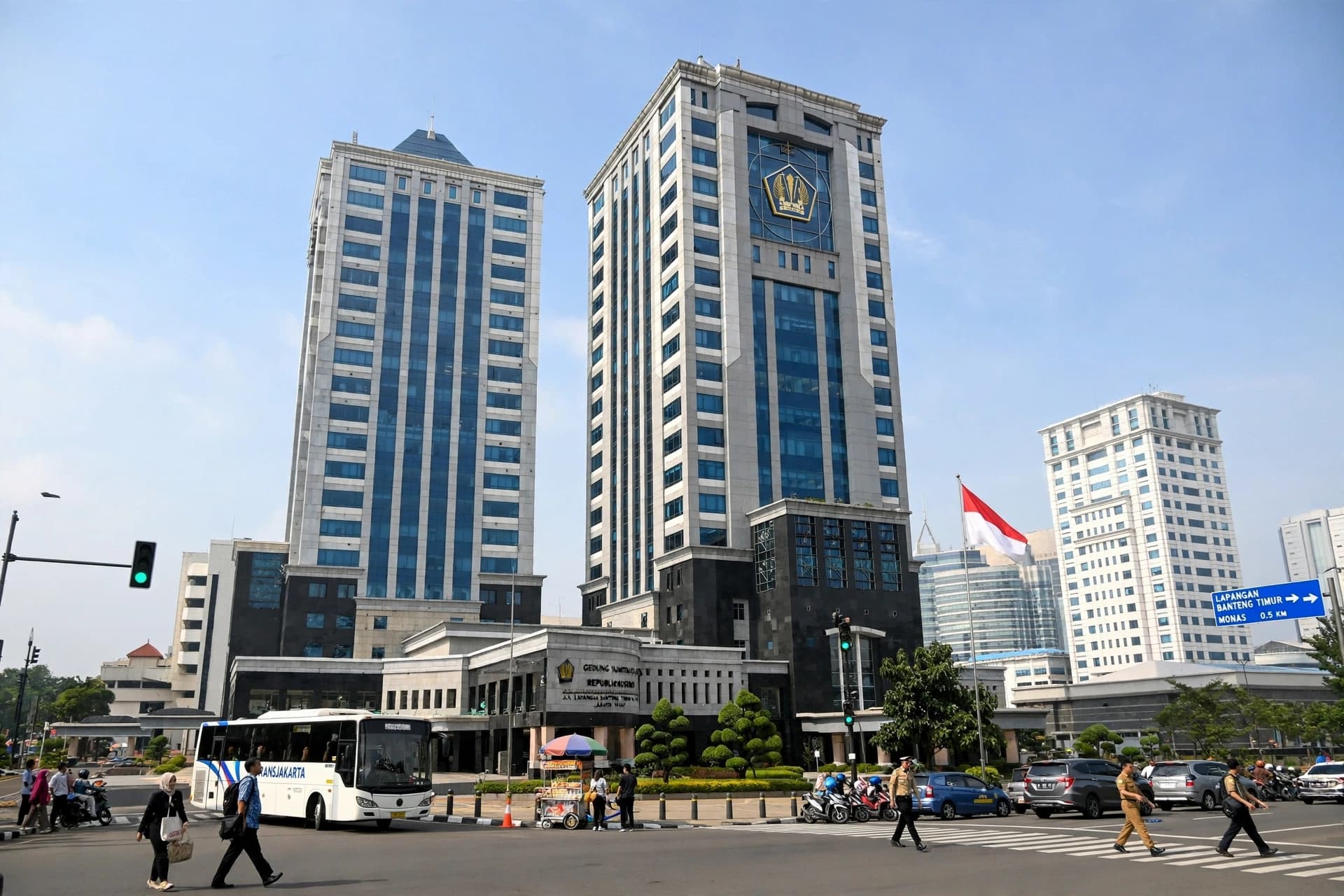
Morning in Jakarta often arrives with the sound of traffic before the financial markets have fully found their rhythm. Behind government buildings and trading screens, numbers begin to tell their own story: revenues, spending, deficits and the expectations that surround them. This week, those numbers have been watched closely as Indonesia welcomed a new finance minister.
Suahasil Nazara, who took office this week, said on Friday that Indonesia would maintain continuity in fiscal policy. He reaffirmed the government’s 2026 budget-deficit target of 2.85% of gross domestic product, below the statutory ceiling of 3%.
The statement came after Purbaya Yudhi Sadewa was removed from the finance ministry earlier in the week and replaced by Suahasil, who had previously served as deputy finance minister. The transition drew attention from investors because fiscal policy remains closely watched as Indonesia manages spending commitments and seeks to maintain confidence in its financial framework.
Government figures cited by Reuters showed that Indonesia’s budget deficit stood at 240.1 trillion rupiah, or 0.93% of GDP, through August. Revenue had increased 25.4% from a year earlier, while government spending had risen 17.1%. Those figures provide a snapshot of the fiscal landscape facing the new minister as the year moves toward its final months.
Among the issues receiving attention is the government’s decision to continue placing 200 trillion rupiah, roughly $11.27 billion, in reserve funds at state-owned commercial banks. Deputy Finance Minister Juda Agung said the policy would remain in place until July 2027.
The placement of government funds is intended to support liquidity within state-owned banks, while its continuation gives financial institutions a relatively clear horizon for the policy. The decision also means that the measure introduced under the previous finance minister remains part of the government’s current financial approach.
Tax administration is another part of the transition. Suahasil said taxpayers who have overpaid would receive refunds in accordance with existing regulations. Processing had slowed previously after additional audit requests were made for tax refunds, creating delays for some taxpayers.
The broader fiscal picture remains connected to Indonesia’s spending needs. Subsidy costs have risen alongside higher fuel prices, while government social spending has also expanded. Through August, spending on programs related to student and maternal nutrition had reached 134.2 trillion rupiah, according to Reuters.
For financial markets, the immediate significance of the ministerial transition lies less in a single announcement than in the consistency of the signals that follow. Investors, businesses and households watch not only the size of the deficit but also how government policy is communicated and implemented over time.
Suahasil’s initial remarks therefore place continuity at the center of Indonesia’s fiscal conversation. The government is maintaining the existing deficit target, continuing the state-bank liquidity policy and addressing delayed tax refunds as the new finance minister begins his tenure. The coming months will show how those commitments translate into the country’s broader fiscal performance.
AI Image Disclaimer The visuals accompanying this article are AI-generated and are intended as conceptual representations of Indonesia’s fiscal and economic environment.
Sources Reuters The Jakarta Post
Published by Banx Network. This article is part of the Banx decentralized media programme, powered by the BXE token on the XRP Ledger.