
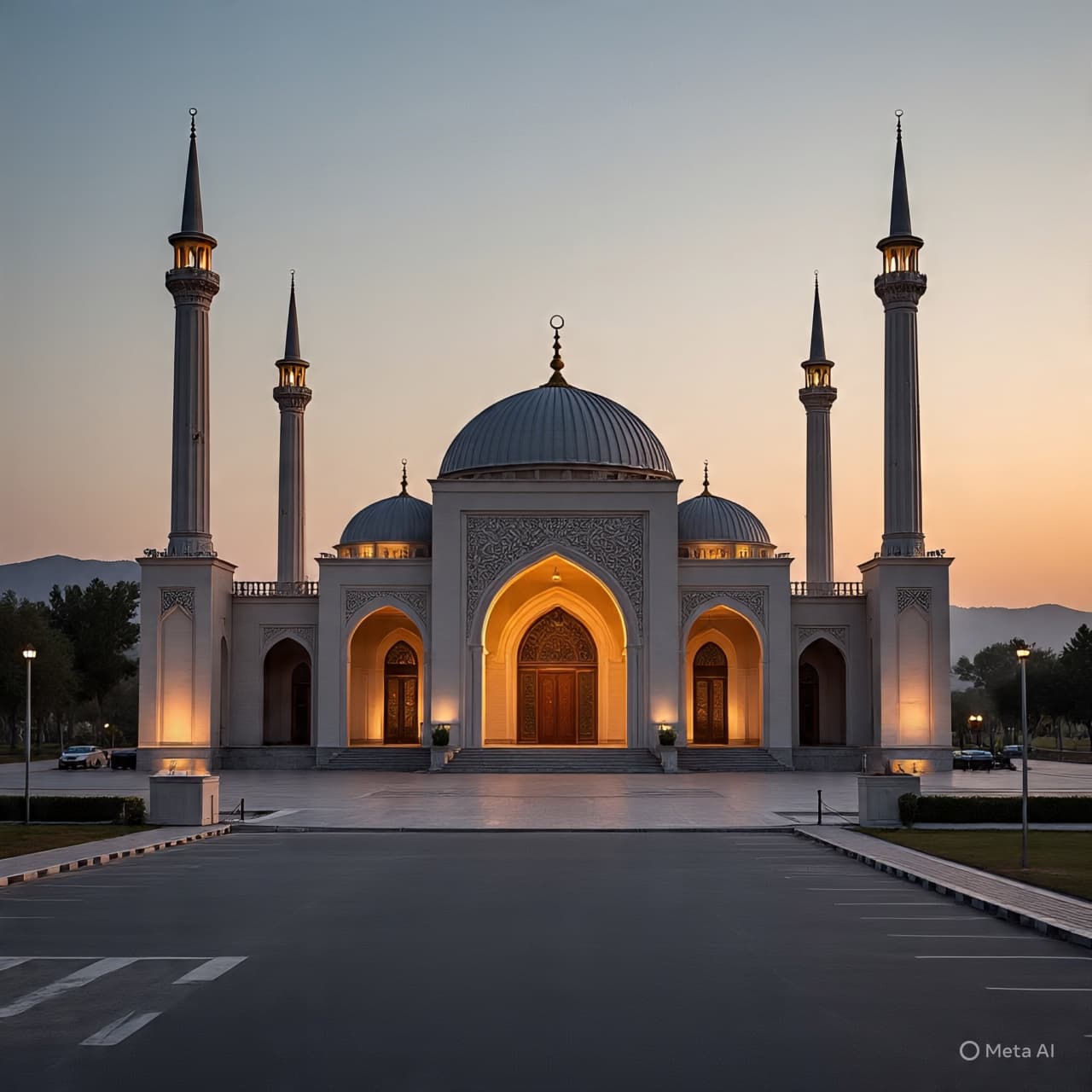
Morning arrived softly on the outskirts of Islamabad, where the city loosens its grip and the hills begin to breathe. The streets carried the usual rhythms—vendors arranging fruit, buses coughing awake, the hush that settles before prayer. A Shiite mosque stood amid this ordinary flow, its walls familiar to those who pass it each week, its doors opening to the same ritual gestures that stitch faith into daily life.
Then the calm fractured.
The explosion came with the suddenness that leaves no room for comprehension, only aftermath. In the minutes that followed, the air filled with dust and shouts, with the dissonant sounds of sirens threading through the morning. Shoes were left where they fell. Windows nearby shuddered and went still. Inside and around the mosque, worshippers—who moments earlier had been bowed in prayer—were caught in a violence that turned a place of gathering into a place of loss.
By the time the smoke thinned, the scale of the damage began to take shape. At least 31 people were killed, and scores more were wounded, their injuries carried outward toward hospitals as ambulances traced urgent paths along the capital’s edges. Doctors and nurses moved quickly, the practiced choreography of emergency care unfolding as families waited in corridors, listening for names.
Authorities cordoned off the area, beginning the careful work of recovery and investigation. The outskirts of Islamabad, often quieter than the city’s center, became a focal point of attention—security tightened, roads slowed, questions accumulating alongside the debris. In Pakistan, attacks on places of worship have long cast a heavy shadow, particularly over minority communities, and this morning’s violence folded itself into that broader, painful history without needing to announce its significance.
As the day wore on, officials spoke of casualties and response efforts, while residents stood at a distance, watching a familiar landscape altered. The mosque, once a waypoint in the neighborhood’s routine, was now marked by absence—by prayers unfinished and lives abruptly ended. The capital continued its movement elsewhere, but here, time seemed to pause, measuring itself in sirens fading and footsteps returning home.
Night would come, as it always does, settling over the hills and the quiet roads beyond Islamabad. What remained was the weight of a morning that began like any other and ended with grief carried softly, deliberately, by those left to remember.
AI Image Disclaimer Illustrations were created using AI tools and are not real photographs.
Sources Reuters Associated Press BBC News Al Jazeera Dawn
Published by Banx Network. This article is part of the Banx decentralized media programme, powered by the BXE token on the XRP Ledger.


