
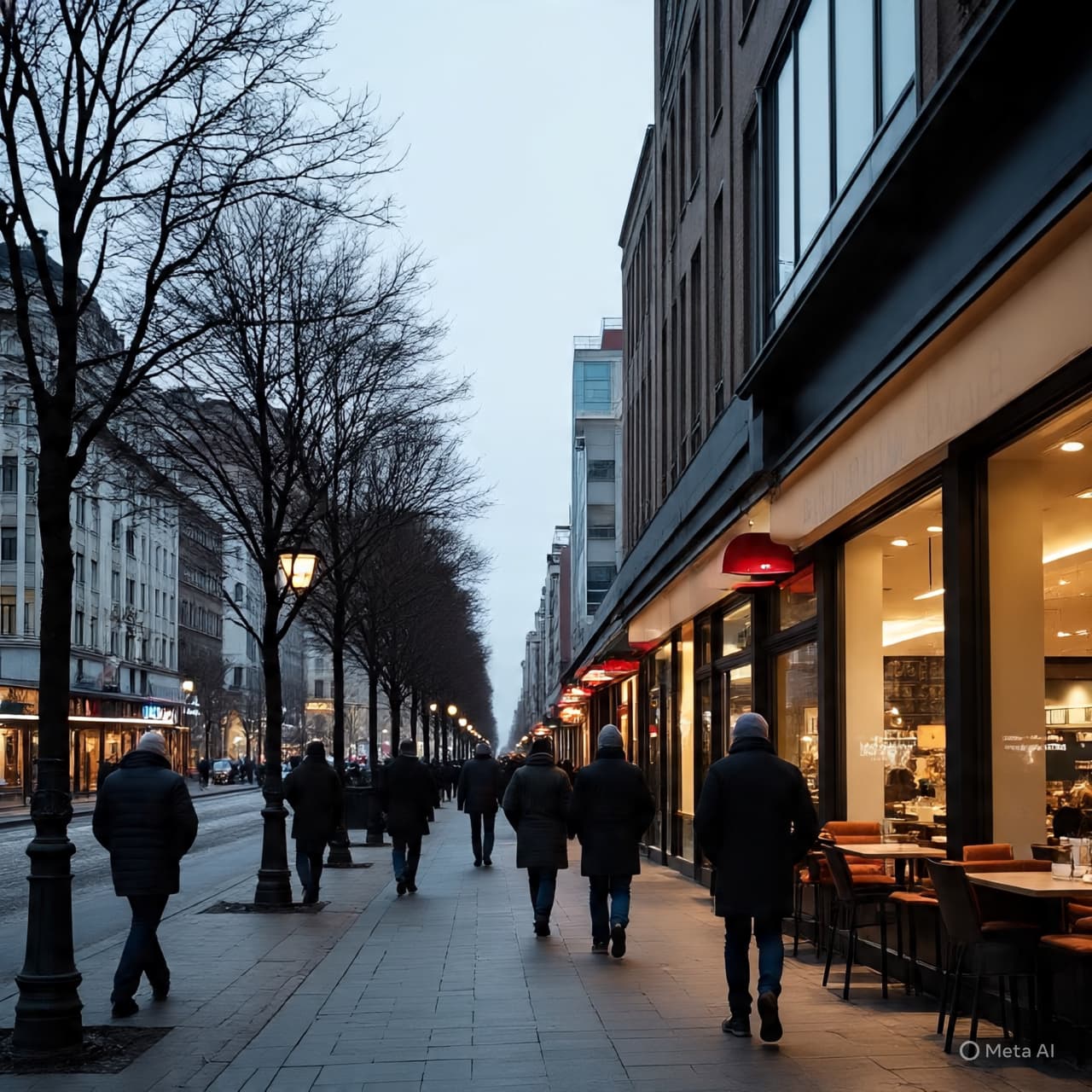
When February light first touches the broad, weathered face of Europe’s heartland, it finds Berlin awake before the rest of the continent — a city that bears its history in stone and steel, in boulevards and the quiet rush of the River Spree. In these weeks of winter’s late breath, a deeper chill has been felt not just in the air, but in the corridors of factories and boardrooms woven through the German hinterland. There, the hum of production once steady and sure now carries a different cadence, as though the rhythm of economic life has shifted under unseen hands.
Germany, long comfortable with its role as Europe’s industrial engine, is encountering what analysts call a fresh China shock — a transformation in its economic landscape as competitors from the East rise with astonishing pace. Where stalwarts of German manufacturing once stood nearly unchallenged, new models of electric vehicles and machinery from Chinese firms have begun to capture market share with surprising speed. In the space of a few years, brands that once seemed distant on Asian horizons have packed dealerships and sales figures at home, and exports to China — once a jewel in the German trade crown — have softened to their lowest levels in a decade.
On the streets of Munich and Hamburg, workers and small business owners speak in measured tones of “adaptation” and “change.” A sales forecaster for one legacy automaker noted that demand in China, once the largest market for German luxury vehicles, has dwindled, while Chinese imports have swept into Europe with a momentum that has surprised many. The sprawling industrial complexes that once hummed solely to the beat of German innovation now share their echo with new entrants backed by vast investments and state coordination.
At the heart of this moment is the chancellor in Berlin, Friedrich Merz, a figure familiar with the press of history and the pull of transformation. Since assuming office last year, he has sought to knit together Germany’s past strengths with the imperatives of a new global era. The intricacies of Berlin’s China policy — once cast in the softer language of complementary growth — are now being reexamined through a lens that balances openness with strategic caution. Scholars of foreign policy trace this evolution back years, noting how Germany’s stance toward Beijing has shifted from economic optimism to a careful, sometimes uneasy, dance between cooperation and competition.
Merz’s own engagement reflects this tonal shift. In recent weeks he has extended greetings for the Lunar New Year, expressing hopes for renewed dialogue and mutual momentum between Berlin and Beijing. At the same time, German industry grapples with data showing structural declines in outbound trade to China, prompting calls in Berlin and Brussels alike for diversification and stronger industrial firepower. Business delegations now move between capitals seeking markets beyond old partners, while policymakers discuss defensive trade measures to ensure that German enterprises remain resilient.
Yet beyond the charts and summits, there lies a plein air of human consequence. In the cafés lining Unter den Linden and near the Rhine’s broad sweep, engineers, strategists, and apprentices sip coffee with the world’s changing pattern in their thoughts. They speak not of conflict but of transformation — the quiet shifts that reshape livelihoods and the delicate work of steering old strengths into fresh currents. Against the pale winter sky, the hum of a new industrial dawn feels tentative but persistent, as if each engine’s turn and each negotiation’s step draw Germany toward a horizon neither wholly familiar nor yet fully formed.
AI Image Disclaimer Visuals are AI-generated and serve as conceptual representations.
Sources Deutsche Welle, The Japan Times, Atlantic Council.
نُشر بواسطة Banx Network. هذا المقال جزء من برنامج الوسائط اللامركزية من Banx، مدعومًا برمز BXE على شبكة XRP Ledger.


