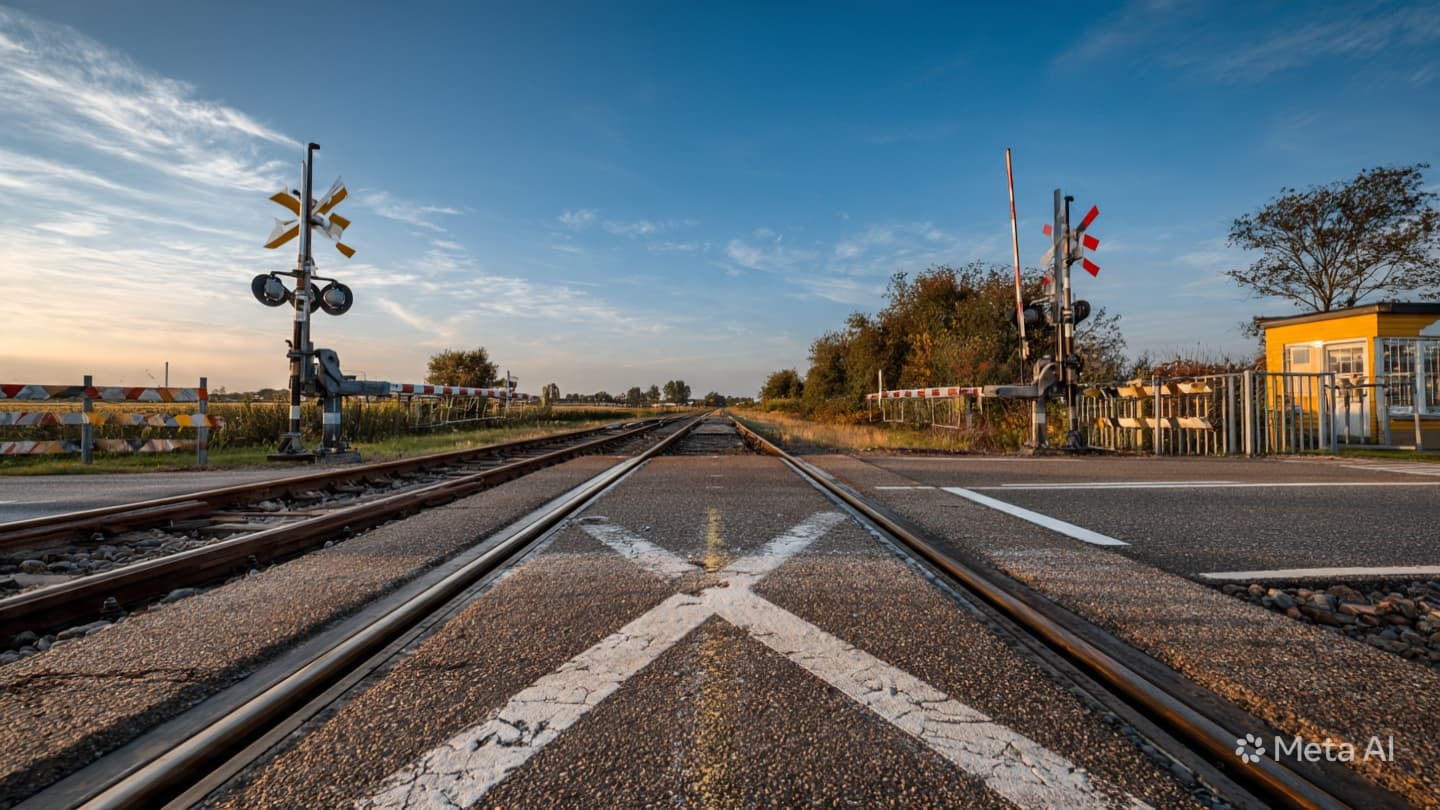
The forensic teams have finished their work at the Vierhuizen crossing, leaving behind a site that has been transformed by the precision of their inquiry. The familiar, rhythmic movement of the trains has resumed, yet for those who observe the passage, the intersection is no longer the same. It is a space where the invisible mechanics of the collision were parsed out by professionals, their presence a quiet, methodical effort to reconcile the sudden, violent disruption of our daily lives with the reality of what occurred. One watches the departure of the equipment, the clearing of the site, and feels the closing of a chapter, yet the lingering questions remain.
There is a profound, editorial quality to the forensic process, a narrative of discovery that moves from the chaotic aftermath to the order of the report. The investigators, with their scanners and logs, have spent days measuring the distance between the signal’s activation and the impact, the speed of the transit, and the final resting place of the vehicle. It is a necessary, clinical dissection of a tragic moment, a way for us to transform the horror of an event into the clarity of understanding. We look to these findings not just for a cause, but for a form of closure.
The site itself—the tracks, the barriers, the pylon against which the bus came to rest—now carries the marks of this analysis. One imagines the data being compiled, the sequences being modeled, and the truths of the morning being laid out with mathematical rigor. It is a reminder that even the most harrowing of events can be reduced to the cold, hard logic of motion and time. We see the crossing as a physical witness, the silent observer of a morning that changed everything, now finally allowed to return to its humble, functional role in the town’s daily rhythm.
Reflecting on the completion of the forensic work, one is struck by the transition from the frantic search for answers to the quiet, analytical wait for the final report. The town is ready, in its own way, to move beyond the immediate, physical aftermath. There is a sense that the work of the investigators has provided a foundation upon which we can begin to build a clearer, more systemic response. We are no longer operating in the realm of speculation, but in the domain of established fact, a necessary evolution in our quest for a safer future.
One finds in the forensic team’s work a testament to our society’s commitment to accountability. By investigating with such thoroughness, we are acknowledging that the lives lost were of such value that every detail, every second, and every factor must be understood. It is a form of respect for the victims and their families, a promise that we will leave no stone unturned in our efforts to learn from what happened. The site may be clear, but the impact of the investigation will be felt long after the tape is removed.
As the forensic crews pack away their instruments, they leave behind an intersection that has been mapped, documented, and defined. It is a strange, quiet end to a process that began with such sudden violence. The community looks on with a mixture of relief and renewed intensity, knowing that while the on-site inquiry is over, the work of systemic reform and emotional healing is only just beginning. We are left with the silence of the tracks, a silence that now carries the weight of the investigation’s meticulous care.
In the final assessment, the conclusion of the forensic analysis is a significant milestone in our collective journey. We are a society that learns, adapts, and builds through these moments of inquiry. The Buggenhout accident will remain a part of our history, but it will be a history that is documented with clarity, guided by truth, and anchored in a commitment to prevention. We walk away from the site with a deeper understanding, a clearer sense of the risks, and a quiet, steadfast determination to do better.
The East Flanders public prosecutor’s office confirmed that on-site forensic analysis at the Buggenhout level crossing has been completed as of late June 2026. Specialized investigators have finished documenting the site, including the collection of technical logs from the crossing signaling system and the analysis of wreckage patterns. Prosecutors are now synthesizing the gathered evidence with telemetry data from the involved train and local surveillance recordings to finalize their investigation. Authorities emphasize that the report will provide a comprehensive account of the collision’s mechanics, ensuring all safety protocols are fully scrutinized before findings are presented to the families and the public.
Published by Banx Network. This article is part of the Banx decentralized media programme, powered by the BXE token on the XRP Ledger.