The desert sky above Riyadh had not yet surrendered to full daylight when the sound arrived — a mechanical murmur cutting across the stillness. In a district built for dialogue and diplomacy, two drones descended toward the compound that houses the United States Embassy in Riyadh, igniting a brief fire and stirring alarms that echoed through quiet streets.
Saudi authorities later confirmed limited damage and no reported casualties. The flames were contained, the perimeter secured, and citizens advised caution. Yet even as order was restored, the symbolism lingered. Embassies are meant to be spaces of negotiation — neutral ground in turbulent times. When their walls are touched by the tremor of unmanned aircraft, it signals more than damage; it signals a shift in atmosphere.
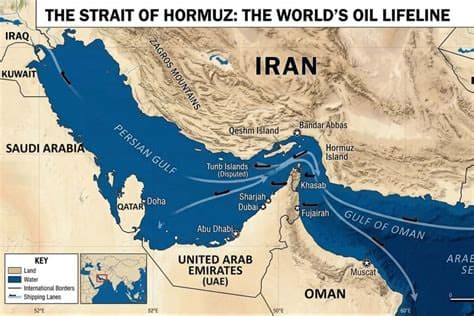
Across the Gulf, in Bahrain, a different claim took shape. Iran’s Islamic Revolutionary Guard Corps announced it had launched drones and missiles at a U.S. air base hosting the United States Fifth Fleet. The statement framed the strike as part of a broader response to recent military escalations in the region, adding another layer to an already tense strategic landscape.
Officials in Bahrain acknowledged security alerts and heightened readiness but did not immediately confirm extensive damage. What remained clear was the widening arc of confrontation — from desert capital to island kingdom, from embassy compound to naval command.
For residents in both capitals, the day unfolded with a strange duality: markets opened, traffic flowed, and yet above it all hovered the awareness that geopolitical rivalries had drawn closer to civilian sightlines. The Gulf, long accustomed to strategic maneuvering beneath its surface calm, now finds its tensions illuminated in the early light of direct claims and visible smoke.
In moments like this, diplomacy feels fragile but not extinguished. Military statements may move swiftly, but history shows that equilibrium in the region has often emerged not from force alone, but from the slow recalibration of interests and influence. The coming days will likely bring assessments, verifications, and international appeals for restraint.
For now, the smoke has thinned above Riyadh’s skyline, and the sea breeze continues to cross Bahrain’s harbors. Yet beneath those familiar rhythms lies a reminder: the geography of conflict is no longer distant. It arrives quietly, sometimes at dawn.
AI Image Disclaimer
Visuals are AI-generated and serve as conceptual representations rather than actual photographs.
Sources
Reuters Al Jazeera Al Arabiya Kurdistan24
Published by Banx Network. This article is part of the Banx decentralized media programme, powered by the BXE token on the XRP Ledger.