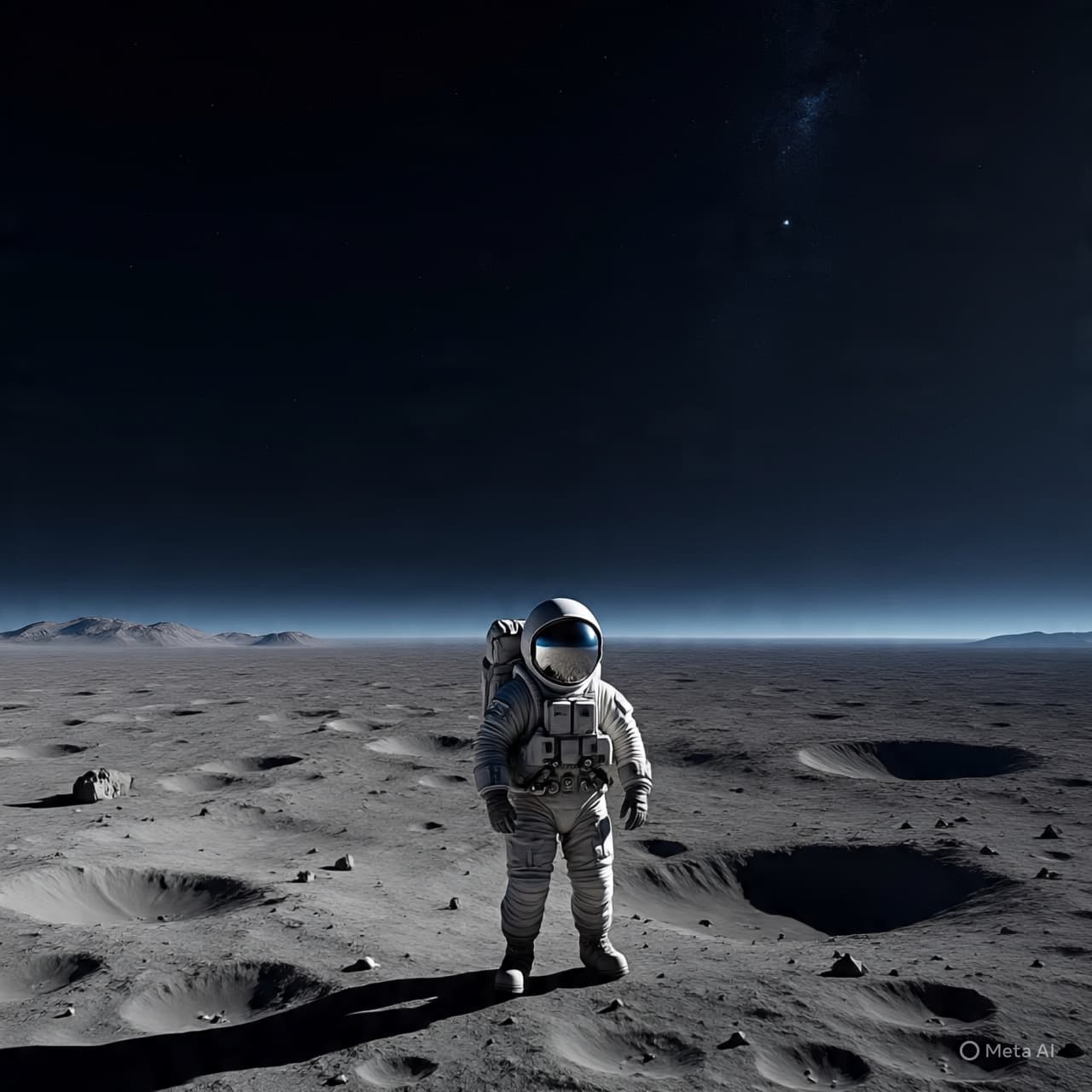
The Moon has a way of making time feel elastic. Half a century after the first human footsteps pressed into its dust, the idea of returning feels both inevitable and unfinished. Rockets are taller, computers faster, ambitions broader. And yet, according to at least one former astronaut, the most intimate piece of lunar exploration still feels unsettled.
Speaking from experience earned far from Earth, the astronaut’s assessment was unvarnished: current lunar spacesuits, as they stand, are not great. The remark landed quietly, without theatrics, carrying the weight of someone who knows how unforgiving the lunar surface can be. On the Moon, a spacesuit is not an accessory or a backup system. It is the environment.
Modern lunar suit development is taking place under intense pressure. NASA’s Artemis program aims to return astronauts to the Moon, including longer surface stays and more demanding exploration than the Apollo missions ever attempted. That requires suits capable of greater mobility, durability, and adaptability, while also supporting a wider range of body types. The ambition is large. The engineering, it seems, is still catching up.
The criticism centers less on aesthetics and more on fundamentals. Mobility remains a concern, particularly for tasks that require bending, kneeling, or sustained work on uneven terrain. Weight and stiffness still limit how naturally an astronaut can move. Thermal regulation, dust mitigation, and long-term comfort are persistent challenges on a surface where temperatures swing violently and lunar soil clings to everything.
These shortcomings matter more now than they did decades ago. Apollo astronauts spent hours on the Moon. Future crews are expected to stay days, even weeks. Exploration plans include driving rovers, setting up experiments, and building infrastructure. A suit that merely keeps someone alive is no longer enough. It has to allow them to work.
The astronaut’s critique does not dismiss progress outright. Prototypes are improving, private companies are contributing designs, and testing continues. But the comment underscores a familiar truth in spaceflight: timelines are ambitious, and hardware rarely matures on schedule. Experience has taught astronauts that confidence comes not from promises, but from repetition, testing, and failure resolved long before launch.
As plans for lunar return accelerate, the Moon waits patiently. It does not care about press releases or program milestones. It responds only to physics, pressure, and preparation. And until the suit feels like a second skin rather than a constraint, even seasoned explorers remain cautious.
AI Image Disclaimer Illustrations were created using AI tools and are not real photographs.
Sources Reuters NASA Smithsonian National Air and Space Museum
Published by Banx Network. This article is part of the Banx decentralized media programme, powered by the BXE token on the XRP Ledger.