There is a rhythm to exploration that extends beyond movement alone. It is not simply the act of going farther, but the act of understanding as one goes—of pausing, observing, and allowing each step to gather meaning before the next begins. Without that rhythm, distance becomes only distance, a measure of space rather than of discovery.
At NASA, this idea has been brought into focus once more as the agency emphasizes the central role of science in its long-term vision for human exploration beyond Earth. The path that stretches from the Moon toward Mars is not framed solely as a journey of presence, but as one shaped by inquiry—where each mission serves as both movement and measurement.
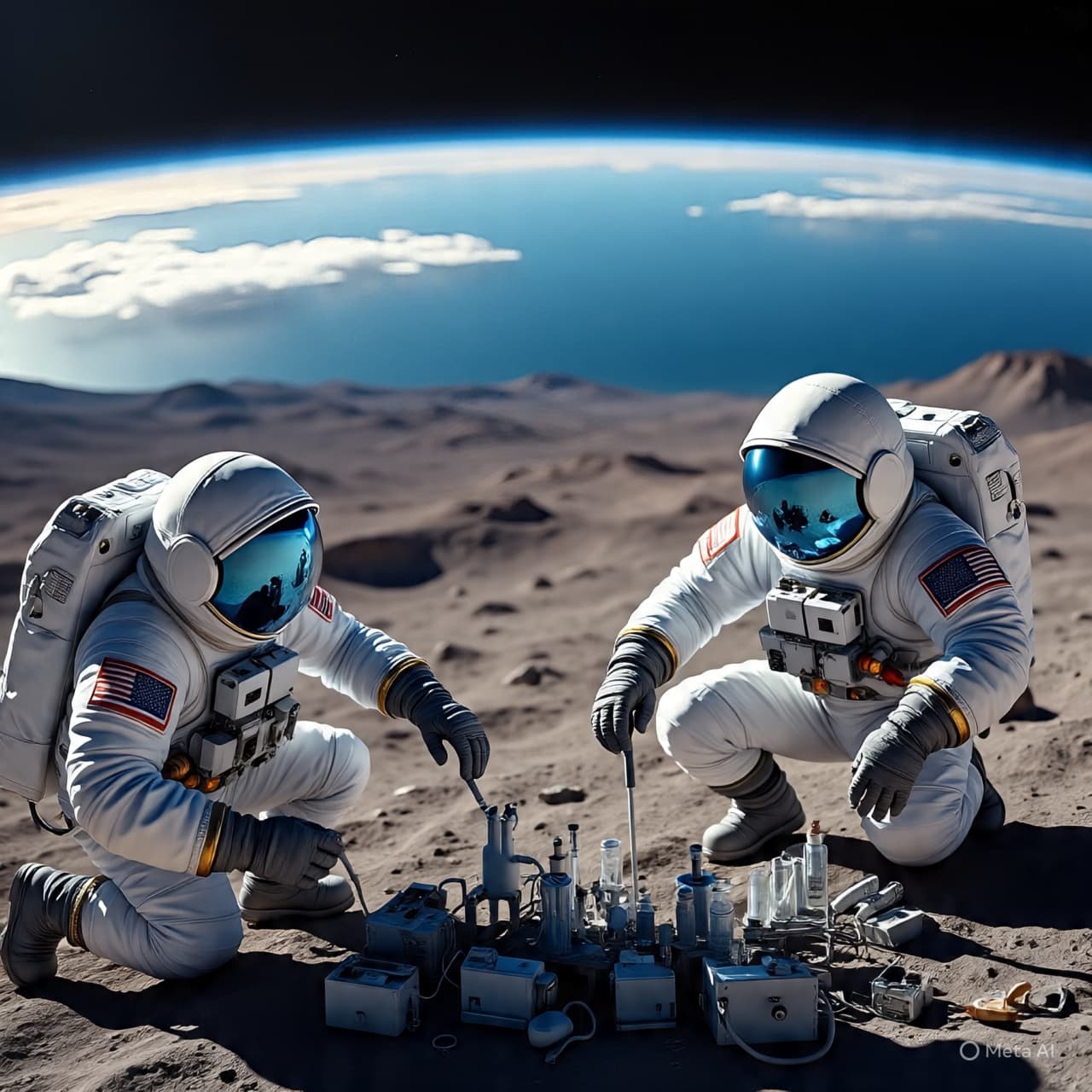
The Moon, in this vision, is more than a destination. It becomes a place of preparation, where technologies are tested, systems refined, and questions asked in an environment that is both familiar and distant. The surface, marked by its stillness and its history, offers a setting where science and exploration can move together, each informing the other.
From there, the horizon extends further, toward Mars—a destination that carries with it a different scale of challenge. The distance alone introduces new considerations, requiring a deeper understanding of how humans and their systems can operate over extended periods, far from the immediate reach of Earth. Here, science becomes not only a goal, but a guide, shaping decisions about how such journeys are undertaken.
Within this framework, research is not treated as an addition to exploration, but as its foundation. Experiments conducted on the Moon, observations made along the way, and data gathered across missions all contribute to a broader understanding of space and of the conditions within it. These insights, in turn, influence the design of future steps, creating a cycle in which knowledge and movement are closely linked.
There is also a continuity in this approach, one that connects current plans with earlier efforts. Past missions, both robotic and human, have contributed pieces to the larger picture, each adding to a growing body of understanding. The Moon-to-Mars pathway builds on this accumulation, extending it into new contexts while relying on what has already been learned.
The emphasis on science reflects a recognition that exploration, at its core, is an act of questioning. To travel without inquiry is to leave much unseen, even in the presence of vast new environments. By placing science at the center, the journey becomes not only about reaching new places, but about interpreting them, understanding their histories, and considering their place within a larger cosmic framework.
There is, within this perspective, a quiet recalibration of purpose. The destinations remain the same—the Moon, Mars—but the meaning of the journey is shaped by what is sought along the way. It becomes less about arrival and more about the process of discovery that unfolds between points.
NASA has emphasized that scientific research will play a central role in its Moon-to-Mars exploration strategy. The agency plans to integrate science objectives into missions as it prepares for sustained lunar presence and eventual human missions to Mars.
AI Image Disclaimer These visuals are AI-generated and serve as conceptual representations.
Sources NASA SpaceNews Reuters BBC News The Guardian
Published by Banx Network. This article is part of the Banx decentralized media programme, powered by the BXE token on the XRP Ledger.