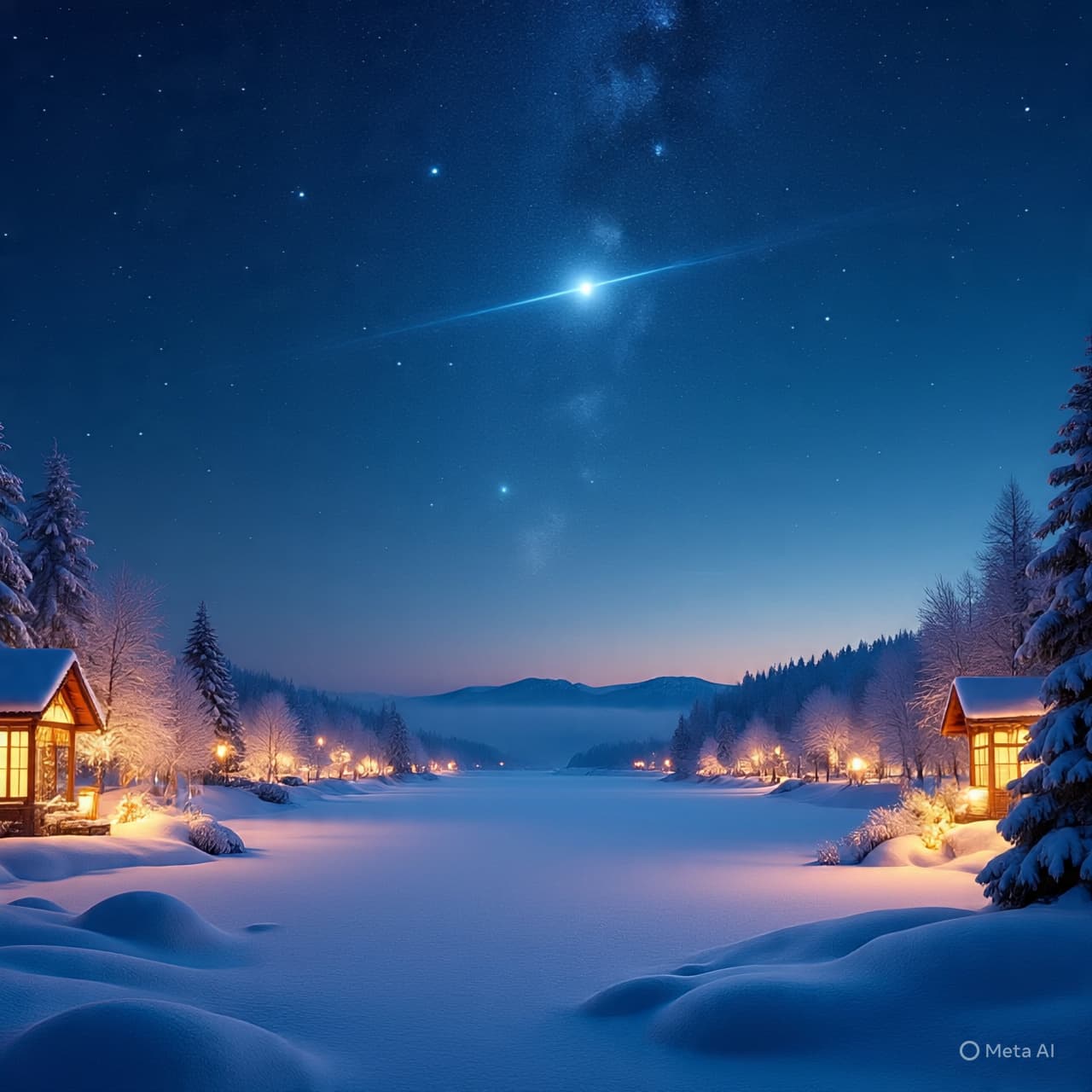
The Christmas holidays stretch the nights and slow the calendar. While homes glow with artificial light and routines soften, the sky does something generous of its own. Late December has always been a gift to stargazers, and in 2025, it offers at least ten reasons to step outside and look up.
First comes the simple advantage of darkness. These are the longest nights of the year, giving the sky more time to reveal itself. Stars linger. Constellations rise earlier and stay longer, turning casual glances into extended encounters.
Then there is Orion, impossible to ignore now. By evening, the hunter dominates the southern sky, his belt pointing the way to other celestial landmarks. For many, Orion is the gateway constellation — familiar, bold, and rich with nebulae visible even through modest binoculars.
Close by, the Pleiades cluster sparkles like frost caught in starlight. Its compact glow has drawn human attention for thousands of years, and in winter skies it appears sharp and unmistakable, especially from darker holiday getaways.
Jupiter also demands attention. Brilliant and steady, it outshines nearly everything around it. Even a small telescope reveals its largest moons, lined up like a miniature solar system performing on cue.
Mars, red and restless, adds contrast. Its color is subtle but distinct, a reminder that planets are worlds, not just lights. Over several nights, its movement against the stars becomes visible, a slow proof of celestial mechanics at work.
The Moon plays its part too, moving through phases that create different moods across the holiday stretch. Crescent nights favor deep-sky viewing, while brighter phases bathe landscapes in silver light, turning familiar surroundings into something quietly theatrical.
For those willing to wake early, meteor activity still whispers through the dawn hours. The year’s final showers may be modest, but winter meteors burn brighter against cold, clear air, making even a few sightings feel earned.
Winter constellations beyond Orion also come into focus. Taurus, Gemini, and Auriga form a bright arc overhead, filling the sky with stars that feel closer and sharper than at any other time of year.
There is also the rare pleasure of stillness. Holiday mornings and late nights tend to be quieter, with fewer cars, fewer lights, fewer distractions. The sky benefits from that calm, and so do the people watching it.
Finally, there is tradition. Looking up during the holidays connects modern observers with something ancient. Long before calendars and electric light, humans watched these same skies at the same time of year, measuring seasons, telling stories, and finding reassurance in the patterns above.
None of these reasons require expertise. No special equipment. No perfect conditions. Just a few minutes outside, a pause between celebrations, and the willingness to tilt your head back.
The Christmas sky of 2025 is not putting on a single grand show. Instead, it offers a series of small, patient moments — ten of them, at least — waiting quietly for anyone ready to notice.
Published by Banx Network. This article is part of the Banx decentralized media programme, powered by the BXE token on the XRP Ledger.