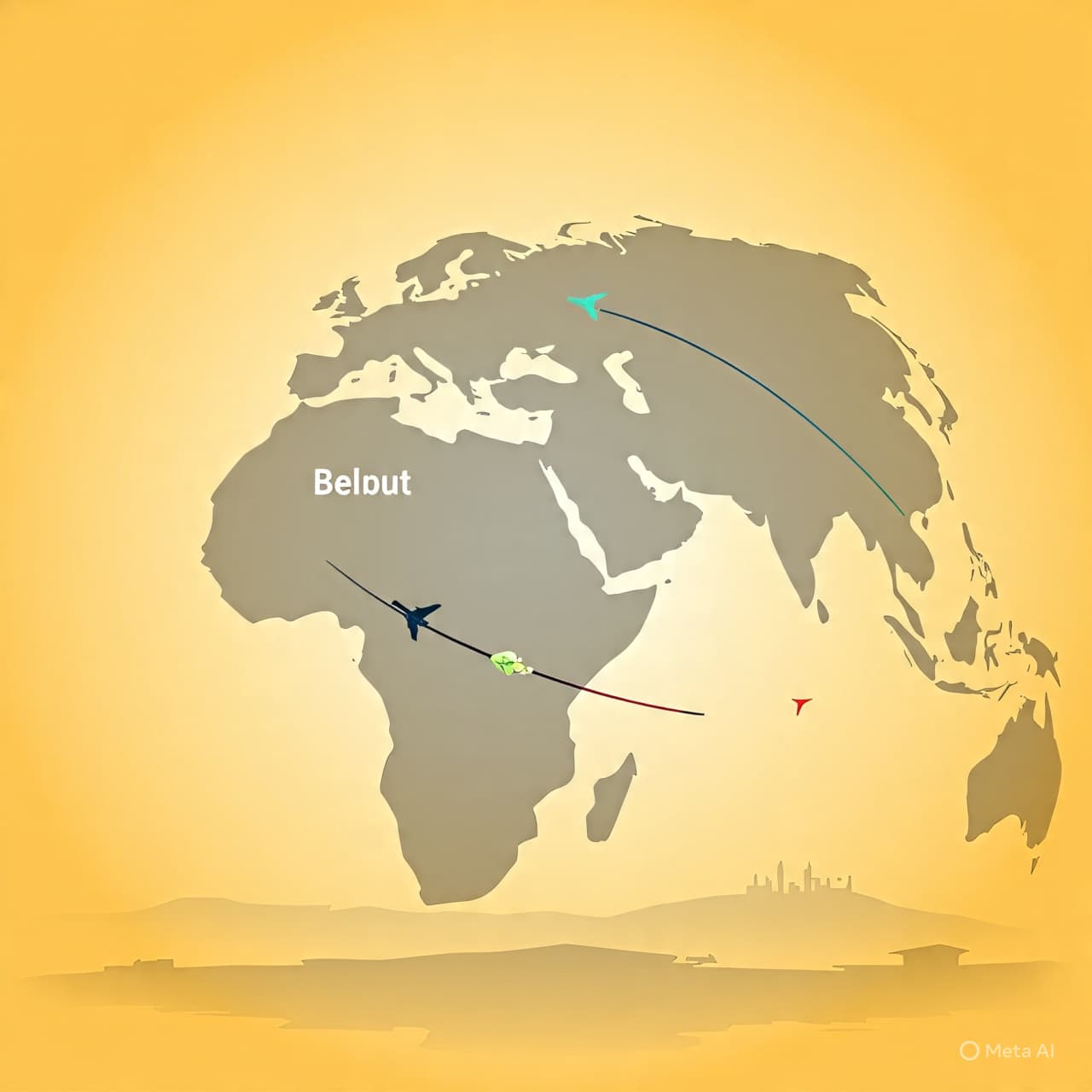
Evening settles differently over cities that have learned to listen to the sky.
In Tehran, the night air often carries the ordinary rhythms of a vast capital—cars moving along broad avenues, distant voices echoing between apartment towers, the quiet persistence of a metropolis that rarely sleeps. Far to the west, along the Mediterranean, Beirut breathes in salt air drifting through narrow streets and aging balconies, where the sea has long shaped the city’s memory and mood.
Yet on certain nights the sky becomes the loudest presence of all.
Reports emerging in recent hours describe waves of Israeli airstrikes directed toward targets in both Tehran and Beirut, two cities linked not by geography but by the complicated currents of regional politics and long-standing alliances. Military officials in Israel have said the operations are aimed at installations connected to Iranian military capabilities and to Hezbollah, the powerful armed group that holds significant influence in parts of Lebanon.
In Tehran, the strikes were reported to have focused on sites believed to be associated with missile development and drone operations. Iranian authorities acknowledged explosions in several areas of the capital and its outskirts, though details about the scale of damage or casualties remained limited as the situation continued to unfold. For residents, the sounds were sudden—sharp interruptions in a city accustomed to distance from direct battlefield activity.
Meanwhile in Beirut, the southern suburbs once again became the focal point of aerial bombardment. The districts there, dense with residential buildings and narrow roads, have long been associated with Hezbollah’s political and military infrastructure. Lebanese media reported powerful blasts lighting the night sky, followed by columns of smoke rising above neighborhoods that have witnessed similar scenes during earlier periods of conflict.
The strikes come amid a widening confrontation between Israel and Iran that has steadily moved beyond shadow operations and into more visible military exchanges. Analysts say the expanding geography of the conflict reflects years of tension built around Iran’s regional alliances, particularly its relationship with Hezbollah in Lebanon, which Israel views as one of its most formidable adversaries.
Across the region, governments and observers have begun to watch the unfolding events with renewed unease. Statements from the United States indicated that military pressure on Iran could intensify in the coming days, suggesting that the present moment may represent only one phase of a broader campaign still developing across airspace and sea lanes.
For civilians in both cities, the immediate experience remains quieter and more personal than the language of strategy suggests. In Tehran, people gathered on rooftops or near windows to watch distant flashes across the horizon. In Beirut, families followed familiar routines of checking on neighbors and listening for updates carried by radio, television, and phone messages.
Cities endure in these ways—through small gestures of observation and resilience, through the quiet habit of continuing life even as the sky grows restless.
Israeli officials say the airstrikes targeted facilities linked to Iranian weapons programs and Hezbollah operations. Iranian and Lebanese authorities have confirmed explosions in both capitals. U.S. officials indicated that further military activity in the region remains possible as tensions between Israel and Iran continue to escalate.
AI Image Disclaimer Visuals are AI-generated and serve as conceptual representations.
Sources (Media Names Only) Reuters Associated Press BBC News Al Jazeera The New York Times
Published by Banx Network. This article is part of the Banx decentralized media programme, powered by the BXE token on the XRP Ledger.