In the quiet expanse of night, where stars hang like distant lanterns against an ocean of dark, we find ourselves peering ever deeper into the cosmos—not with longing alone, but with tools born of human curiosity and the strange logic of artificial minds. The sky, once a tapestry of mystery, now yields its secrets in patterns subtle enough to elude the unaided eye. In these patterns, hidden in the faint flicker of starlight, new worlds emerge—dozens of them—revealed not by chance but by the patient, unblinking gaze of algorithms trained to listen where humans once heard only silence.
This unfolding chapter in astronomy is quiet in its wonder. It begins not with a flash but with data: the steady stream of measurements captured by NASA’s Transiting Exoplanet Survey Satellite (TESS), each tiny dip in brightness a whisper of a planet passing before its star. For years, astronomers have sifted these whispers for signs of distant worlds. But now, with machine learning woven into the fabric of discovery, those whispers become a chorus. Researchers at institutions including the University of Warwick have applied artificial intelligence systems to this vast celestial dataset, uncovering more than a hundred exoplanets and confirming dozens that were previously unseen.
The process is a testament to the quiet symbiosis between human ingenuity and computational power. Where once astronomers combed data by eye and intuition, AI offers a new kind of insight—pattern recognition that spans scales and complexities beyond what a human mind can easily hold. In the dance of light and shadow, algorithms discern the rhythmic signatures of planets, even those that eluded earlier detection. The result is a richer catalog of worlds, some strange and large, others more familiar in size, each orbiting stars light-years away.
There is something poetic in this melding of silicon and starlight. It speaks to our desire not only to explore but to understand the universe in its vastness and variety. Each newly identified planet is a reminder that our own small world is part of a larger cosmic story—one written in orbits and atmospheres, in the silent revolutions of worlds unseen.
In the more measured language of science news: astronomers using advanced AI techniques applied to TESS data have validated over a hundred exoplanets, including dozens of newly identified ones. These discoveries expand the known population of alien worlds and demonstrate the effectiveness of machine learning in exoplanet detection.
AI Image Disclaimer
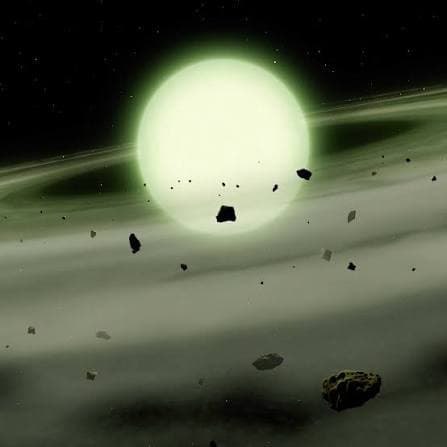
Visuals are AI-generated and serve as conceptual representations.
Source Check
This topic is reported by credible science news outlets: SciTechDaily and Space.com on recent discoveries of new exoplanets using AI and advanced data analysis.
Published by Banx Network. This article is part of the Banx decentralized media programme, powered by the BXE token on the XRP Ledger.