Across the long arc of international politics, certain tensions return with a familiar rhythm—shifting in intensity, changing in form, yet often circling the same unresolved questions. They move like weather systems over strategic landscapes, gathering in one place before dispersing into another, never fully gone, never entirely new.
It is within this broader pattern of rising regional friction involving the Iran and the United States that analysts in China have been increasingly attentive to how cycles of confrontation in the Middle East intersect with global power competition. In particular, commentary emerging from Chinese policy and academic circles has drawn comparisons between current U.S.–Iran tensions and earlier episodes of American military and strategic engagement in the region.
Rather than framing the situation as a singular turning point, these perspectives often emphasize continuity. They point to recurring dynamics: pressure through sanctions, intermittent escalation in maritime or proxy theaters, and diplomatic breakdowns followed by partial attempts at de-escalation. In this reading, the present moment is less an exception than another chapter in a longer sequence of unresolved regional instability.
The language of “mistakes,” used in some analytical discussions, reflects this interpretive lens. It does not describe a unified official position, but rather a strand of critique suggesting that cycles of intervention and containment have repeatedly produced unintended consequences—political fragmentation, security vacuums, and prolonged instability across parts of the Middle East.
Within Chinese strategic thought, such assessments are often tied to broader questions about global governance and the limits of military-centered approaches to international order. As China’s global economic and diplomatic footprint has expanded, so too has its emphasis on alternative frameworks of engagement, particularly those prioritizing infrastructure development, long-term economic integration, and multilateral diplomacy.
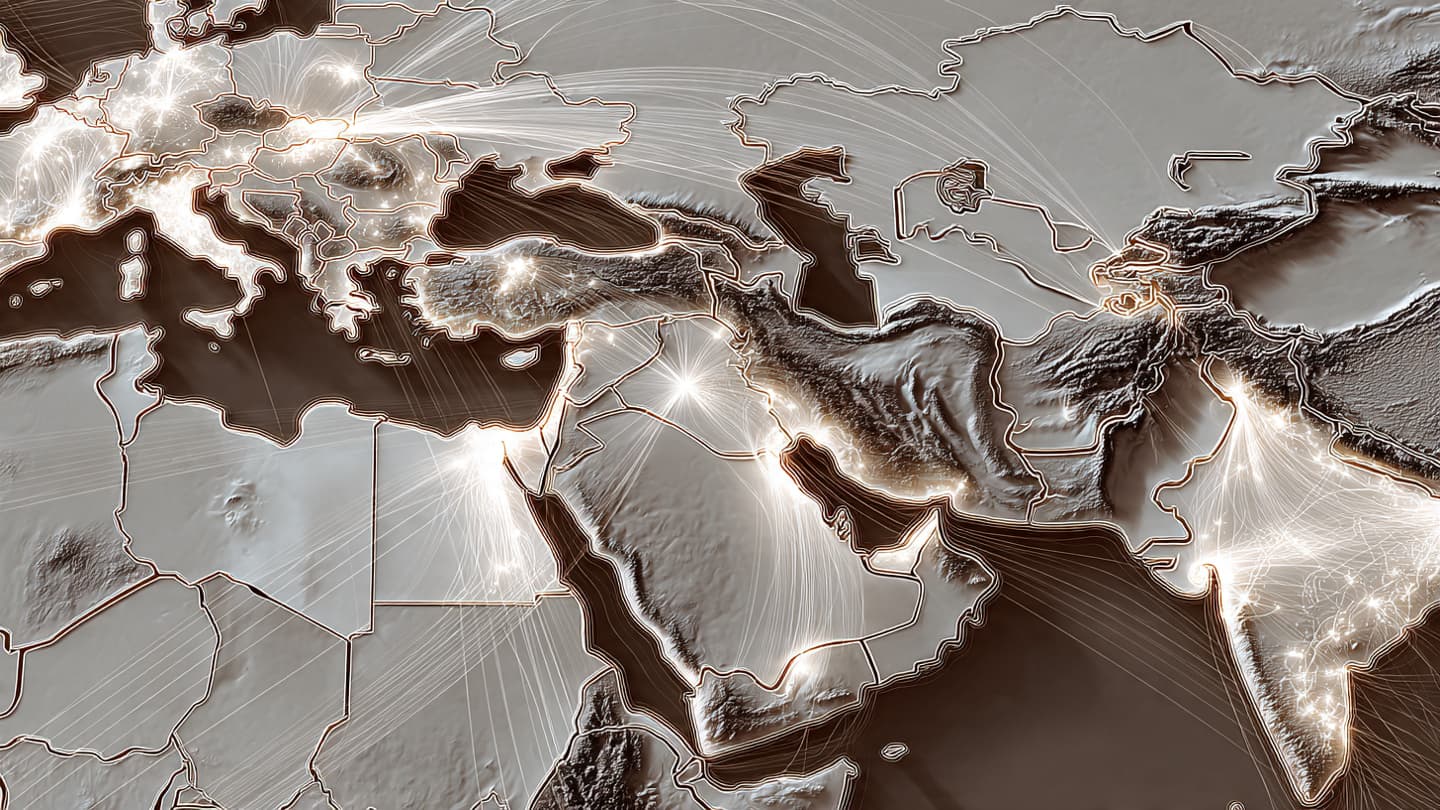
At the same time, the geopolitical environment surrounding Iran remains complex and layered. The region sits at the intersection of energy flows, maritime routes, and security alliances that extend well beyond its immediate geography. Any escalation involving Iran and the United States is therefore interpreted not only in bilateral terms, but also through its potential impact on global trade stability and regional alignment.
In recent years, tensions between Washington and Tehran have fluctuated between diplomatic openings and renewed pressure campaigns. Sanctions regimes, nuclear negotiations, and episodic security incidents have collectively shaped a relationship defined more by managed confrontation than by resolution. It is within this context that external observers often situate their own interpretations of recurring instability.
Chinese commentary that draws attention to perceived patterns in U.S. policy does so against the backdrop of its own evolving role in the Middle East. Beijing has increasingly positioned itself as a facilitator of dialogue in certain regional disputes, while also maintaining significant economic relationships across both Gulf and broader Islamic world markets. This dual engagement informs its analytical framing of instability as something to be mitigated through sustained diplomatic and economic channels.
Yet, like all geopolitical analysis, these interpretations exist alongside competing narratives. U.S. policymakers typically emphasize deterrence, alliance structures, and security guarantees as central components of their regional approach, while Iranian officials frame their position through sovereignty, resistance, and strategic autonomy. The result is a landscape of overlapping perspectives, none of which fully define the whole.
What emerges is not a single storyline, but a set of parallel readings of the same geopolitical terrain—each shaped by history, interest, and strategic imagination. In this sense, comparisons drawn by Chinese analysts reflect less a definitive judgment and more an effort to situate present tensions within a longer global pattern of power interaction.
As these dynamics continue to evolve, the relationship between the United States, Iran, and external observers like China remains part of a wider recalibration of international order. The language used to describe it—whether of mistakes, cycles, or continuity—ultimately reflects the challenge of interpreting a system still in motion.
And in that motion, the past is never entirely past, but instead becomes a reference point through which the present is constantly re-examined.
AI Image Disclaimer Visuals are AI-generated and serve as conceptual representations of geopolitical analysis and international relations.
Sources Reuters, BBC News, Associated Press, Financial Times, South China Morning Post
Published by Banx Network. This article is part of the Banx decentralized media programme, powered by the BXE token on the XRP Ledger.