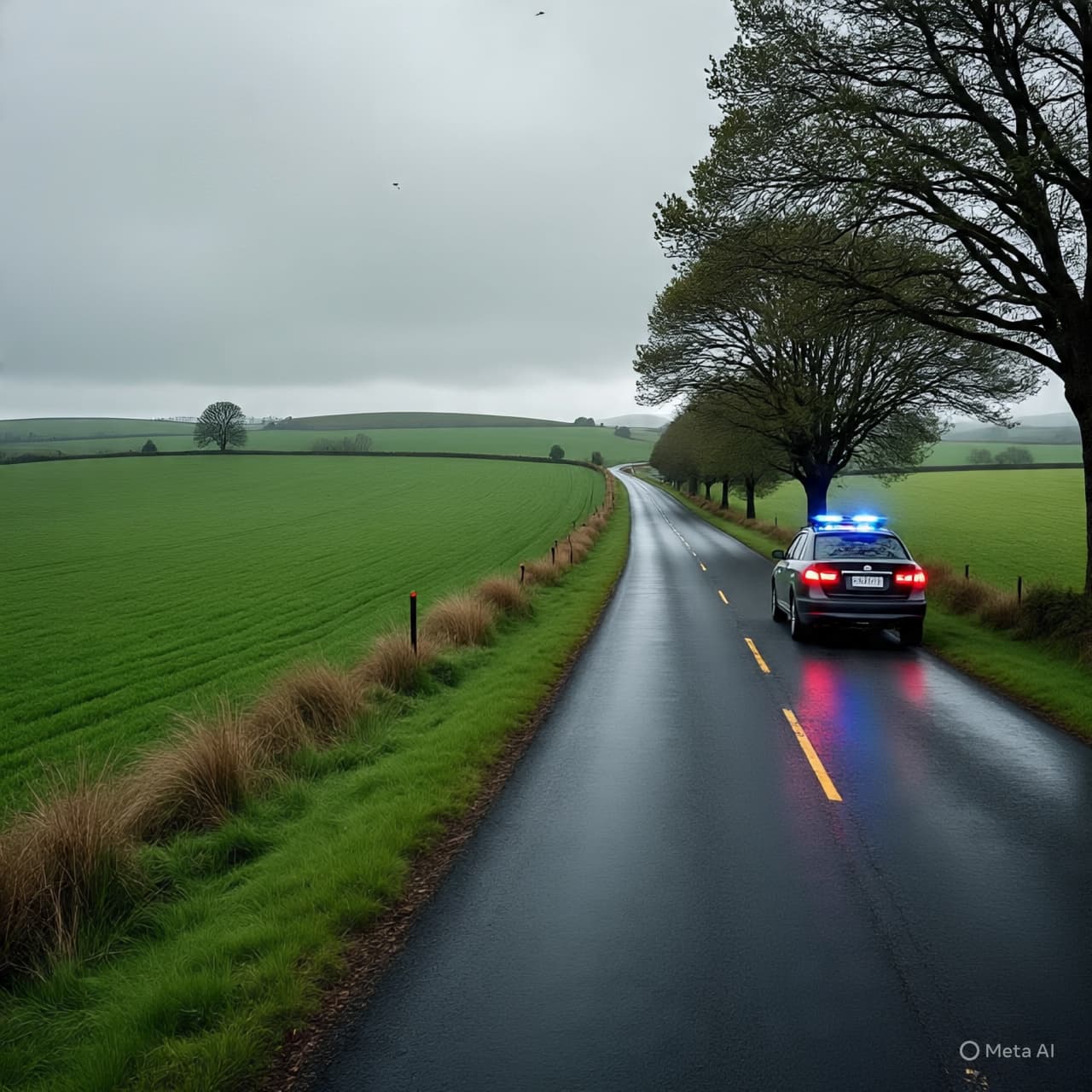
There are roads that slip quietly between counties, marked only by a change in sign or the subtle shift of landscape. Near the border of Limerick and Tipperary, such a stretch became the focus of a Garda operation that unfolded with methodical precision rather than spectacle.
Officers from An Garda Síochána carried out a search in the border area, resulting in the seizure of a firearm and approximately €70,000 worth of cocaine. The drugs, packaged for suspected distribution, were taken for forensic analysis, while the weapon was secured for ballistic examination. No injuries were reported in the course of the operation.
The seizure forms part of ongoing efforts to disrupt the movement of narcotics through regional corridors that link urban centers with smaller towns. Border zones between counties, though administrative rather than national, can offer logistical advantages for those attempting to shift goods discreetly. Gardaí have increasingly relied on targeted intelligence and coordinated checkpoints to intercept such activity before it reaches local communities.
Cocaine remains one of the most prevalent illegal substances in Ireland, with law enforcement agencies reporting sustained demand across both cities and rural areas. Its distribution networks often involve layered supply chains, from importation through ports to inland transport and street-level sales. The presence of a firearm alongside the drugs underscores the risks that can accompany trafficking operations, where disputes or perceived threats may escalate quickly.
Authorities have indicated that investigations are ongoing, including efforts to trace the origin of the seized substances and determine whether organized crime groups were involved. Arrests may follow pending further inquiries. The value of the drugs was calculated based on estimated street price, a metric frequently used to convey the scale of a seizure.
For residents living along the quiet roads near the Limerick–Tipperary boundary, the operation may have passed largely unseen — an unmarked vehicle, a brief closure, a momentary pause in routine. Yet its implications ripple outward, touching broader national strategies aimed at reducing drug availability and associated violence.
In public statements, Garda representatives have reiterated their commitment to community safety, emphasizing that intelligence-led policing remains central to curbing both drug trafficking and illegal firearms possession. The recovered weapon will undergo technical examination to determine whether it has been linked to previous incidents.
As the seized items move from roadside to evidence locker, the border returns to its familiar stillness. Fields stretch on either side, traffic flows again without interruption. But beneath that ordinary landscape lies the quiet reminder that the routes connecting counties can also connect networks of crime — and that vigilance, often unseen, continues along them.
AI Image Disclaimer
Visuals are AI-generated and serve as conceptual representations.
Sources
An Garda Síochána
Garda National Drugs and Organised Crime Bureau
Courts Service of Ireland
Published by Banx Network. This article is part of the Banx decentralized media programme, powered by the BXE token on the XRP Ledger.