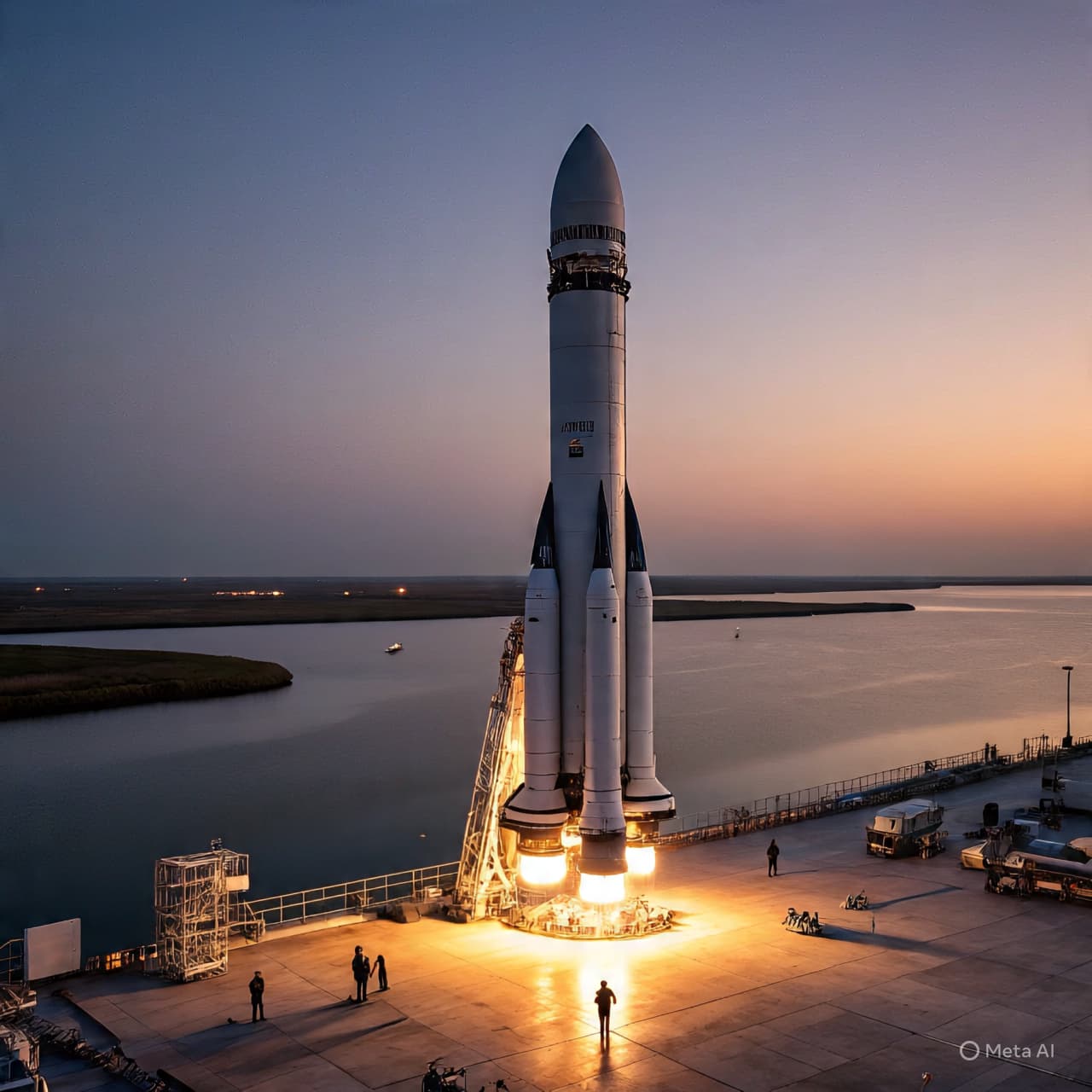
Before dawn, launch pads along Florida’s coastline often stand in quiet silhouette — towers of steel outlined against a horizon not yet lit. Rockets, when they rise, do so in a matter of minutes. The decisions that precede them, however, unfold slowly, measured in reviews, inspections, and caution.
This week, the U.S. Space Force announced it is pausing national security launches aboard the Vulcan rocket, introducing a moment of reassessment into a program designed to carry some of the nation’s most sensitive payloads into orbit.
The Vulcan launch vehicle, developed by United Launch Alliance as a successor to the Atlas V and Delta IV rockets, has been positioned as a central pillar of the United States’ next-generation launch capability. Certified for national security missions after completing required demonstration flights, the rocket is intended to support satellites critical to communications, missile warning, navigation, and reconnaissance.
The pause follows a review process tied to recent technical evaluations. Space Force officials indicated that the decision reflects standard oversight protocols rather than a broad programmatic failure. When payloads involve national security assets, certification standards demand extensive validation of hardware performance, flight data, and anomaly resolution. Even minor irregularities can prompt additional scrutiny.
United Launch Alliance has stated that it is working closely with the Space Force to analyze data and address any findings. The Vulcan rocket, powered by BE-4 engines supplied by Blue Origin, represents years of industrial coordination and supply chain development. Its introduction is part of a broader effort to modernize U.S. launch infrastructure while maintaining assured access to space.
National security launches occupy a distinct category within the launch industry. Unlike commercial missions, they often involve classified payloads and strategic timelines. The Space Force, which oversees military space operations, maintains strict criteria for reliability and mission assurance. A temporary pause allows engineers to confirm that performance margins align fully with requirements before proceeding.
The timing also intersects with a competitive landscape. Multiple providers now compete for government launch contracts, including established and emerging companies. Ensuring confidence in each vehicle is central to sustaining that marketplace while safeguarding critical missions.
For now, scheduled Vulcan national security missions will remain on hold pending completion of the review. Other certified vehicles may absorb near-term launches if necessary, preserving continuity for defense-related deployments.
In the broader arc of spaceflight, pauses are not uncommon. New rockets undergo iterative refinement, and oversight agencies frequently reassess readiness in response to data. The stakes of orbital deployment — particularly for defense systems — leave little margin for uncertainty.
As engineers sift through telemetry and evaluation reports, launch complexes remain prepared but patient. The towers stand ready; the countdown clocks are quiet.
When Vulcan next carries a national security payload skyward, it will do so after layers of verification reaffirm its reliability. In the realm of strategic space operations, progress is measured not only by liftoff, but by the confidence that precedes it.
Published by Banx Network. This article is part of the Banx decentralized media programme, powered by the BXE token on the XRP Ledger.