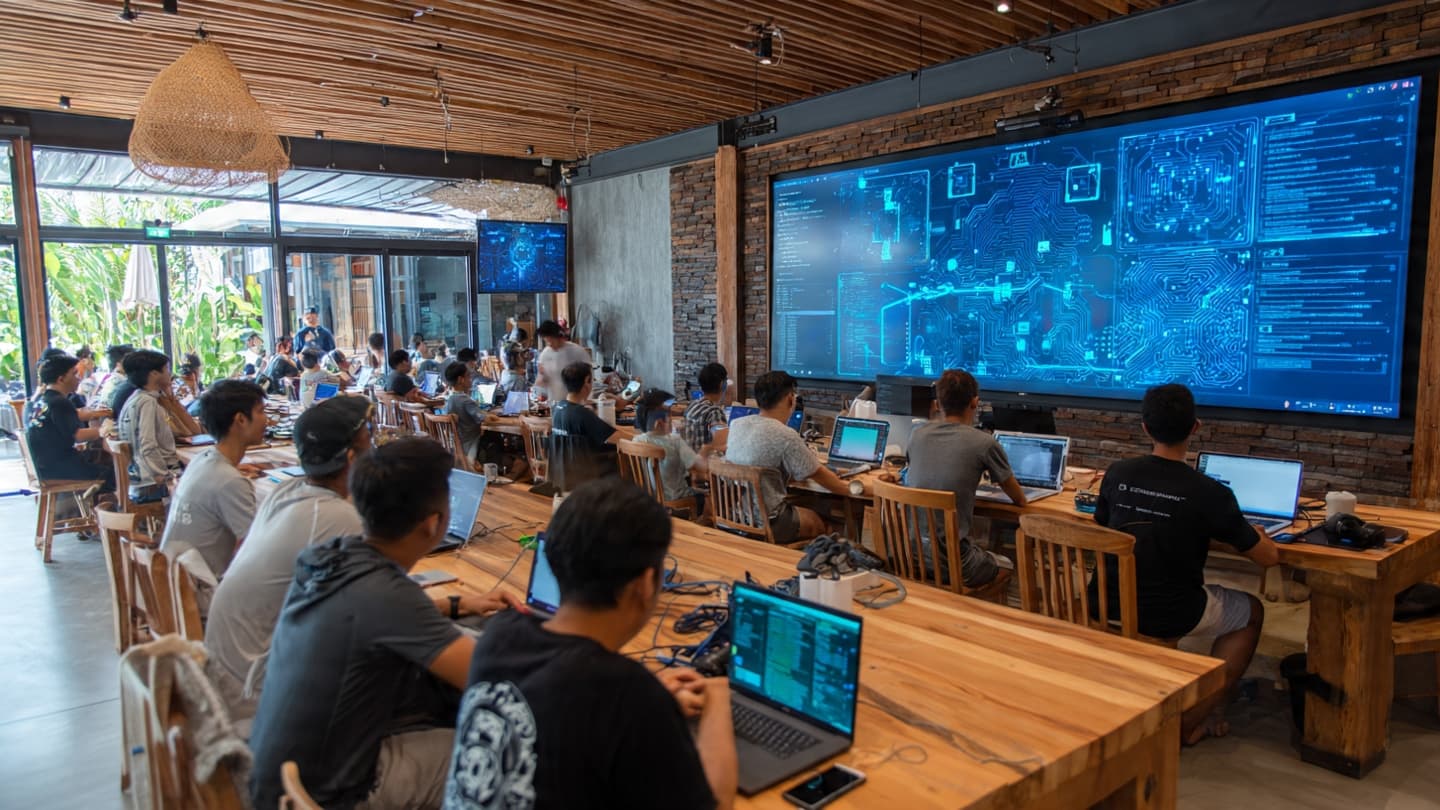
In Bali, where the landscape is often associated with beaches, temples and tourism, another kind of activity is taking place behind computer screens. Young developers are spending hours learning how digital systems work, testing ideas and building software around a technology that remains relatively new.
ShardLab and Indonesia's Creative Economy Ministry have expanded a partnership focused on blockchain talent development. The collaboration was highlighted during Southeast Asia Blockchain Week 2026, while the ninth Protocol Camp cohort concluded with a final demonstration event in Bali.
Protocol Camp is designed to provide developers with practical experience in blockchain technology. Participants work through training and development activities before presenting projects that demonstrate what they have built.
The latest cohort was described as the program's third Asia-wide batch. Its completion reflects the increasingly regional nature of technology education, where developers from different countries can learn through the same programs and collaborate across borders.
Blockchain technology can be used for more than cryptocurrencies. Developers have explored applications involving digital identity, financial systems, supply-chain records, ownership verification and other forms of decentralized data management.
For Indonesia's creative economy, the technology can have particular relevance where digital ownership and intellectual property are concerned. Creative products increasingly exist in digital form, creating new questions about how ownership and transactions can be recorded.
The partnership also connects with Indonesia's broader interest in developing digital talent. Technology industries require people who can build and maintain software, while emerging fields often need specialized knowledge that may not yet be widely available through conventional education.
Training programs can help close that gap by giving participants practical experience. Instead of learning only theoretical concepts, developers can work with tools and platforms while creating projects that demonstrate technical skills.
The international element is also important. Technology markets do not stop at national borders, and Indonesian developers can potentially work with companies, projects and communities located elsewhere in Asia and beyond.
ShardLab and the Creative Economy Ministry have also opened applications for the next Protocol Camp cohort, with a kickoff planned during EastPoint:Seoul 2026.
The continuation of the program suggests that blockchain development is being treated as part of a longer talent-building process rather than a single event. Each cohort adds another group of developers to an ecosystem that is still evolving.
For Indonesia, the value of such programs may ultimately depend on what participants build after training. Skills become economically meaningful when they translate into products, businesses, research and services that can operate beyond the classroom.
The technology itself will continue to change, as blockchain platforms, digital assets and decentralized applications develop in different directions. But beneath those changes lies a more enduring requirement: people capable of understanding new technologies and turning them into practical tools.
In Bali, the latest group of developers has completed one stage of that journey. Their projects are small pieces within a much larger digital landscape, but together they reflect Indonesia's continuing effort to develop the skills needed for an economy increasingly shaped by software and emerging technologies.
Image Disclaimer
The accompanying illustrations were generated using AI and serve as conceptual representations of blockchain education and technology development in Indonesia.
Sources
ANTARA PR Newswire ShardLab Ministry of Creative Economy of Indonesia Southeast Asia Blockchain Week
Published by Banx Network. This article is part of the Banx decentralized media programme, powered by the BXE token on the XRP Ledger.