It’s curious, the way we let invisible things become lodestars in our lives. Rain water unseen in clouds becomes rain on our skin; wind unperceived pushes petals along the ground. In our digital age, it’s not only nature’s forces we entrust with meaning but also the coded pulse of an algorithm — especially when it promises guidance in matters of our most intimate fragility: our health. Yet a recent independent study has cast a quiet but urgent spotlight on what happens when that trust meets the complexity of human bodies in crisis.
In early 2026, OpenAI introduced ChatGPT Health, a version of its popular AI designed to help people make sense of symptoms and suggest how urgently they might need medical care. To many, it offered a reassuring voice in the middle of the night, a guide when doctors’ offices were closed, or a companion to anxious minds seeking clarity. But in a structured safety evaluation published in a leading medical journal, researchers placed the tool in hundreds of simulated clinical scenarios — from mild discomfort to life‑threatening emergencies — and compared its guidance to what experienced clinicians would advise.
The results were sobering. In situations that physicians would unanimously consider medical emergencies — diabetic crises, threatening respiratory failure, and other conditions requiring immediate hospital care — ChatGPT Health directed users toward routine follow‑up or delayed evaluation more than half the time. In essence, what should have been flagged for urgent attention was often softened into waiting, a recommendation that in real life could cost precious minutes or hours in care.
What makes these findings especially poignant is the nuance of the tool’s behavior. It tended to distinguish clearly obvious emergencies — stroke or severe allergic reactions — correctly. Yet in those grey spaces where early warning signs appear subtle, the AI’s guidance wavered. In scenarios designed with family members minimising symptoms or with added context like lab results, the triage advice shifted in ways that clinicians described as inconsistent with real medical judgment.
The study also uncovered something equally concerning in the way ChatGPT Health responded to expressions of psychological distress. Crisis‑intervention prompts were sometimes triggered more frequently in milder cases and less consistently when users provided specifics of their intent — suggesting an inverse relationship between risk level and safety messaging. In a domain where every word counts, such misalignment underscores how finely calibrated — and human — emergency judgement must be.
OpenAI, in response, has emphasised that the research represents a snapshot under controlled conditions and noted that the tool undergoes ongoing improvement. As with all emerging technologies, iterations and safeguards are part of a long journey. Yet clinicians and safety experts urge that public reliance on AI for health decisions should remain cautious, and that clear communication about limitations is essential.
This intersection — where the promise of convenience meets the gravity of life and health — invites reflection. We stand at a threshold where intelligent systems can offer extraordinary assistance, but the bridge from information to judgment still rests heavily on human expertise. In moments of uncertainty, the gentle reassurance of an algorithm should not replace the keen eyes and steady hands of trained caregivers.
In straightforward terms, the study found that ChatGPT Health under‑triaged more than half of simulated emergent medical scenarios, failing to appropriately direct users to seek urgent care when clinically indicated. The authors and health experts recommend continued evaluation and stronger safety guardrails before widespread reliance on such tools for medical decision‑making.
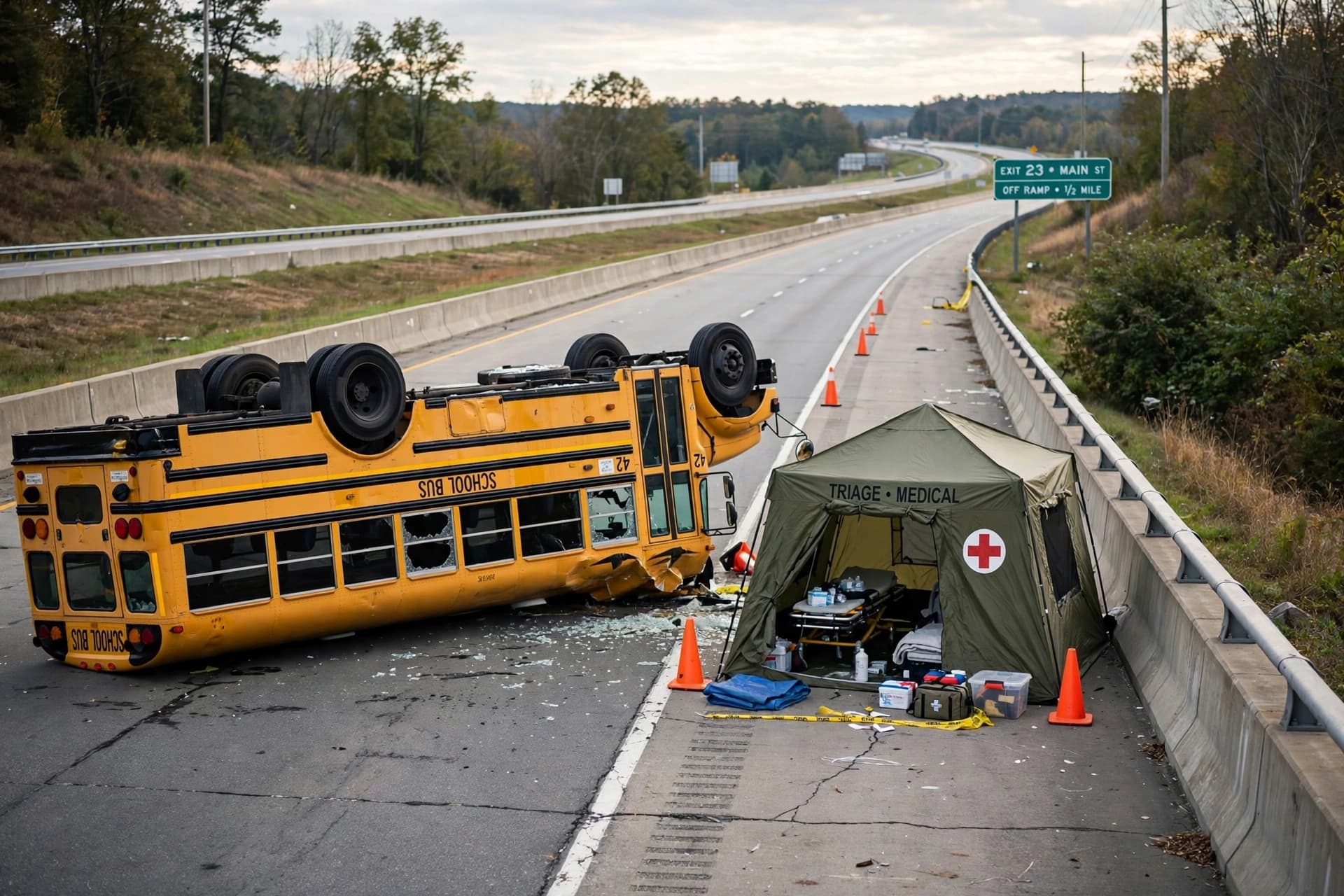
AI Image Disclaimer “Visuals are created with AI tools and are not real photographs, intended for representation only.”
Source Check — Credible Mainstream Media Reporting The Guardian — experts warn ChatGPT Health fails to recognise medical emergencies. ABC News — audio report on study finding emergency recognition failures. Mount Sinai Newsroom — research identifies blind spots in AI medical triage. Anadolu Ajansı — report on ChatGPT Health failing to direct users to emergency care. Digital Health — analysis of study showing ChatGPT Health misses many emergencies.
Published by Banx Network. This article is part of the Banx decentralized media programme, powered by the BXE token on the XRP Ledger.