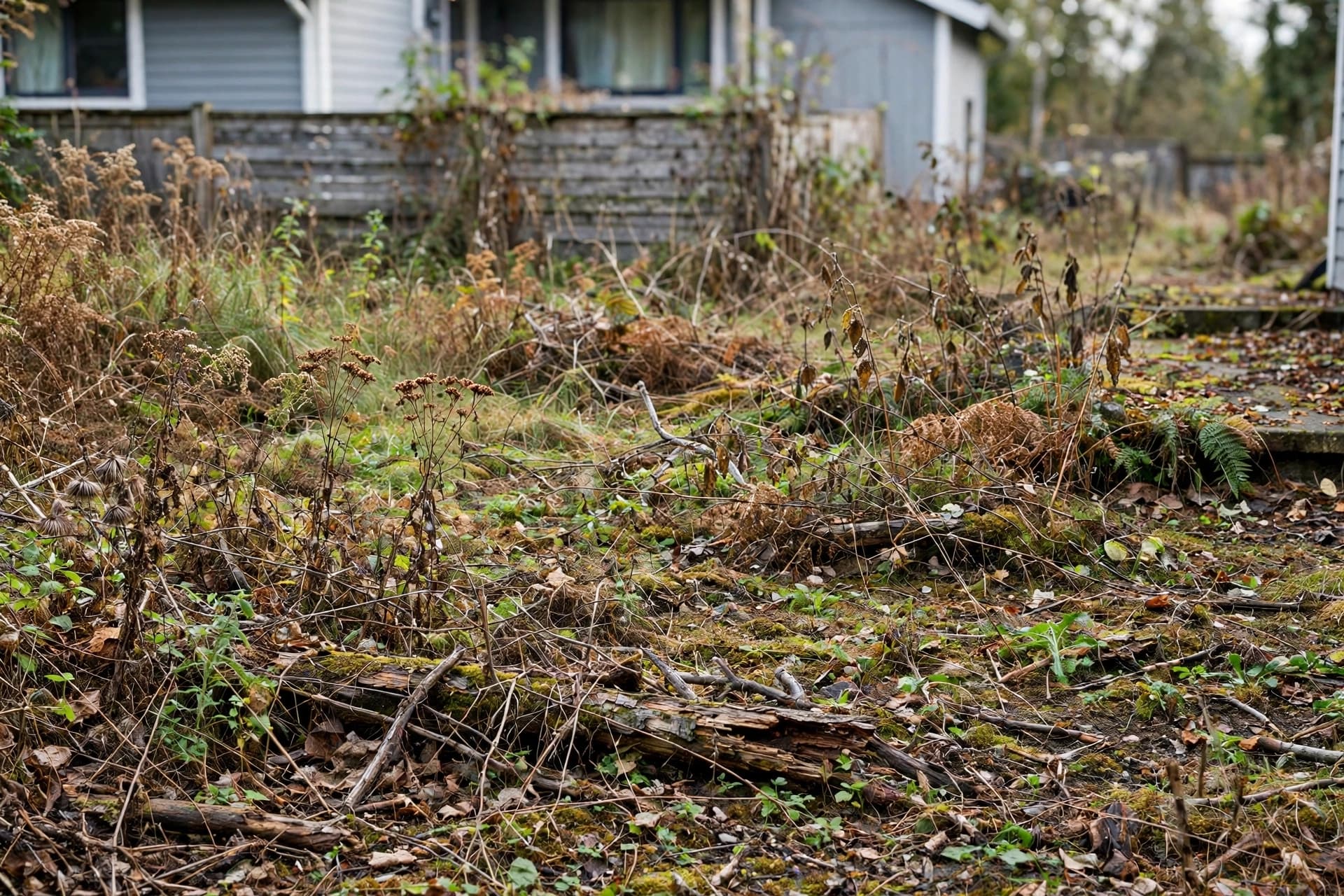
There is a quiet argument embedded in the way we tend our gardens, one that rarely gets spoken aloud but is written in the choices we make: manicured lawn or wild growth, raked leaves or fallen deadwood, order or a certain amount of mess. For decades, the preference has leaned toward neatness, toward the removal of anything that might look unkempt. But a growing body of research suggests that the microbes we encounter in our everyday environments—or fail to encounter—shape our immune systems in ways that matter for health. And a new study from Finland has found that rewilding a private yard can begin to shift the human microbiome and inflammatory signals in as little as three months.
The study, led by researchers at the University of Helsinki and published in the journal Microbiome, rewilded twenty-one urban private yards by introducing deadwood, diverse vegetation, and microbially rich soil . Fifteen control yards were analyzed for comparison. Samples were collected before the intervention in summer and again three months later in autumn, measuring skin bacteria, oral microbiomes, and salivary cytokine levels—specifically IL-6, a pro-inflammatory signal, and IL-10, an immunoregulatory one .
The findings were nuanced but significant. Skin microbial diversity remained constant in the rewilding group and was associated with plant richness, even as the normal seasonal decline and reduced outdoor time in autumn would have been expected to reduce it . Rewilding was also associated with changes in oral microbiota, including a decrease in L-histidine degradation gene pathways and an increase in Mycobacteriaceae . In the rewilding group during autumn, picking berries and fruits was directly associated with immunoregulatory IL-10 and pleiotropic IL-6 in saliva .
Perhaps the most striking finding concerned the neighborhood. The abundance of deadwood within a 200-meter radius of the homes was directly linked to skin Gammaproteobacterial taxa and to typically soil-derived bacteria like Cytobacillus and Streptomyces in saliva . Across all groups analyzed jointly, the diversity of oral microbial functional gene pathways was negatively correlated with IL-6 levels—meaning that greater microbial diversity was associated with lower pro-inflammatory signaling .
The researchers frame their results within the biodiversity hypothesis, which holds that exposure to diverse environmental microbes supports immune function and may protect against immune-mediated diseases . Urbanization and biodiversity loss have reduced human exposure to these microbes, and the consequences are thought to contribute to rising rates of conditions like allergies and inflammatory disorders . The study suggests that decomposing plant matter—deadwood and plant residues—may be particularly important, not just plant species richness .
The study is small, with only thirty-six participants, and the three-month timeframe is short. The authors are careful to note that their findings provide an incentive for further research rather than definitive proof of clinical benefit . Yet the direction of the results is consistent with a broader pattern emerging from studies of green space and human health: that contact with the microbial world, in all its messiness, is not something to be sanitized away.
For urban dwellers, the implication is gentle but practical. The deadwood in a neighboring yard, the berries left to ripen on a bush, the soil beneath the fallen leaves—these are not merely aesthetic choices. They are, in a small way, part of an ecology that includes the human body, with its own microbial communities, its own immune system, its own need for the diversity that cities often erase. A garden can be more than a garden. It can be a connection to something older and more complex than the tidy lawn.
AI Image Disclaimer: The visual content in this article was generated by artificial intelligence and is for illustrative purposes only.
Sources:
· Microbiome · University of Helsinki · Springer
Published by Banx Network. This article is part of the Banx decentralized media programme, powered by the BXE token on the XRP Ledger.