Across Europe, the landscape is gradually acquiring another kind of movement. On open plains and along distant coastlines, turbine blades turn through changing weather, converting the steady motion of wind into electricity. During the first half of 2026, that movement became more substantial.
Europe added 8.8 gigawatts of new wind-energy capacity during the first six months of the year, an increase of nearly one-third compared with the same period in 2025, according to WindEurope data reported by Reuters.
Germany played a leading role in the expansion, while offshore wind connections also contributed significantly to the increase. The development reflects a broader effort across European countries to expand renewable electricity and reduce dependence on fossil fuels.
The growth of wind power has become increasingly important as European electricity systems respond to changing energy markets. The continent has experienced periods of sharp volatility in gas and power prices, encouraging governments and companies to seek greater diversity in electricity generation.
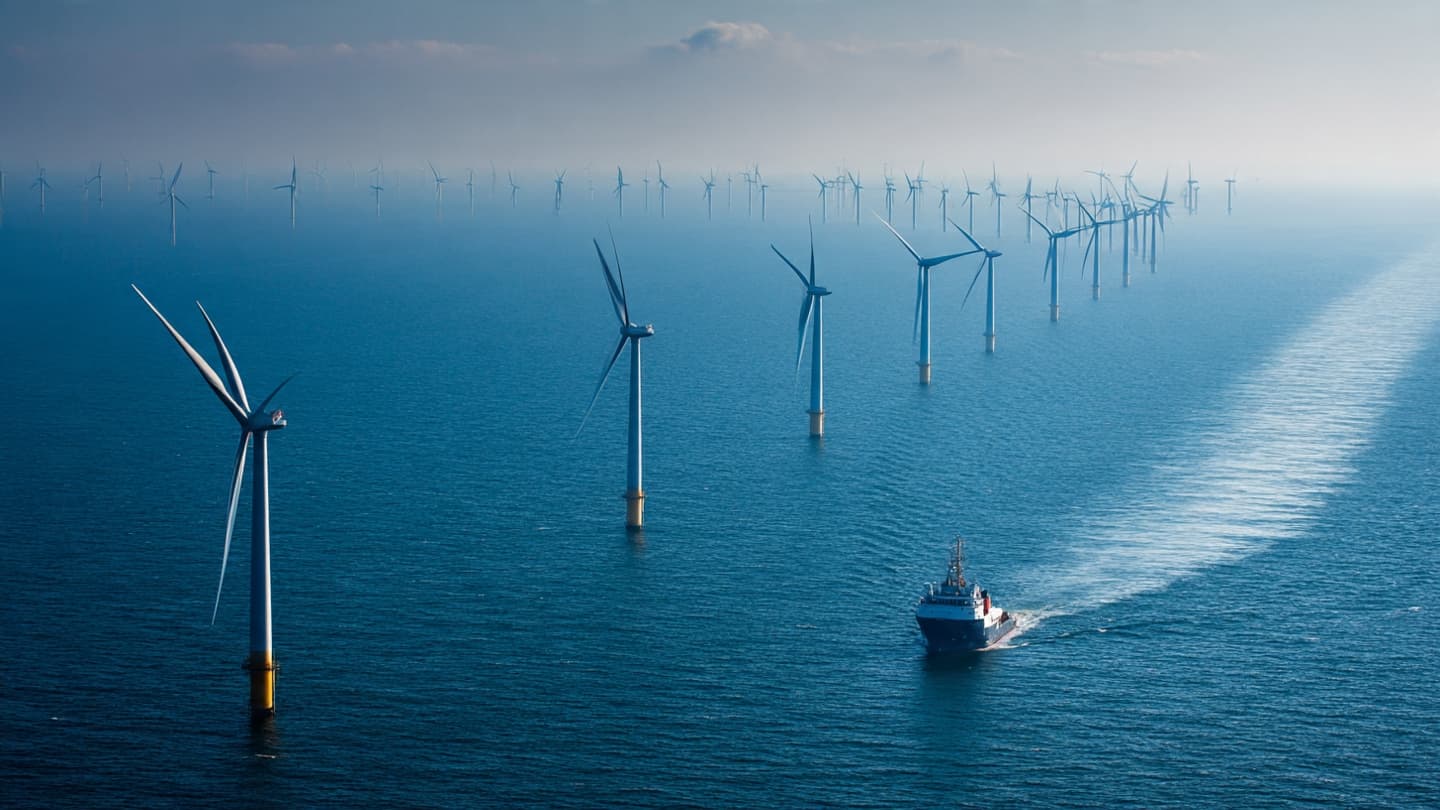
Offshore wind offers a particularly distinctive opportunity. Turbines positioned at sea can take advantage of stronger and more consistent winds, although construction and grid connections are technically demanding and require substantial investment.
On land, Germany remains one of Europe’s most important wind markets. Large areas of the country have been used for wind development, while manufacturers, engineering companies, grid operators, and project developers form an extensive industrial ecosystem around the sector.
The expansion also creates demand beyond the turbines themselves. Ports need specialized infrastructure, factories produce towers and components, engineering firms design projects, and transmission networks must be strengthened to carry electricity from windy regions toward major population centers.
Europe’s renewable-energy transition is not occurring through wind alone. Solar power has expanded rapidly as well, and Reuters reported that wind and solar together surpassed fossil fuels in EU electricity generation during 2025 for the first time.
That shift does not mean fossil fuels have disappeared from Europe’s electricity system. Gas and other conventional sources continue to provide power when renewable generation is insufficient, while grid operators work to balance increasingly variable sources of electricity.
The first-half figures nevertheless show that Europe continues adding substantial wind capacity. As new turbines rise across fields and offshore waters, the continent’s energy system is gradually becoming more dependent on infrastructure designed around the movement of natural forces.
AI IMAGE DISCLAIMER
The accompanying illustrations were generated with AI and serve as conceptual representations of Europe’s wind-energy infrastructure, not actual photographs.
SOURCES
Reuters WindEurope European Commission
Published by Banx Network. This article is part of the Banx decentralized media programme, powered by the BXE token on the XRP Ledger.