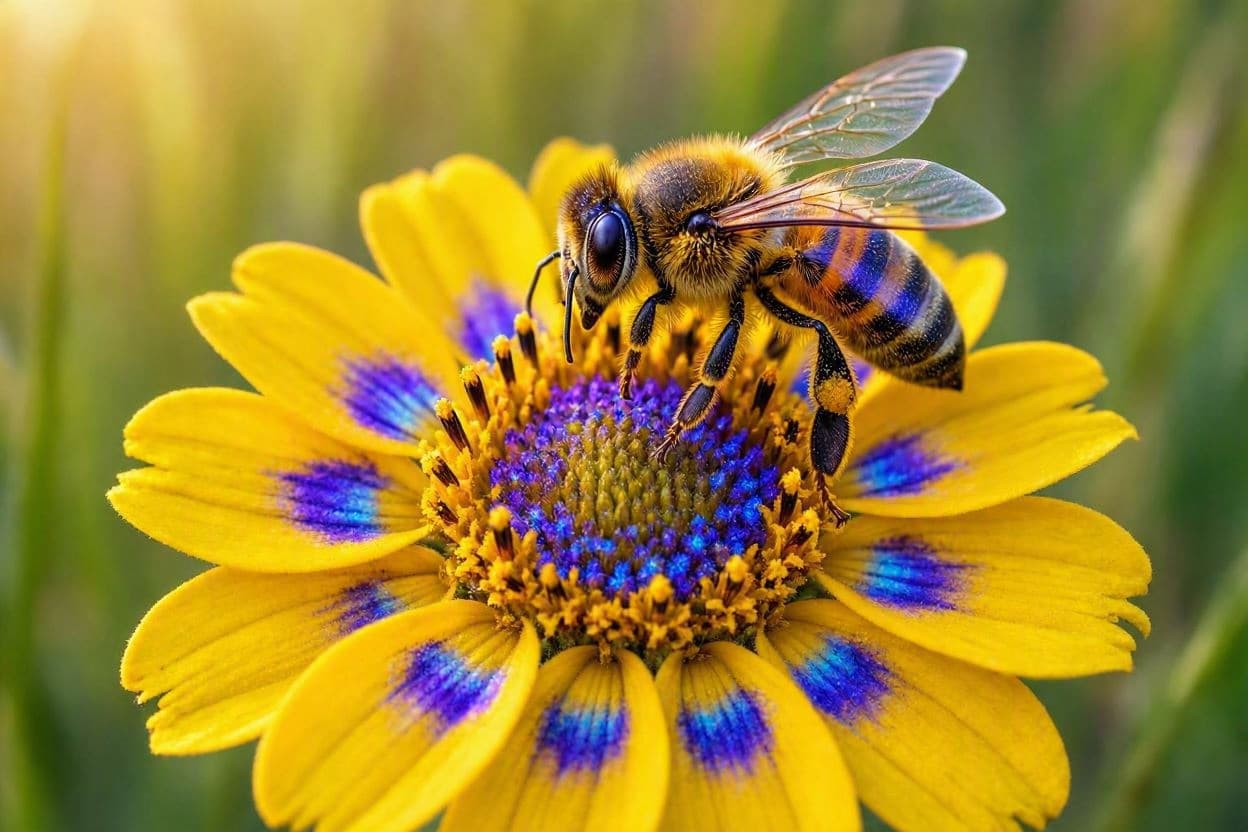
To walk through a meadow is to witness a tapestry of color, yet for the humble bee, this visual experience is far richer and more complex than human eyes can perceive. For centuries, we have understood that bees see ultraviolet light, allowing them to locate nectar guides on flowers that remain invisible to us. However, recent scientific discoveries suggest that their visual world is even more nuanced, revealing a sensory landscape that challenges our assumptions about insect cognition and perception. This new understanding invites us to look closer at the tiny pollinators that sustain our ecosystems.
Researchers have long known that bees possess compound eyes capable of detecting polarized light and ultraviolet patterns. These abilities are crucial for navigation and foraging, helping them find their way home and identify the most rewarding blooms. But new studies indicate that bees may also process visual information in ways that involve higher-order cognitive functions, such as recognizing complex shapes and even distinguishing between different artistic styles. This suggests that their vision is not merely a mechanical input but an integrated part of a sophisticated mental map.
The implications of these findings extend beyond mere curiosity. Understanding how bees see the world can help us design better conservation strategies. If bees rely on specific visual cues that we have overlooked, then habitat restoration efforts must account for these subtle details. Planting flowers that bloom in colors visible to humans may not be enough; we must consider the full spectrum of light that bees utilize to thrive.
Moreover, the complexity of bee vision highlights the intricate co-evolution between plants and pollinators. Flowers have evolved to signal their presence in ways that align with bee perception, creating a silent dialogue of color and pattern. This relationship is a testament to the interconnectedness of nature, where the survival of one species is deeply tied to the sensory capabilities of another. It reminds us that beauty in nature is often functional, designed for survival rather than just aesthetic appreciation.
As we delve deeper into the mechanics of bee vision, we also uncover the fragility of their environment. Pesticides and habitat loss can disrupt not only their physical health but also their ability to process visual information. A polluted environment may blur the signals they rely on, making it harder for them to find food and navigate. Protecting bees, therefore, requires a holistic approach that considers their sensory needs alongside their biological ones.
The study of bee vision also offers insights into the development of artificial intelligence and robotics. By mimicking the efficient visual processing systems of bees, engineers can create drones and sensors that are more effective in complex environments. Nature, in its wisdom, has already solved many of the problems we struggle with, offering blueprints for innovation that are both elegant and sustainable.
Ultimately, recognizing the depth of bee perception fosters a greater sense of respect for these small creatures. They are not just instinct-driven machines but beings with a rich internal experience of the world. This shift in perspective encourages a more empathetic approach to conservation, where we value bees not just for their utility but for their intrinsic complexity.
The discovery that bees see the world in more ways than previously thought enriches our understanding of their role in the ecosystem. As science continues to unravel the mysteries of their vision, it underscores the importance of preserving the delicate visual landscapes they depend on. Protecting bees means honoring the full spectrum of their existence.
AI Image Disclaimer: The visual representations accompanying this article are AI-generated interpretations designed to illustrate the concept of ultraviolet vision and floral patterns, using abstract and colorful imagery.
Sources: Nature Communications Scientific American University Research Journals
Published by Banx Network. This article is part of the Banx decentralized media programme, powered by the BXE token on the XRP Ledger.