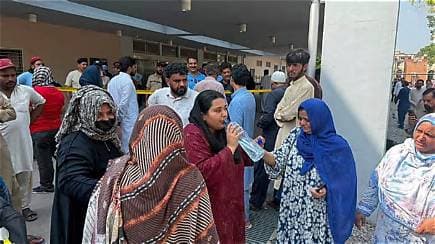
At Gaza’s edge, where gates have too often marked the end of movement rather than its beginning, a crossing has reopened. The act itself was quiet — barriers lifted, procedures resumed — yet its meaning traveled far beyond the narrow strip of land it serves. In the context of the Israel-Hamas ceasefire, the reopening signals not resolution, but a cautious easing of pressure in a place long defined by closure.
Border crossings in Gaza are never merely logistical. They function as valves, regulating not only goods and people, but hope and endurance. For months, this particular crossing had stood still, its silence echoing the broader halt imposed by war. Its reopening allows humanitarian aid, fuel, and limited commercial traffic to move once more, offering practical relief to a population strained by scarcity.
The decision emerged from fragile negotiations underpinning the ceasefire, an agreement marked by pauses rather than trust. Each concession is calibrated, reversible, and closely watched. Allowing the crossing to operate again reflects a willingness — however tentative — to translate ceasefire language into lived reality.
For Israel, the reopening is framed as conditional and controlled, tied to security assurances and ongoing monitoring. For Gaza, it represents a partial restoration of access rather than freedom, a reminder that normalcy remains distant. Still, even limited movement alters the texture of daily life, reducing reliance on emergency improvisation.
Humanitarian organizations describe the step as necessary but insufficient. Aid can flow more predictably, but needs remain vast. Infrastructure lies damaged, medical systems stretched thin, and displacement unresolved. The crossing eases one constraint while leaving many others firmly in place.
History tempers optimism. Previous ceasefires have opened gates briefly, only to see them close again when violence resurfaces. Memory lingers at these checkpoints, carried by those who queue with documents in hand and uncertainty close behind. Progress here is measured not in declarations, but in days without reversal.
As trucks pass through and officials resume routines, the crossing stands as both symbol and test. It asks whether restraint can endure, whether agreements can hold beyond paper, and whether movement — even limited — can build momentum toward something more durable.
For now, the gates are open. In Gaza, that alone is enough to matter.
AI Image Disclaimer Visuals are AI-generated and serve as conceptual representations.
Sources Regional diplomatic reporting Humanitarian agency briefings Israeli and Palestinian official statements International ceasefire monitoring coverage
Published by Banx Network. This article is part of the Banx decentralized media programme, powered by the BXE token on the XRP Ledger.