Morning breaks softly over Kyiv, its pale light spilling across the empty courtyards of schools that now serve two purposes — centers of learning and sanctuaries of survival. The laughter of children still echoes through hallways once rattled by explosions, but behind every sound of joy lies an awareness far too mature for their years. As Russia’s invasion enters its fifth year, Ukraine’s children are learning to live — and, in some ways, to fight — within a world forever altered by war.
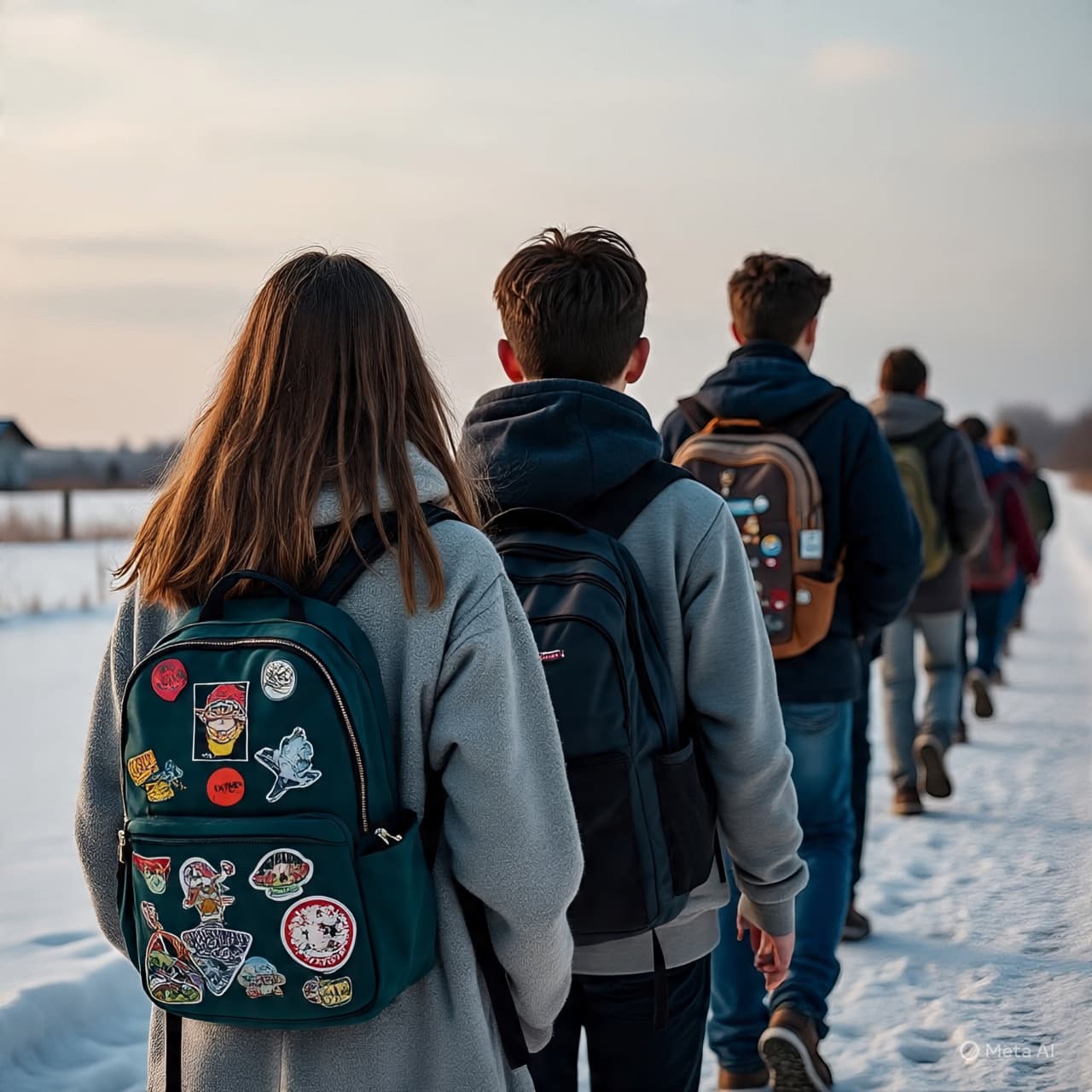
In classrooms where history and mathematics once stood apart, lessons now blend with instruction in first aid, evacuation, and defense. Across the country, more than 300,000 students participate in a national program known as Protecting Ukraine, designed to teach practical survival and self-defense skills alongside the ordinary rhythm of schooling. Teenagers learn how to dress wounds, navigate minefields, and respond to missile alerts. The tone is careful and solemn — a form of education born not from ideology but necessity, shaped by the memories of occupied towns and lost relatives.
For many of these young people, the war is not a distant abstraction but a vivid recollection. They remember the sound of shelling, the weeks spent in basements, and the long lines of families fleeing to the west. Teachers now guide lessons through the weight of those memories, balancing instruction with reassurance. Beneath maps of Europe, there are reminders of air raid drills; beside art projects, a neatly stacked set of emergency kits. The transformation of education has been both practical and deeply emotional — an effort to prepare without extinguishing hope.
Yet amid this preparation, the heartbeat of youth persists. Between lessons, children gather to laugh, to share music, to trade dreams that reach beyond the war. In towns once scarred by occupation, sports fields reopen, and classrooms ring with the same small arguments over homework and friendship found anywhere else. That duality — resilience beside ruin, laughter beside loss — defines this generation. They live in a world that demands alertness yet refuses to take away their right to wonder.
Observers often describe Ukraine’s children as a generation of endurance. But they are also inheritors of imagination — the ability to build meaning amid uncertainty. Their teachers say the goal is not to turn them into soldiers but to give them tools to survive and the confidence to rebuild. Each lesson in first aid becomes, in its own way, a lesson in courage.
As the war moves into another year, Ukraine’s children embody both fragility and strength, a living measure of what has been lost and what endures. Their notebooks fill with sketches of peace signs and bandaged hearts; their eyes, still bright, hold the weight of a country learning to begin again even as it defends what remains.
AI Image Disclaimer Visuals are AI-generated and serve as conceptual representations.
Sources (Media Names Only) The Washington Post Reuters UNICEF BBC News Associated Press
Published by Banx Network. This article is part of the Banx decentralized media programme, powered by the BXE token on the XRP Ledger.