There comes a moment in every generation when the future stops feeling distant and starts showing up in everyday life — like a new sound on the street or a machine that seems to think for itself. For many families in cities across the United States, that moment may already have arrived, not on a distant horizon but right at the corner where school drop‑off meets the era of autonomous mobility. What once sounded like science fiction — cars navigating without a human behind the wheel — is increasingly part of real family routines, prompting both wonder and caution about how robot cars fit into the rhythms of childhood.
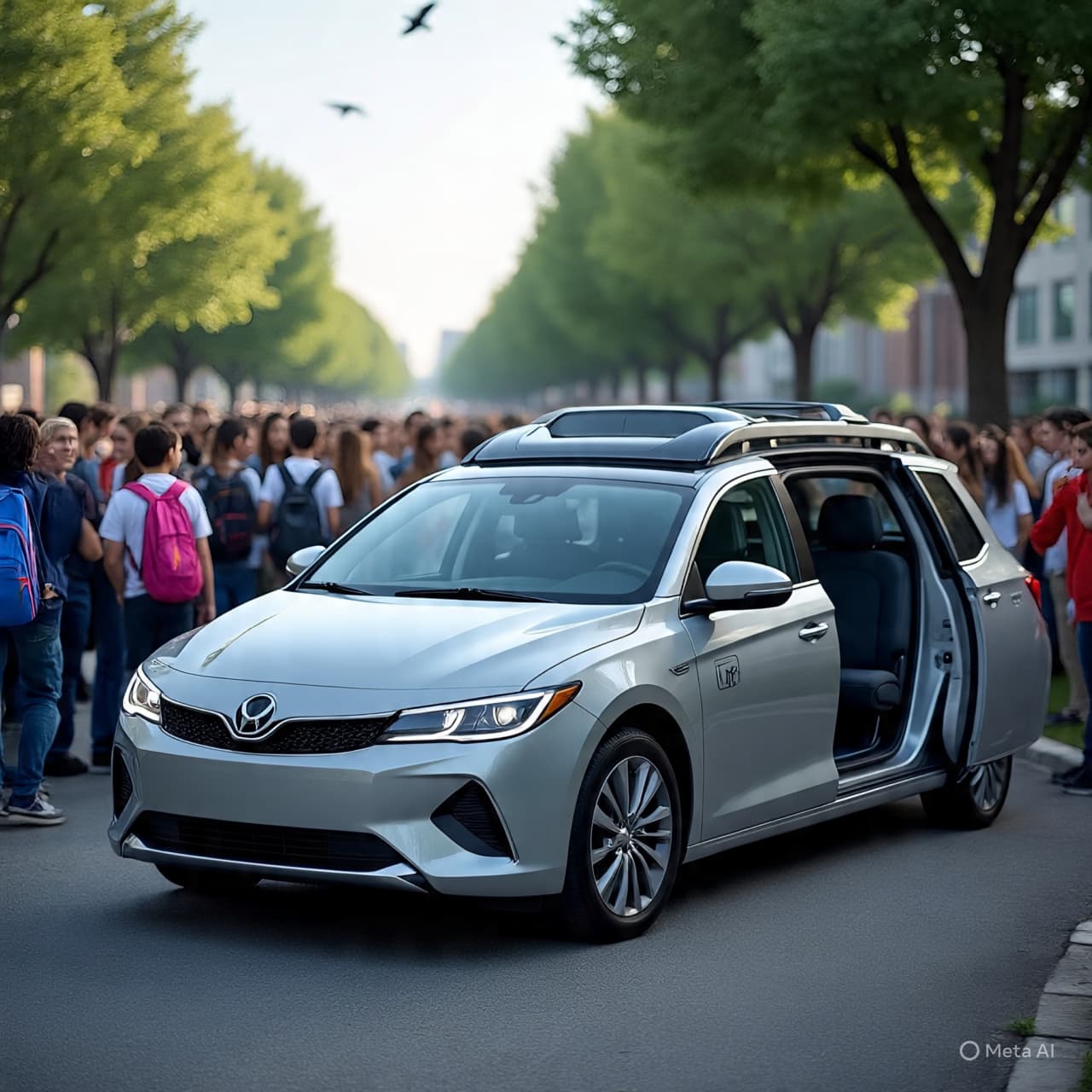
In places like Los Angeles and Phoenix, anecdotal reports and community chatter reveal a trend: parents using Waymo robotaxis to ferry their children to school, after‑school activities, and other destinations, even though the technology’s official policies generally require adult supervision. Families describe a kind of everyday convenience — a quiet, driverless vehicle arriving at the curb to collect a child and whisk them safely along to their next stop — that would have seemed improbable only a few years ago.
The appeal is understandable: busy schedules, concerns over stranger‑from‑ride‑hail drivers, or the desire for dependable transportation can make autonomous vehicles feel like an answer to modern parenting puzzles. But it also raises important questions about safety, regulation, and social norms as cities and companies grapple with how to integrate technology developed for adults into contexts involving unaccompanied minors. Robot cars operate using advanced sensors, lidar, radar, and machine vision to “see” and navigate environments — a technology that is being fine‑tuned with each generation of vehicles — yet they also force us to revisit assumptions about supervision, responsibility, and trust on public roads.
Beyond parent‑driven uses, the broader mobility landscape is shifting toward purpose‑built autonomous vehicles designed around specific passenger groups. Concepts like Toyota’s “Kids Mobi” — a self‑driving bubble‑shaped car designed with children in mind, complete with playful interfaces and AI companions — suggest that the industry is imagining a future where driverless vehicles aren’t just taxis without drivers but vehicles tailored for unique passenger experiences. These prototypes are not yet commonplace on public streets, largely due to regulatory, safety, and technological hurdles, but their very existence speaks to where innovation could lead.
For the children themselves — especially those too young to remember a time before autonomous rides — these vehicles will be just another part of life: something they take for granted, like a tablet or a streaming show. As one parent reflected in an essay about riding in a robot car with a toddler, his son barely registered the novelty — for him, it was simply a ride in a robot car, no different from any other taxi.
Yet as these technologies advance, society must balance excitement with careful discussion about ethics, safety, and equity. How do we ensure that autonomous systems protect young passengers? What rules and infrastructure upgrades are needed before children can ride alone? And how do we prevent unequal access from dividing a generation between those who benefit from robot mobility and those who do not? These are questions that families, policymakers, educators, and technologists are only beginning to explore as the wheels of autonomy begin to turn not just on highways but in the lives of our children.
AI Image Disclaimer Visuals are created with AI tools and are not real photographs.
Sources Reddit community discussions on Waymo robot use, reports of parents using autonomous vehicles for child transport, and concept coverage of Toyota’s autonomous “Kids Mobi.”
Published by Banx Network. This article is part of the Banx decentralized media programme, powered by the BXE token on the XRP Ledger.