Trade rarely moves in a straight line. It begins in fields and factories, passes through warehouses and ports, crosses borders, and eventually appears as numbers in economic reports. Between Cambodia and China, that movement has become more pronounced this year, with bilateral trade continuing to expand through the first eight months of 2026.
Cambodia and China recorded $15.53 billion in bilateral trade from January through August, a 22.3 percent increase from the same period a year earlier, according to figures from Cambodia’s Ministry of Commerce and customs authorities.
Cambodian exports to China reached approximately $1.3 billion during the period, increasing 23.4 percent year over year. Imports from China were substantially larger, reaching about $14.2 billion after rising 22 percent. The figures show both the growth of commerce and the continuing imbalance between the two directions of trade.
The products moving from Cambodia into the Chinese market include rice, fresh bananas, cassava, rubber, and fresh longan, alongside other agricultural and manufactured goods. On the opposite route, Cambodia receives industrial materials and consumer products, including textiles, steel, vehicles, spare parts, machinery, and electronic equipment.
The trade relationship is supported by regional and bilateral agreements. Cambodia’s trade with China operates within the framework of the Cambodia-China Free Trade Agreement and the Regional Comprehensive Economic Partnership, which have expanded market access and established rules for commerce across participating economies.
The wider Cambodian economy is also moving through a period of diversification. Garments, footwear, and travel goods remain important, while policymakers and investors have been looking toward agro-processing, electronics assembly, automotive production, clean energy, and higher-value manufacturing. Chinese investment and supply chains form part of that broader industrial landscape.
Cambodia’s total international trade exceeded $50 billion during the first eight months of the year, with China accounting for 29.8 percent of the country’s overall trade, according to the reported customs figures. That places the bilateral relationship within a much larger movement of goods connecting Cambodia with regional and global markets.
Yet the numbers also show the different scale of the two flows. Cambodian exports to China remain far below imports, despite the faster growth rate of exports during the period. The country’s trade relationship with China therefore carries two parallel stories: expanding access for Cambodian products and continued dependence on Chinese goods, materials, machinery, and industrial inputs.
For Cambodian producers, the expanding Chinese market provides a larger destination for agricultural and manufactured products. The challenge of converting market access into greater export value will depend on production capacity, quality, logistics, processing, and the ability of local companies to participate more deeply in regional supply chains.
The latest figures leave the Cambodia-China trade route moving at a faster pace than a year earlier. With $15.53 billion recorded in the first eight months of 2026, the relationship remains an important part of Cambodia’s commercial landscape as businesses continue to navigate agriculture, manufacturing, logistics, and regional markets.
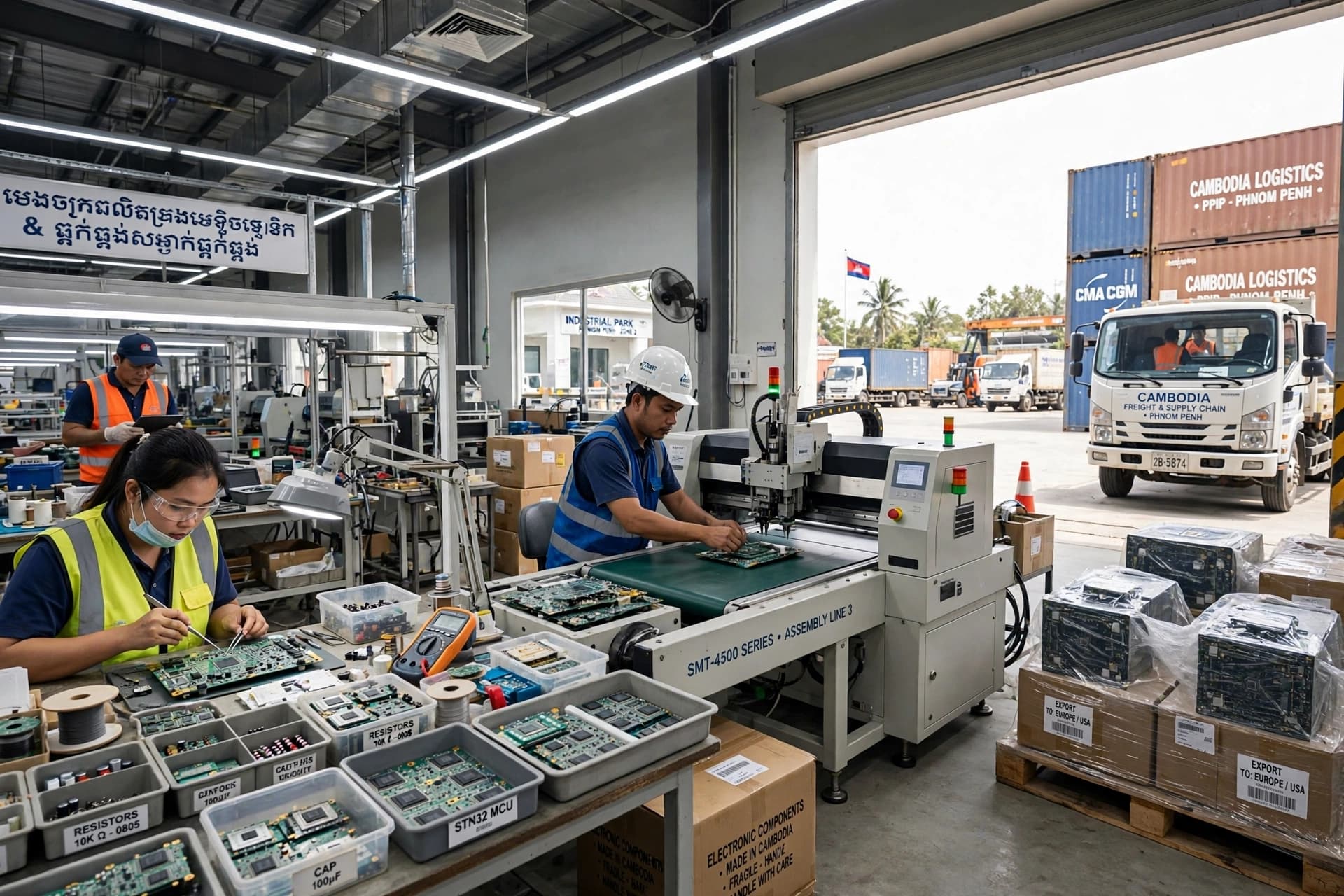
Image Disclaimer The illustrations are AI-generated conceptual visuals and should not be interpreted as documentary photographs of the reported trade activity.
Sources Khmer Times Vietstock Kampuchea Thmey Daily General Department of Customs and Excise Cambodia Cambodia Ministry of Commerce
Published by Banx Network. This article is part of the Banx decentralized media programme, powered by the BXE token on the XRP Ledger.