There is a particular quietness to money when it moves without paper, without queues, and without the familiar sound of coins passing from one hand to another. In Egypt, that quiet movement is becoming increasingly visible across the country’s financial landscape.
By the end of the second quarter of 2026, Egypt’s Instant Payment Network, or IPN, had recorded 1.47 billion transactions worth approximately EGP 4.33 trillion, according to Central Bank of Egypt Governor Hassan Abdalla. The network had also reached around 22 million registered customers.
The figures offer a glimpse into how rapidly electronic payments are becoming part of everyday financial activity. IPN functions as Egypt’s national real-time electronic payment infrastructure, connecting banks and allowing customers to transfer funds and conduct financial transactions electronically.
The development is taking place alongside the expansion of InstaPay, which has become one of the country's main channels for instant electronic transfers. Across the wider Arab region, similar systems have emerged, including Sarie in Saudi Arabia and Aani in the United Arab Emirates.
For consumers, the transition can appear almost invisible. A transfer that once involved cash, a bank visit, or a longer waiting period can increasingly be completed through a smartphone. For businesses, particularly small and medium-sized enterprises, digital payments can also provide another way to receive and send money.
The Central Bank of Egypt has identified greater inclusivity, broader payment use cases, regional integration, and cross-border transactions as important areas for further development. The objective is therefore not simply to increase transaction numbers, but to make instant payments useful across more parts of economic life.
One potential direction is stronger integration with African payment infrastructure. Egypt has held discussions with Afreximbank concerning the connection of the Pan-African Payment and Settlement System, or PAPSS, with InstaPay, which could facilitate cross-border electronic payments with other African countries.
Yet cash remains an important part of Egypt’s economy. The growth of digital payments should therefore be understood as an expanding layer of the financial system rather than an immediate disappearance of traditional money.
The significance of the numbers may ultimately be found in their cumulative effect. More than a billion transactions represent millions of individual decisions to use a digital financial channel, each one small in isolation but collectively reshaping the way money moves.
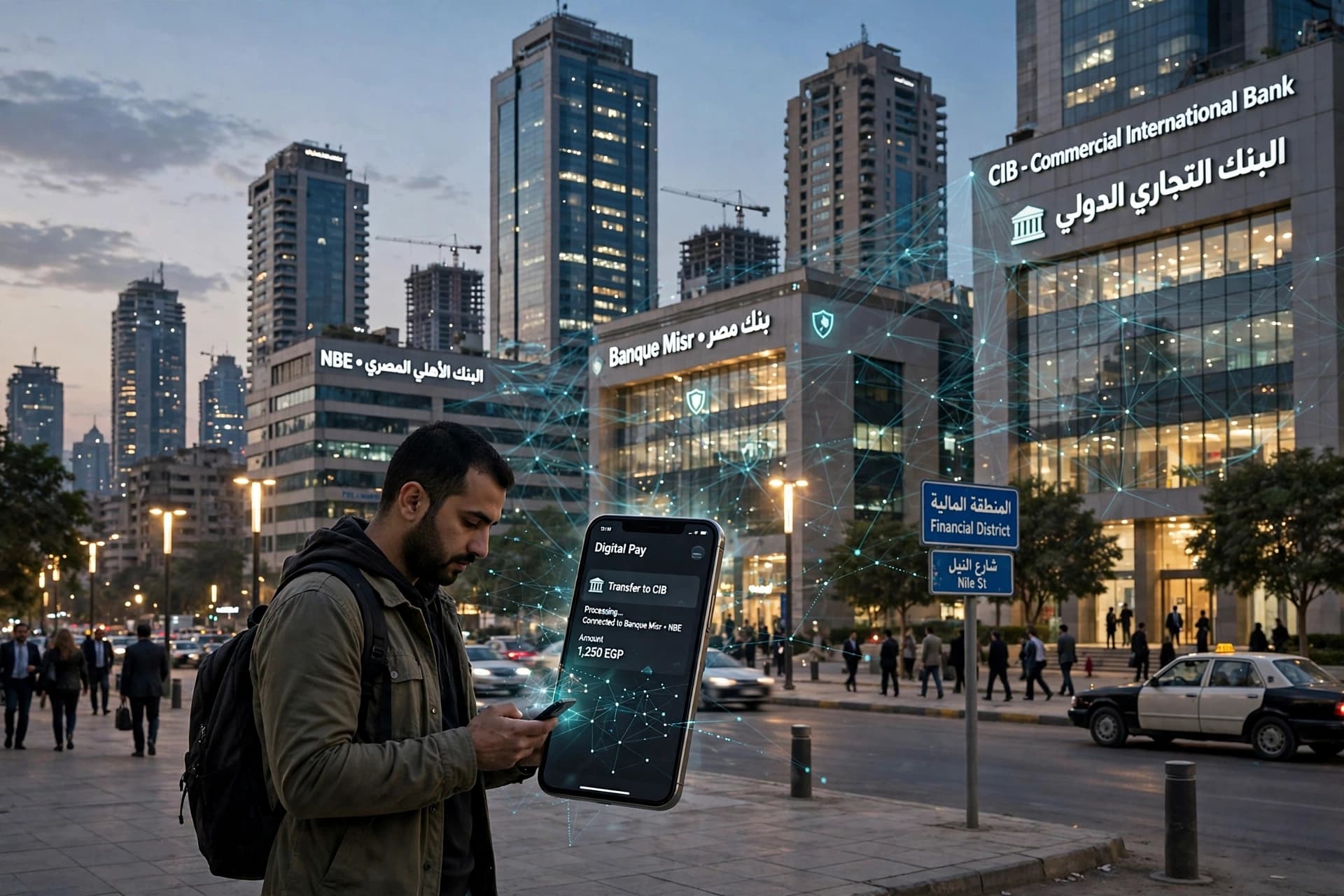
From Cairo’s banks to the phones carried through its streets, Egypt’s financial system is gradually becoming more digital. The technology may work in seconds, but the larger transformation is measured in years, as habits, businesses, and financial institutions slowly adjust to a world in which money can travel almost as quickly as information.
SEO SLUG
egypt-instant-payment-network-digital-payments-2026
HASHTAGS
#Egypt #InstantPayments #DigitalPayments #InstaPay #Fintech #Banking #DigitalEconomy #FinancialInclusion
IMAGE DISCLAIMER
This AI-generated visual is intended solely for editorial illustration and does not depict an actual transaction, person, or financial institution.
SOURCES
Ahram Online Central Bank of Egypt
Published by Banx Network. This article is part of the Banx decentralized media programme, powered by the BXE token on the XRP Ledger.