In the quiet spaces between branches, where light filters through leaves and the air holds still for a moment, webs begin to take shape. They appear almost overnight—delicate, geometric, suspended with a precision that feels both natural and deliberate. For many, they pass unnoticed. But lately, in parts of the United States, these webs have begun to draw a different kind of attention.
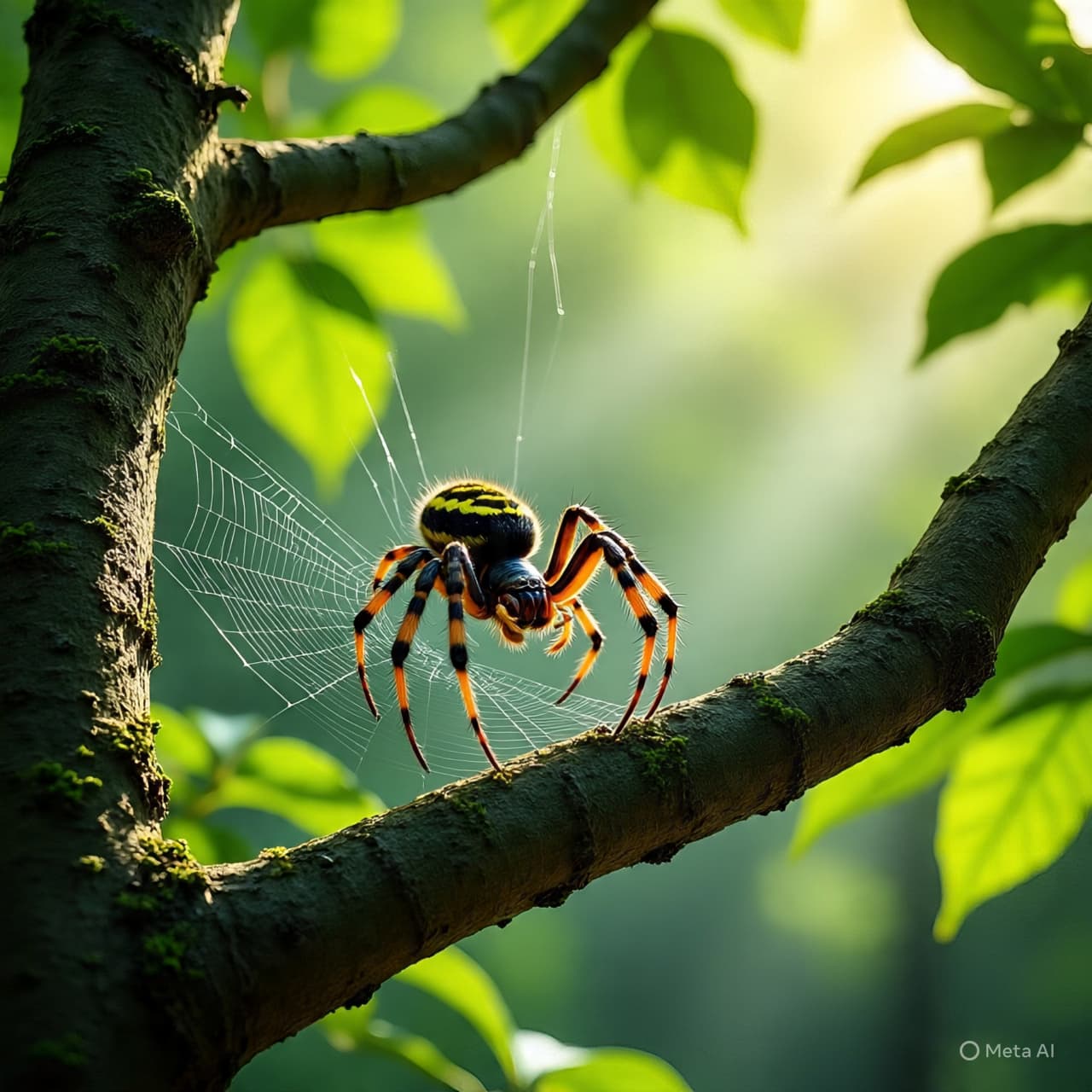
The presence behind them is the Joro spider, a species known for its striking size and vivid coloration. Native to East Asia, the spider has, over recent years, been steadily expanding its range across the U.S., with confirmed sightings in at least eight states since 2021. Its spread, gradual yet persistent, has shifted it from curiosity to subject of broader discussion.
Joro spiders are notable not only for their appearance—females can grow to a size comparable to a human hand when their legs are extended—but also for their adaptability. Their webs, often large and intricately structured, can be found suspended between trees, utility lines, and even structures closer to human activity. Despite their imposing presence, they are not considered dangerous to humans, their venom relatively mild and their behavior largely non-aggressive.
Researchers studying the species have pointed to its resilience as a key factor in its expansion. The spiders are capable of tolerating a range of temperatures and conditions, allowing them to survive in environments that might limit other species. Their method of dispersal—often described as “ballooning,” where spiderlings release silk threads to catch the wind—enables them to travel considerable distances, carried quietly through the air.
Since their initial detection in the southeastern United States, populations have continued to establish themselves beyond their original range. States such as Georgia, where the species was first widely reported, have become focal points for observation, but sightings have extended further, suggesting a pattern that may continue in the coming years.
For ecologists, the spread of the Joro spider presents a familiar set of questions. As with many introduced species, its long-term impact on local ecosystems remains under study. Early observations suggest that while the spiders are effective predators of insects, they do not yet appear to be displacing native species in a significant way. Still, the balance within ecosystems is often subtle, and changes may only become apparent over time.
For the public, the reaction tends to move along a different line—between fascination and unease. The scale of the spider, combined with its visibility, makes it difficult to ignore. Yet its presence also serves as a reminder of how environments evolve, shaped by movement, climate, and the unintended consequences of global connectivity.
The Joro spider does not arrive with urgency or disruption. It settles, quietly, weaving its place into the landscape. Its webs catch the light in the same way as any other, its movements guided by instinct rather than intrusion. And in that quiet expansion, it reflects a broader pattern—one where the boundaries of habitat are less fixed than they appear.
As the seasons continue and the spiders extend their reach, their presence may become less remarkable, folded into the everyday texture of the environment. What begins as a moment of attention often softens into familiarity.
And so, across branches and open spaces, the webs remain—fine threads suspended in air, marking not just the presence of a species, but the slow, ongoing shift of the world it inhabits.
Published by Banx Network. This article is part of the Banx decentralized media programme, powered by the BXE token on the XRP Ledger.