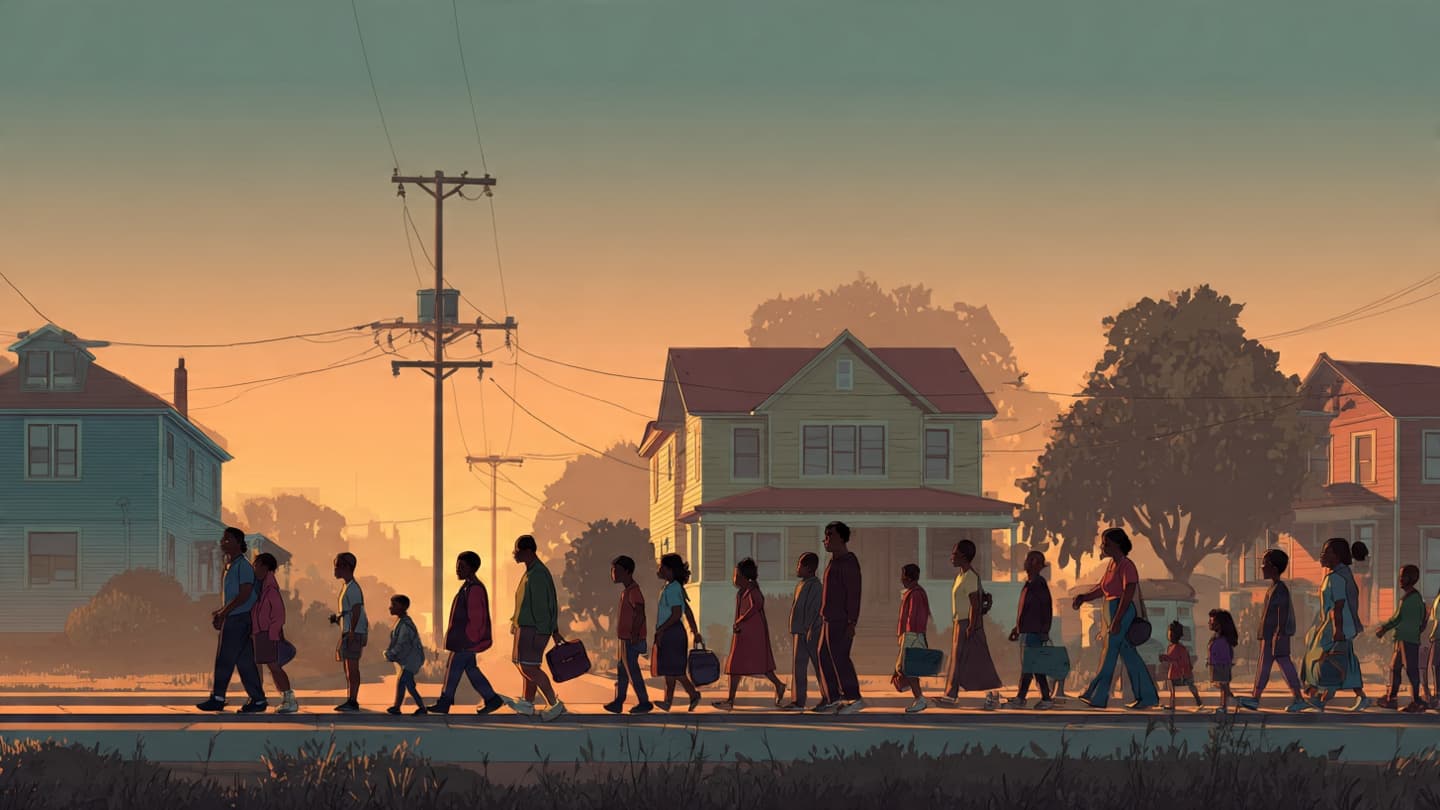
Morning begins quietly in neighborhoods across the United States where thousands of families prepare for another ordinary day. Children gather their schoolbags, shopkeepers lift metal shutters, and workers join familiar commutes beneath the first light. Yet for many living under Temporary Protected Status, or TPS, the routine carries an invisible companion: the awareness that legal decisions made far away may shape where tomorrow begins.
That uncertainty deepened after the U.S. Supreme Court allowed the Trump administration to move forward with ending TPS protections for certain groups while broader legal challenges continue in lower courts. The order did not resolve every question surrounding the program, but it permitted policy changes to proceed during ongoing litigation, leaving thousands of beneficiaries facing renewed uncertainty about their ability to remain and work legally in the United States. Legal advocates immediately continued pursuing additional court actions on behalf of affected communities.
Temporary Protected Status is a humanitarian immigration program created by Congress in 1990. It allows eligible nationals from countries experiencing armed conflict, environmental disasters, or other extraordinary conditions to live and work legally in the United States for limited periods. TPS does not automatically provide permanent residency or citizenship, but for many recipients it has offered years of stability while conditions in their home countries remained unsafe.
The Supreme Court's decision centered on whether the administration could implement changes before the underlying legal challenges reached a final conclusion. Immigration advocates argue that ending protections too quickly could separate families, disrupt local economies, and expose people to unsafe conditions abroad. Supporters of the administration's position contend that immigration policy falls within executive authority and that temporary protections should not continue indefinitely without statutory justification.
Behind these legal arguments are communities whose lives have gradually become rooted in the places they now call home. Many TPS recipients have worked in healthcare, construction, education, hospitality, and agriculture for years. They own businesses, pay taxes, volunteer in their neighborhoods, and raise children who often know no other country as home. For these families, legal status represents more than documentation—it provides continuity for ordinary routines that have quietly become part of American communities.
Immigration attorneys, nonprofit organizations, and civil rights groups continue filing lawsuits, seeking injunctions, and helping affected individuals understand their options. Some beneficiaries may qualify for other immigration pathways depending on their personal circumstances, while others continue waiting for the courts or future administrative decisions to clarify their legal position. The outcome remains uncertain, and each new ruling shapes the choices available to thousands of households.
The debate also reflects broader questions about how nations respond to prolonged humanitarian crises. Temporary protections, by design, are intended to address exceptional circumstances. Yet when crises persist for many years, governments are confronted with difficult policy choices balancing humanitarian responsibilities, immigration law, executive authority, and legislative action. These questions extend beyond a single administration, touching broader discussions about the purpose and future of temporary protection programs.
Communities across the country continue adapting as these legal proceedings unfold. Employers monitor workforce changes, schools support students whose families face uncertainty, and local organizations expand legal assistance for those seeking guidance. Daily life continues, even as important decisions remain unresolved in courtrooms and government offices.
For now, the legal struggle surrounding Temporary Protected Status continues beyond the Supreme Court's interim decision. Additional cases remain active, advocacy organizations continue challenging policy changes, and future administrative actions could further shape the program's direction. Like the first light that gradually reaches every neighborhood before the day fully begins, clarity may arrive only through time—carried forward by the patient work of courts, lawmakers, advocates, and the families whose futures remain closely tied to the outcome.
AI Image Disclaimer
The accompanying illustrations were generated using AI as conceptual representations and are not authentic documentary photographs.
Sources
Associated Press Reuters U.S. Supreme Court U.S. Department of Homeland Security American Immigration Council
Published by Banx Network. This article is part of the Banx decentralized media programme, powered by the BXE token on the XRP Ledger.