There is a particular tenderness in adolescence, whether in living beings or in worlds still forming. In the vast theaters of space, planetary systems also pass through uncertain years — no longer newborn, not yet settled, carrying the restless signatures of growth. Astronomers peering into distant star systems sometimes glimpse these in-between chapters, where dust has not fully cleared and orbits are still finding their rhythm. It is within such a delicate window that a rare “teenage” planetary system has drawn renewed scientific attention.
Unlike the luminous chaos of stellar birth or the stable geometry of mature solar systems, this intermediate stage is fleeting. The system under assessment is estimated to be tens of millions of years old — young by cosmic standards, yet old enough for planets to have taken recognizable shape. What makes it remarkable is not only its age, but its clarity. Observations reveal structures that allow researchers to study planetary evolution in motion rather than in hindsight.
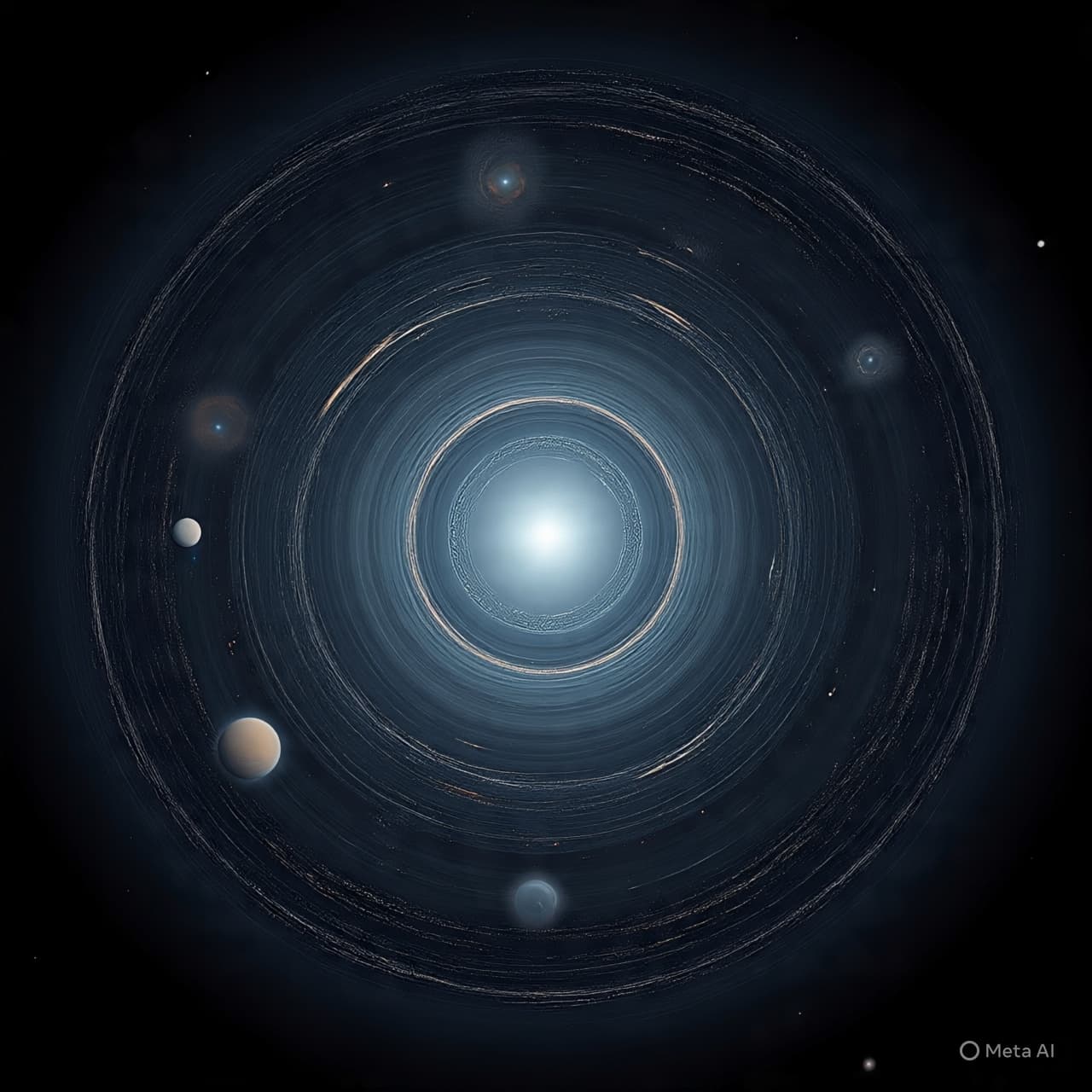
Using advanced telescopes sensitive to infrared and radio wavelengths, astronomers examined the dusty debris disk encircling the star. Such disks are the remnants of planetary construction — belts of rock, ice, and microscopic grains that linger after collisions and gradual assembly. In this system, scientists detected asymmetries and gaps that suggest gravitational sculpting by emerging planets. The architecture appears neither chaotic nor fully settled, offering a rare glimpse into how young planetary systems reorganize themselves after their earliest formative years.
The value of studying a “teenage” system lies in comparison. Mature systems like our own solar system show stability; very young systems reveal turbulent beginnings. But the middle years often remain observationally elusive. By analyzing disk composition, planetary mass estimates, and orbital dynamics, researchers can refine models of how planets migrate, how debris clears, and how stable habitable zones eventually emerge.
Early findings suggest that planetary migration — the slow drifting of planets from their birthplaces — may play a more significant role than once thought. The observed gaps in the debris disk align with theoretical predictions of planets reshaping their surroundings as they orbit. These subtle gravitational influences help scientists better understand how giant planets can shift inward or outward, influencing the fate of smaller rocky worlds.
The system also offers insights into how atmospheres may evolve during adolescence. Young planets often retain thick envelopes of gas that gradually thin or transform under stellar radiation. Studying such transitional stages helps astronomers estimate how Earth-like conditions might arise elsewhere in the universe.
Importantly, researchers approach these conclusions with careful restraint. While the system provides valuable data, continued monitoring and complementary observations will be needed to confirm planetary masses and refine orbital parameters. Cosmic adolescence, after all, is dynamic; what appears stable today may shift over time.
Still, each observation adds clarity to the broader narrative of cosmic evolution. Planetary systems are not static arrangements but living arrangements shaped by gravity, time, and chance collisions. By examining this rare intermediate stage, astronomers strengthen their ability to interpret both younger protoplanetary disks and older mature systems across the galaxy.
Further studies are expected as telescope arrays continue long-term monitoring. Scientists anticipate that deeper imaging and spectral analysis will yield additional detail about dust composition and planetary characteristics. For now, the assessment marks a steady advance in understanding how planetary systems transition from formation to stability — a chapter once hidden, now gradually illuminated.
AI Image Disclaimer Graphics are AI-generated and intended for representation, not reality.
Sources Space.com Phys.org ScienceDaily The Guardian BBC Sky at Night Magazine
Published by Banx Network. This article is part of the Banx decentralized media programme, powered by the BXE token on the XRP Ledger.