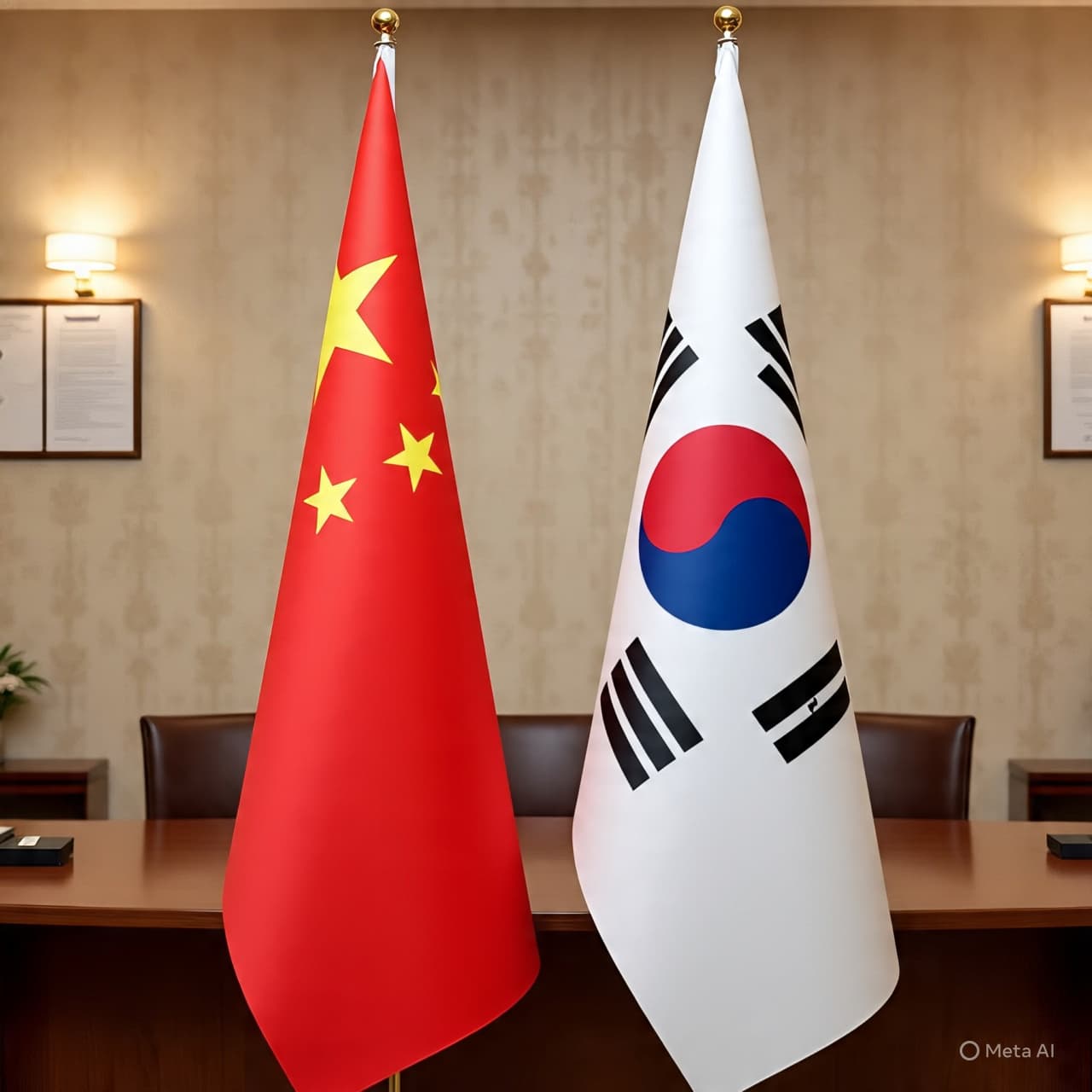
Diplomatic visits often take place in the quiet space between what is said and what is implied. A handshake, a meeting room, a carefully chosen itinerary — each carries weight shaped by events unfolding elsewhere. This week, that weight followed South Korea’s president as he arrived in China.
The visit comes at a moment of heightened tension between Beijing and Tokyo over Taiwan, an issue that continues to ripple across the region’s political and security calculations. While Seoul’s engagement with China has its own long-standing logic, the timing places the trip within a broader atmosphere of unease in East Asia.
South Korean officials have described the visit as focused on economic cooperation, regional stability, and the management of bilateral ties. China remains South Korea’s largest trading partner, and dialogue between the two governments has been strained in recent years by security disagreements and shifting alliances. The meetings offer an opportunity to steady a relationship that has grown cautious and transactional.
At the same time, the regional backdrop is difficult to ignore. Beijing’s increasingly firm posture on Taiwan has drawn concern from Japan, which has voiced alarm over potential instability near its southwestern islands. The resulting friction has sharpened diplomatic lines, pulling neighboring countries into careful recalibration rather than open alignment.
For South Korea, the visit reflects a familiar balancing act. The country maintains a security alliance with the United States while seeking functional ties with China, a power whose influence touches trade routes, supply chains, and regional diplomacy. Engagement, in this context, is less about resolution than about managing distance and expectation.
Chinese officials have emphasized the importance of dialogue and mutual respect, framing the visit as part of normal diplomatic exchange. No joint statements signaling a shift in regional policy have been announced, and discussions have remained measured in tone.
As the meetings conclude, the broader questions remain unanswered. Taiwan continues to sit at the center of regional anxiety, and relations between China and Japan show little sign of quick easing. Against that backdrop, the South Korean president’s visit stands not as a turning point, but as a moment of navigation — a reminder that in East Asia, movement itself is often the message.
Published by Banx Network. This article is part of the Banx decentralized media programme, powered by the BXE token on the XRP Ledger.