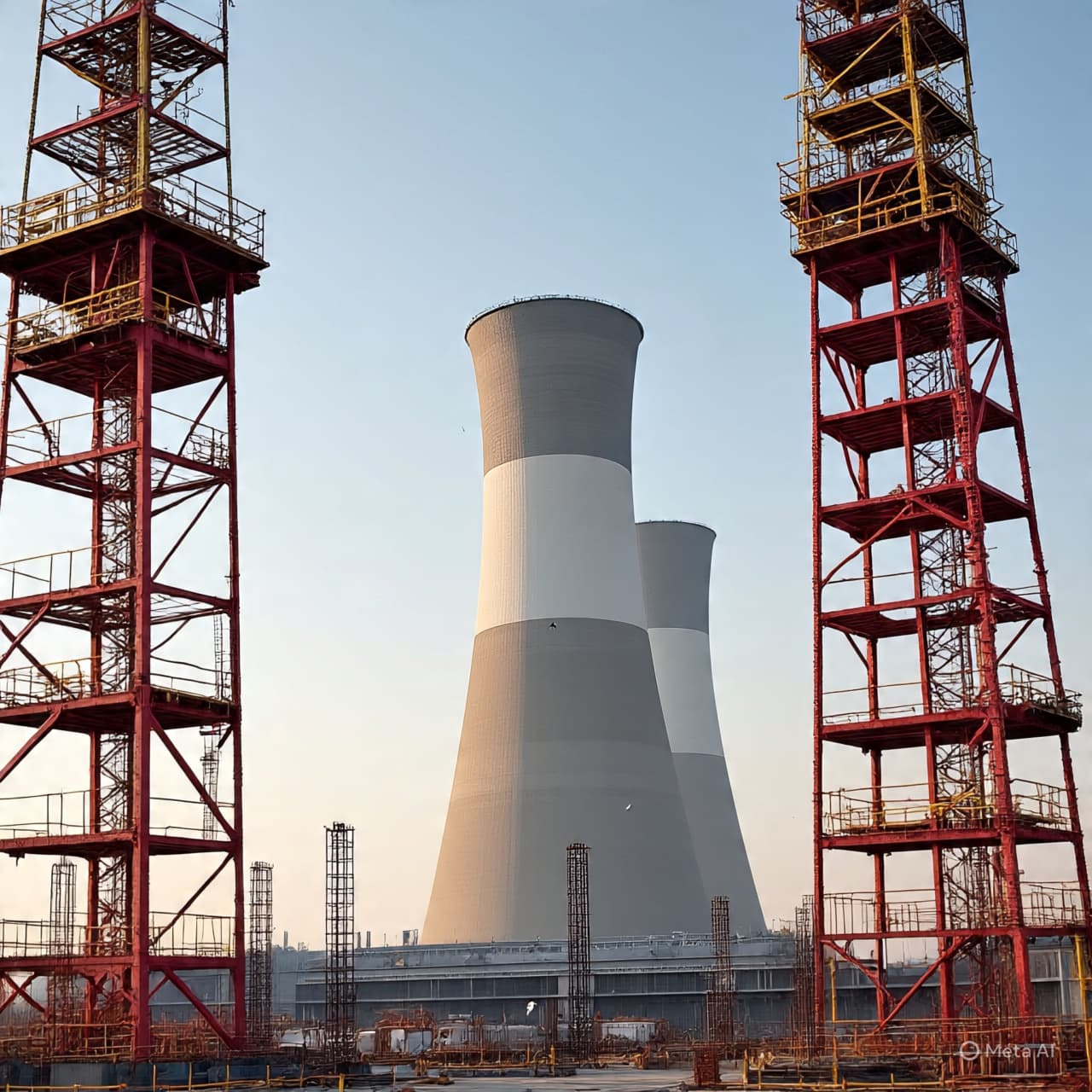
In the dawn before a new grid hums to life, one might imagine reactors quietly spinning away in harmony with our ambitions. But beneath that hopeful vision lies a tension: between promise and peril, between faith in innovation and caution about its untested ground. Today, as the U.S. and private investors pour billions into emerging nuclear technologies, experts warn that the stakes are far from settled.
Across recent years, backing for small modular reactors (SMRs) and advanced nuclear concepts has surged. The government has committed substantial funds. Private capital, too, is flowing. The rationale is compelling: these reactors are pitched as clean, flexible, and scalable — keys to powering data centers, decarbonizing industries, and safeguarding energy security. Yet many of these designs remain experimental, their economics unresolved, their deployment timelines uncertain.
Critics point out shadows behind the sheen. Many past efforts in new reactor designs have been plagued by cost overruns and delays. Some SMR projects abroad have exceeded budgets by hundreds of percent. The true cost of production, regulatory compliance, supply chains, and materials may undercut optimistic projections. Meanwhile, valuation in some nuclear startups shows signs of disconnection from operational fundamentals.
In this landscape, investor enthusiasm can outpace engineering reality. Some see echoes of past bubble behavior: vast capital chasing nascent technologies that still need to prove reliability, safety, and scalability. Supply chain constraints, licensing burdens, regulatory inertia, and fuel availability all loom as real barriers. And even if a prototype succeeds, moving from one demonstration plant to dozens is a leap many warn may falter.
But the argument is not dismissive of hope. Supporters maintain that early pioneers must attract risk capital to break ground. They see a future where costs fall with scale, designs standardize, and grid-compatible reactors emerge. They argue that without ambitious bets, progress stalls.
So the narrative is not simply optimistic or fatalistic, but cautious. The U.S. and investors are indeed placing a high-stakes bet on technologies that have yet to prove themselves fully. The potential payoff is immense — low-carbon base load power, industrial heat, energy independence — but the pathway is narrow, uncertain, and fraught with technical and financial pitfalls.
As reactor blueprints become contracts, as prototypes shift to construction bids, the real test nears. Will these next-generation systems deliver, or will many remain promises on paper? In this moment, the gamble is both technological and economic — and only time will tell which way the odds fall.
Sources
• Financial Times
• Semafor
• Undark
• EnergyMonitor
• Washington Post
Published by Banx Network. This article is part of the Banx decentralized media programme, powered by the BXE token on the XRP Ledger.

.jpg&w=3840&q=75 "The Artemis Revolution: How NASA Plans to Build Humanity's Future on the Moon")