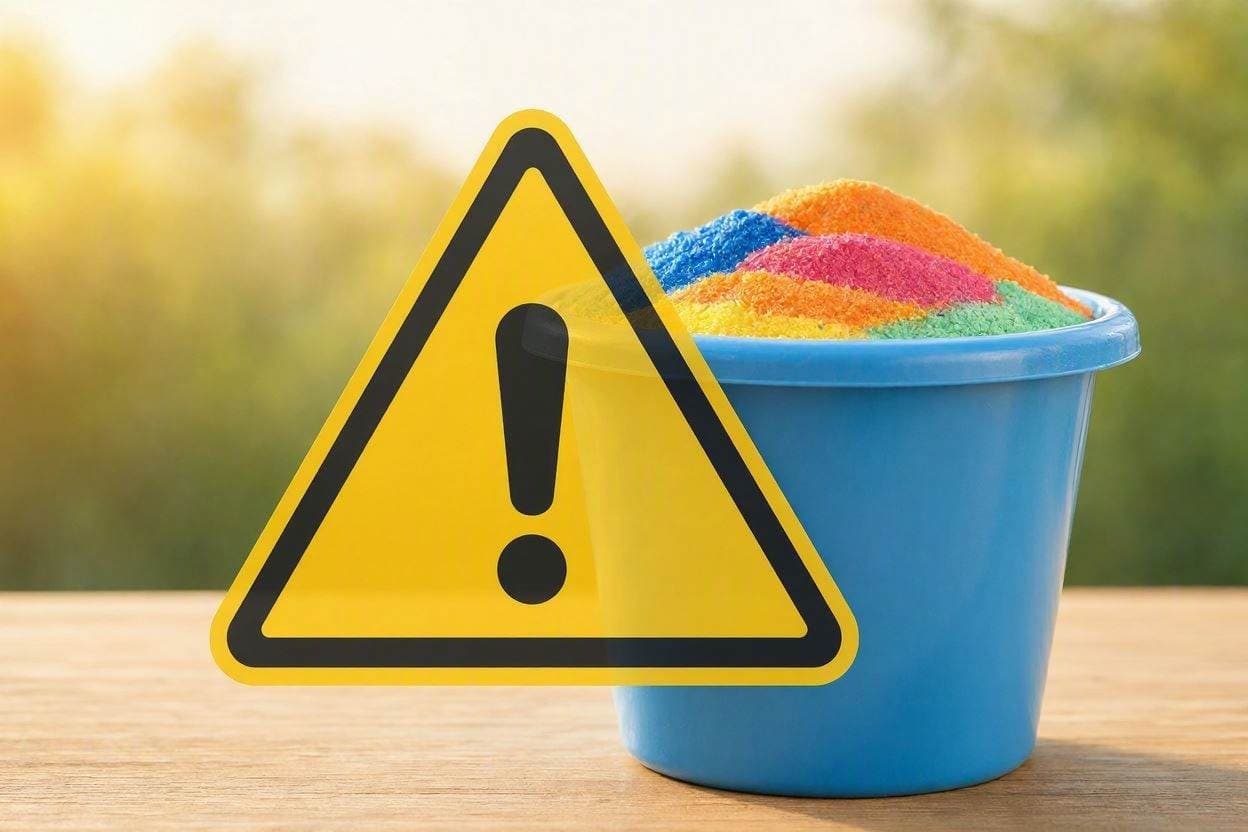
Playgrounds are supposed to be sanctuaries of joy, where children explore the world with innocence and freedom. For one mother, known as Elle, that sense of security was shattered when she discovered that her twin daughters had been playing with sand contaminated by asbestos for an entire year. The revelation has sparked outrage and deep concern among parents, raising critical questions about safety standards, regulatory oversight, and the communication of risks. It is a disturbing narrative that underscores the hidden dangers that can lurk in everyday environments, demanding accountability and transparency from those responsible for public health.
Elle purchased bags of colored sand from a local retailer, unaware that the product contained traces of asbestos, a known carcinogen. Her children used the sand for various craft projects and play activities, exposing themselves to potential health risks daily. When the contamination was finally identified through independent testing, the shock was immediate. The fact that the product remained on shelves for so long without adequate warnings or recalls has left many feeling betrayed by the systems meant to protect them.
Asbestos is a hazardous material that can cause serious lung diseases, including mesothelioma, when its fibers are inhaled. While the risk from brief exposure is lower, prolonged contact, especially in children who may ingest or inhale particles more readily, is a significant concern. Health experts emphasize the need for immediate medical consultation for affected families, though the long-term implications remain uncertain. The anxiety surrounding potential health outcomes is a heavy burden for any parent to bear.
The incident has triggered an investigation into the supply chain of the contaminated sand. Authorities are examining how the product passed quality control checks and why it was not flagged earlier. Retailers and manufacturers face scrutiny over their testing protocols and labeling practices. This case highlights gaps in consumer protection regulations, particularly regarding imported goods and building materials repurposed for play.
Parents across the region are now checking their own supplies, discarding any suspicious products. Community groups have formed to share information and support those affected. The collective response is one of caution and advocacy, pushing for stricter regulations and better enforcement. Trust in consumer safety has been eroded, and rebuilding it will require transparent action from authorities.
The story also raises issues of corporate responsibility. Companies have a duty to ensure their products are safe for their intended use. Failure to do so can have devastating consequences, both health-wise and legally. This case serves as a warning to the industry that vigilance is non-negotiable. Consumers deserve confidence that the items they bring into their homes are free from harm.
The exposure of Elle’s twins to asbestos-contaminated sand is a troubling event that highlights systemic failures in product safety. As investigations continue, the focus must remain on protecting children and ensuring that such oversights do not happen again. Transparency and rigorous testing are essential for restoring public trust.
AI Image Disclaimer: Visuals associated with this article are AI-generated to illustrate the themes of consumer safety and health concerns.
Sources: 9 News Daily Mail Australia News.com.au
Published by Banx Network. This article is part of the Banx decentralized media programme, powered by the BXE token on the XRP Ledger.